
Livraison le jour même ou le lendemain

Qualité garantie

Débloquez vos offres de bienvenue: Livraison GRATUITE | Jusqu'à -80 % | 30 jours d'essai gratuits à JoyPlus
Téléchargez l'application
As a product expert at Joybuy, I test dozens of kitchen appliances every day. The blender is undoubtedly one of the most popular, but it's also a favourite playground for marketing and its misleading promises. One wrong choice, and you're guaranteed disappointment: a noisy appliance, a chore to clean, or worse, one that can't even blend your ingredients properly.
This guide gets straight to the point: helping you decode the technical jargon and sales pitches to find the blender that truly meets your needs, not just the ones on the spec sheet.
The market is flooded with models making tempting promises. Before you give in, watch out for these three classic mistakes that can turn a great deal into a bad buy.
You don't need to be an engineer to make the right choice. Focus on these key points that truly make a difference in your appliance's performance and lifespan.
Power, expressed in watts (W), is the primary indicator of the motor's strength.
But watts aren't everything. A motor with overheat protection is a true guarantee of longevity.
The word "blender" actually covers several families of appliances. The first step is to identify your primary need.
The quality of the materials has a direct impact on durability and hygiene.
To illustrate these criteria in practice, here are models suited for three distinct user profiles.

Why it's a great fit: Ideal for whipping up a vitamin-packed drink just before you leave. Its 600 ml bottle serves as both the blending jar and a portable cup. Compact and simple, it's the perfect daily companion.
It doesn't fall into the "all-in-one" trap. This is a hyper-specialised device, designed for one task that it masters perfectly: preparing individual smoothies in record time.
Its simplicity (a single button) and express cleaning thanks to the detachable blades.
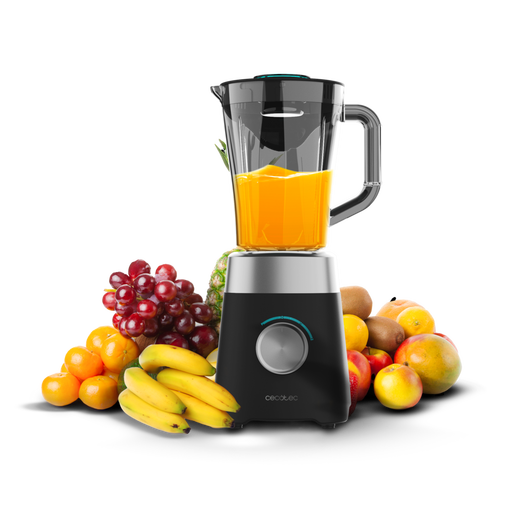
Why it's a great fit: With its large 1.5 L jar and 1300 W of power, it's built for family needs. It can handle large batches of smoothies, soups, and its ice-crushing function is a real bonus for summer cocktails.
It debunks the myth of raw power. Its 1300 W are intelligently paired with 4-edge, titanium-coated blades and a Pulse function. This proves that performance comes from a balance of components.
Its versatility: its capacity and power allow it to tackle everything from a simple smoothie to crushed ice for mojitos.
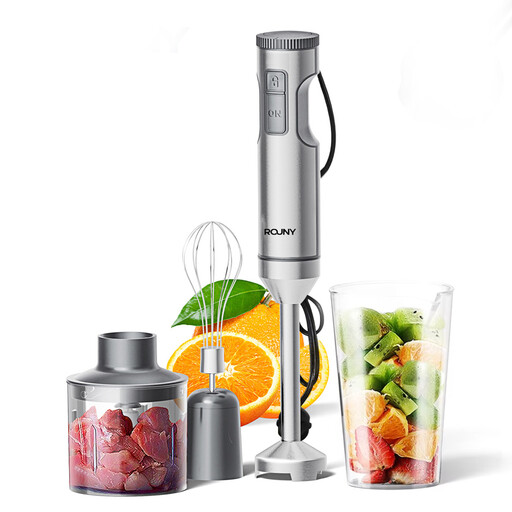
Why it's a great fit: This 4-in-1 immersion blender is the tool for the cook who loves control and precision. It can create a velvety soup right in the pot, finely chop herbs with its mini-chopper, or whip egg whites with the whisk. All with total control thanks to its variable speed.
It eliminates the cleaning problem. The blender shaft rinses clean in seconds, and the removable accessories are dishwasher-safe. No more struggling to scrub a large, awkward jar.
Its versatility, thanks to the accessory set (blending shaft, chopper, whisk) and precise texture control via the adjustable speed.
We have selected a full range of products that meet our criteria for quality, performance, and safety.
It all depends on your use case. For smoothies with soft fruits and liquids, 300 to 500?W is enough. To crush ice, blend frozen fruit, or make nut butters, aim for 800?W or more. But don't focus solely on watts: the blade design and motor quality are just as crucial.
It depends on the jar material. Glass jars can generally handle hot liquids, but it's advisable to let them cool to warm to avoid thermal shock or over-pressurisation. Plastic jars, even BPA-free ones, can warp or get damaged. For this purpose, a heating blender is the most suitable and safest appliance. Always check the manufacturer's instructions.
The easiest and quickest method is self-cleaning: fill the jar halfway with warm water and a drop of dish soap, then blend on high speed for 30 seconds. Rinse thoroughly. For stubborn residue, a bottle brush can be helpful. Many models have a dishwasher-safe jar and blades. An immersion blender is even simpler to clean, as you just need to rinse the detachable shaft.