
Livraison le jour même ou le lendemain

Qualité garantie

Débloquez vos offres de bienvenue: Livraison GRATUITE | Jusqu'à -80 % | 30 jours d'essai gratuits à JoyPlus
Téléchargez l'application
Choosing a dish soap seems like a trivial task. Yet, when faced with shelves overflowing with marketing promises, it's easy to walk away with a disappointing product. From formulas that claim to be ultra-concentrated but run out in the blink of an eye, to "green" packaging that hides questionable ingredients, navigating the household products jungle is a real challenge. But the goal is simple: sparkling clean dishes, without harming your skin or your wallet.
This guide is here to help you decode the labels and choose the product that’s truly right for you, far from the siren song of marketing.
Before you settle on a bottle, it's wise to understand the marketing claims that often hide a different reality.
To find the perfect product, it's best to focus on a few technical and objective points.
The effectiveness of a degreasing dish soap primarily depends on its concentration of anionic surfactants. These are the molecules that attack grease and lift it from your dishes. A concentration between 5% and 15% is a good benchmark for daily use. For very greasy dishes or baked-on grime, a more concentrated formula or one containing enzymes will be far more effective. Some products also leverage traditional ingredients like vinegar or baking soda, known for their cleaning power, almost turning your dish soap into a handy multi-purpose cleaner for your countertops.
If you have sensitive skin or are washing baby items, the formula becomes a non-negotiable criterion. Opt for a hypoallergenic baby-safe product or a formula specifically designed to minimise allergy risks. In practical terms, this means no fragrances, dyes, or controversial preservatives. The "EU Ecolabel" is a dual seal of approval: it ensures limited environmental impact and imposes strict restrictions on potentially hazardous substances.
Buying in bulk often means paying less. A value pack of cleaning products lowers the cost per litre and saves you a trip to the supermarket every other week. Family-size formats or multi-bottle packs are therefore an excellent strategy for reducing your annual bill—provided, of course, you have the space to store them.
To help you see things more clearly, here is a selection of products that tick all the right boxes, each tailored to a specific need.
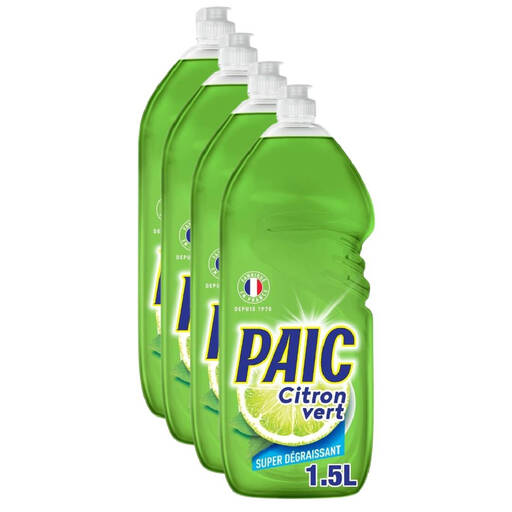
Why we recommend it: With 6 litres in total, this XXL pack offers an unbeatable price-per-litre. It's the perfect solution for large families who go through bottles at lightning speed and want to keep their spending in check.
Here, the "concentrated" promise isn't an empty one. Paic's formula is renowned for its effectiveness, and a few drops really are enough. By buying in bulk, you maximise savings and say goodbye to the "always-empty-bottle" syndrome.
Ultra-economical format: 6 litres in total. Formidable effectiveness: a super-degreasing formula that works even in cold water (from 18°C, according to the brand).
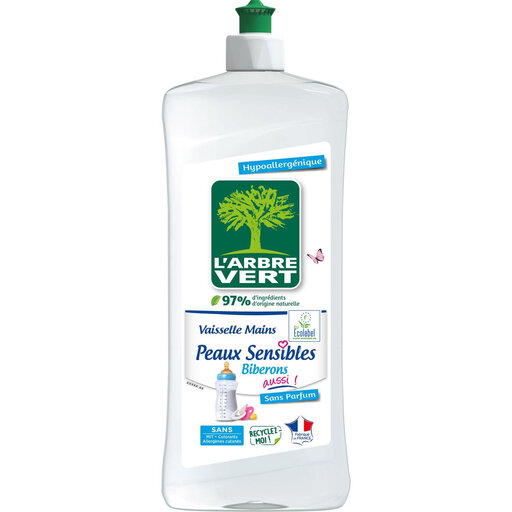
Why we recommend it: Specially formulated to minimise allergy risks, it's perfect for cleaning baby bottles, teats, and soothers, as well as for anyone with reactive skin.
This product doesn't just settle for the "gentle on hands" claim. Its formula is genuinely hypoallergenic: free from fragrances, dyes, and known skin allergens. A seal of trust for the most delicate skin.
High-tolerance formula: EU Ecolabel certified and hypoallergenic. Clean ingredients: 97% ingredients of natural origin, with no undesirable substances.
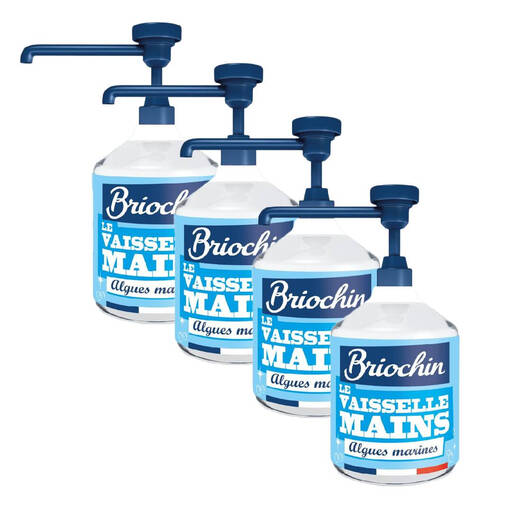
Why we recommend it: For those who trust in time-tested recipes, this product combines the ultra-degreasing power of black soap with the benefits of marine algae. A great alternative to 100% chemical formulas.
There's no superficial *greenwashing* here. The product relies on a proven star ingredient: black soap. It ticks the eco-friendly dish soap box in spirit, with the added bonus of being made in France and having a transparent formula.
Traditional ingredients: an effective formula with black soap and marine algae. Practicality: the pump dispenser allows for precise, waste-free dosing.
Many cleaning products leverage the proven effectiveness of vinegar. Discover our selection of cleaners that make it their star ingredient.
1. What's the difference between a classic dish soap and an eco-friendly one? An "eco-friendly" dish soap prioritises plant- or mineral-based ingredients and a more readily biodegradable formula. Most importantly, it often carries an official label (e.g., EU Ecolabel, Ecocert). This label guarantees compliance with strict specifications, covering both environmental impact and authorised substances—a requirement that classic products don't have.
2. Is a powerful degreaser necessarily harsh on the skin? No, the two are not necessarily linked. Degreasing power comes from surfactants, while irritation is often caused by other components: fragrances, preservatives, or an unsuitable pH level. Today, you can find excellent degreasing dish soaps with formulas that include moisturising agents (glycerin, aloe vera) or are specifically designed to be hypoallergenic.
3. Is buying in bulk always a good deal? Most of the time, yes, as the price per litre is much more attractive. You just need to check two things: that you have the space to store the products and to keep an eye on the expiration date. But for a product like dish soap, which keeps very well, buying in bulk is almost always a smart move for family or regular use.