
Livraison le jour même ou le lendemain

Qualité garantie

Débloquez vos offres de bienvenue: Livraison GRATUITE | Jusqu'à -80 % | 30 jours d'essai gratuits à JoyPlus
Téléchargez l'application
A well-organized kitchen is the first step towards a happy home. But when it comes to choosing the right food storage container, things can get complicated quickly. Faced with marketing promises and a jungle of options, we often end up with cupboards full of unsuitable containers, gathering dust instead of making our lives easier.
As a product expert at Joybuy, my mission is to help you see things more clearly. Let's cut the jargon and get straight to the point. Here are the most common pitfalls and, more importantly, how to avoid them to make the right choice.
Buying food storage containers seems simple, but a few classic mistakes can cost you dearly in time, money, and food waste.
For top-notch pantry organization and flawless food preservation, there are three things to check before you head to the checkout.
The choice of material is crucial and depends entirely on your habits.
A good airtight seal is the shield that protects your food from air, moisture, and pests. Inspect the lid closely:
For kitchen organization worthy of the name, opt for container ranges designed to nest or stack. Flat lids and bases with the same dimensions (even with different heights) allow you to create stable towers and free up a surprising amount of shelf space. A food storage container set from the same collection is often the best initial investment.
Here are a few options that meet specific needs, taking into account the criteria we've just discussed.
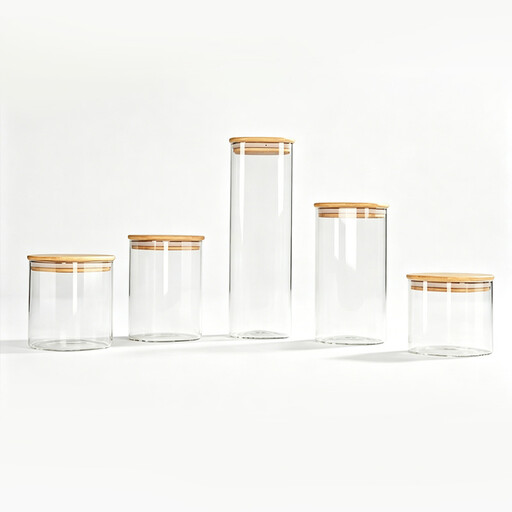
Why we love it: The perfect starter kit for bulk-buy enthusiasts. With five different sizes, it lets you stylishly store pasta, rice, legumes, or cereal, and finally bring order to your pantry.
No more headaches from mismatched, unstackable containers! The consistent design and materials ensure flawless visual and practical organization.
The transparent glass lets you see the contents and remaining levels at a glance. No more unpleasant surprises when it's time to go grocery shopping.

Why we love it: Because practical can also be beautiful. This elegantly designed jar, inspired by Roman amphorae, is perfect for stylishly displaying coffee beans, nuts, or biscuits on your countertop.
It proves that design and function can go hand in hand. Its acacia wood lid includes a silicone gasket that ensures a perfectly airtight seal to protect your food.
The combination of hammered borosilicate glass and a natural wood lid transforms a simple jar into a true decorative object.
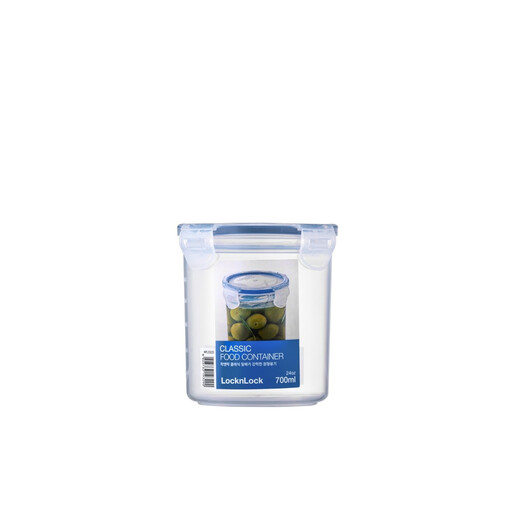
Why we love it: It's the Swiss Army knife of food storage. Perfect for dinner leftovers, weekly meal prep, or small portions. Its fridge, freezer, and microwave compatibility make it an everyday essential.
It delivers on its promise of versatility. Made from high-quality, BPA-free polypropylene (PP), it's truly designed to go from freezer to microwave (with the clips open) without warping or becoming brittle.
Its patented 4-clip locking system, combined with the silicone gasket, guarantees a 100% airtight and liquid-tight seal. Say goodbye to leaks in your backpack!
Discover our complete selection of containers and jars, all tested and approved according to our quality criteria and European safety standards.
It all depends on your use case. Glass is the champion of hygiene: it's inert, so it won't stain or retain odours (perfect for bolognese sauce!). It's ideal for long-term storage of dry goods. Plastic, being lighter and virtually unbreakable, is the king of portability: perfect for taking lunch on the go, for families with children, or for the freezer, where the risk of thermal shock is lower.
The trick is to inspect the lid. A good airtight jar should have a thick, flexible silicone gasket that fits snugly against the rim. Clip systems (often four of them) are an excellent indicator, as they distribute pressure evenly. For screw-on lids, check that the thread seems sturdy and deep.
Absolutely not. It's a habit you need to develop: always check the manufacturer's pictograms. For the microwave, only certain plastics (like PP) and borosilicate glass are compatible. Remember to always open or remove the lid to let steam escape. For freezing, never fill to the brim! Liquids expand as they freeze and could shatter a glass container or crack an overly rigid plastic one.