
Livraison le jour même ou le lendemain

Qualité garantie

Débloquez vos offres de bienvenue: Livraison GRATUITE | Jusqu'à -80 % | 30 jours d'essai gratuits à JoyPlus
Téléchargez l'application
Whether you are a professional mechanic or a savvy DIYer, choosing an automotive diagnostic scanner is a strategic investment. The market is flooded with promises, but not all scanners are created equal, especially when facing the demands of modern vehicles. A poor choice can quickly become an expensive, obsolete paperweight. This guide breaks down the essential criteria for selecting a high-performance, durable tool built for heavy-duty use in the workshop or for complex repairs.
Navigating the jungle of diagnostic tools can quickly become a headache. Many brands tout features that, in practice, turn out to be limited or conceal unexpected costs. Here are the most common pitfalls to anticipate.
It's a classic tactic: a tempting sticker price that hides a business model based on exorbitant annual subscriptions. After a year or two, software updates become a paid service, and the bill can sometimes exceed half the purchase price of the device. Without them, the scanner loses compatibility with new vehicle models and their features, quickly rendering it useless.
The automotive industry is evolving at breakneck speed. Communication protocols like CAN FD (used by General Motors since 2020) and DoIP (used by BMW, Jaguar, Land Rover) are now essential. Investing in a scanner that ignores these protocols guarantees you won't be able to communicate with the ECUs of recent vehicles. You'll be stopped dead in your tracks when trying to diagnose models that are widespread in the US and Europe.
Terms like "bidirectional control" or "ECU coding" are often brandished as heavy-hitting marketing claims. However, on many entry-level models, the reality is far less impressive: these functions are often severely limited. Bidirectional control may be reduced to a few basic tests (like activating a fan), and ECU coding to simple adaptations of little practical value. A true professional OBD2 scanner must offer fine-grained control over a multitude of actuators and allow for complex ECU configurations.
To avoid these disappointments, it's crucial to rely on objective technical specifications. These are what define the true value of an automotive diagnostic tool.
A professional tool worthy of the name goes far beyond simply reading error codes. It must allow for a complete all-system diagnosis, accessing every ECU in the vehicle (engine, transmission, ABS, SRS, BCM, climate control, etc.). Bidirectional control is the ability to send commands to these ECUs to test component functions in real time. For example, commanding an EGR valve to open and close, activating the fuel pump, or testing each injector individually. This function is indispensable for cutting diagnostic time in half and avoiding unnecessary parts replacement.
ECU coding should not be confused with reprogramming. It is the ability to modify pre-programmed parameters in an ECU to adapt the vehicle's behavior or activate options. This can range from calibrating injectors after replacement to configuring a new battery module or enabling hidden features.
For complex diagnostics, topology mapping is an increasingly sought-after feature. It displays a graphical overview of the vehicle's entire communication network, showing at a glance which ECUs are communicating correctly and where faults are located. It's a phenomenal time-saver for tracking down CAN network failures.
A quality multi-brand scanner must guarantee broad vehicle coverage and, most importantly, long-lasting compatibility. Check the following points:
Rather than an exhaustive list, we have identified tools that meet specific user profiles, based on the performance and durability criteria discussed above.
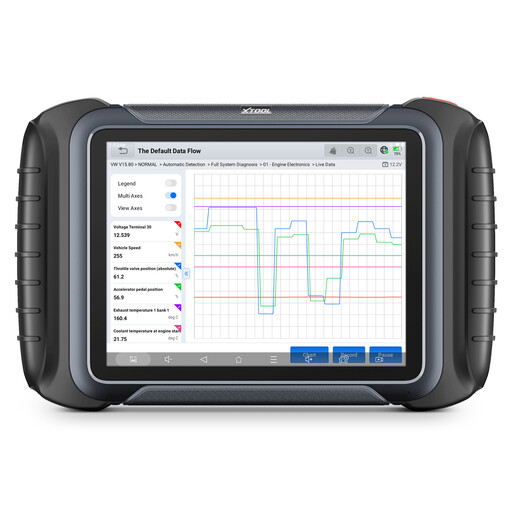
Why it's the right choice: In the workshop, every minute counts. The D8S is designed to slash diagnostic times with its topology mapping, which provides an instant overview of the CAN network's health. Its advanced ECU coding capabilities and full bidirectional control make it a reliable daily workhorse for a wide variety of brands.
It includes TRUE topology mapping, a far cry from superficial "advanced" features. With 3 years of included updates and CAN FD/DoIP support, it knocks out the risk of obsolescence and hidden costs.
Topology mapping for up to 90% faster network diagnostics. Advanced ECU coding and PMI function for Ford/Mazda.
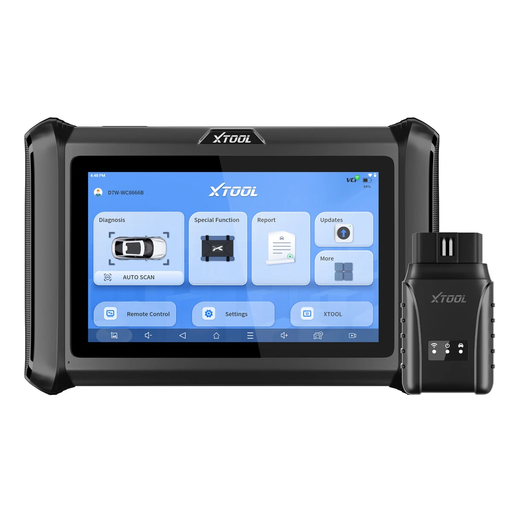
Why it's the right choice: For an expert enthusiast or a mobile technician, freedom of movement is non-negotiable. The D7W offers a stable and fast wireless Wi-Fi connection, freeing the user from cable constraints. It strikes an excellent balance between professional functions (bidirectional control, coding, PMI) and a compact, accessible format.
With 3 years of free updates, it eliminates the risk of high short-term subscription costs. Its native CAN FD and DoIP compatibility ensures its relevance for years to come, avoiding the technological obsolescence trap.
Wireless Wi-Fi connectivity for total freedom of movement. Excellent features-to-price ratio with over 39 service functions.
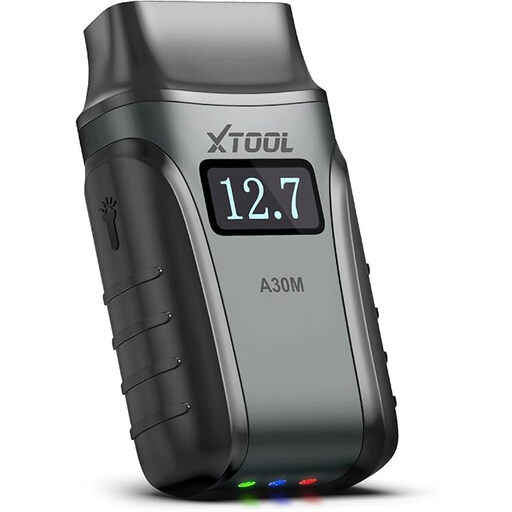
Why it's the right choice: Perfect as a second tool in the tool cart or for quick jobs, the A30M turns a smartphone into a powerful scanner. Its portability is its greatest asset. Despite its size, it offers all-system diagnostics and bidirectional control, which is remarkable for a Bluetooth adapter.
It completely sidesteps the subscription trap with its free lifetime updates. It offers genuine bidirectional functions and full diagnostics, setting it apart from gadgets that promise much but deliver little.
Free lifetime updates for zero cost of ownership. Extreme portability and CAN FD/FCA compatibility.
Discover our full selection of diagnostic tools that meet our criteria for performance and durability.
No, and this is a common point of confusion that is crucial to clarify. ECU coding involves modifying existing parameters within an ECU (for example, changing tire configuration, adjusting comfort options). Reprogramming (or "flashing") involves rewriting the ECU's internal software. This is a much more complex and risky operation, generally reserved for dealership tools or highly specialized equipment.
The diagnostic tool provides the technical compatibility to access the Security Gateway (SGW) on FCA group vehicles (Fiat, Chrysler, Jeep, etc.) made after 2018. However, access itself requires creating an account and a paid subscription directly with the AutoAuth service. In short, the scanner is the key, but the service subscription is the lock that you must pay for separately from the manufacturer.
While both offer a wireless connection, their performance differs. Bluetooth is often sufficient for simple tasks but can suffer from latency or disconnections. A direct Wi-Fi connection between the tablet and the VCI (Vehicle Communication Interface) is much faster, more stable, and offers a greater range (up to 20-30 meters). It provides incomparable convenience for performing tests while moving around the vehicle.