
Livraison le jour même ou le lendemain

Qualité garantie

Débloquez vos offres de bienvenue: Livraison GRATUITE | Jusqu'à -80 % | 30 jours d'essai gratuits à JoyPlus
Téléchargez l'application
With electronics being omnipresent in our cars, the simple error code reader has had its day. Whether you're a professional mechanic, a workshop manager, or a car enthusiast, choosing a high-performance multi-brand car diagnostic scanner is no longer a luxury: it's the essential tool for pinpointing faults with precision and carrying out the most advanced repairs.
This guide is here to help you navigate the jungle of available models. We will break down the key technical criteria to consider and present our selection of the best tools to help you find the car diagnostic device that perfectly meets your needs.
Before diving into a comparison, it's crucial to understand what separates an amateur's gadget from a true professional OBD2 scanner. Here are the three essential points to check.
Recent vehicles (generally post-2020) rely on new communication protocols to handle the growing volume of electronic data.
These functions are what separate a simple reader from a true professional tool.
A good diagnostic tool with service functions frees you from trips to the dealership for most routine maintenance tasks. Check for the presence of the functions that will be most useful to you:
Finally, a crucial point: the update model. Some manufacturers offer free lifetime updates, a huge advantage, while others operate on an annual subscription basis.
Here is a selection of models that caught our attention. They cover different needs and budgets, from the knowledgeable enthusiast to the professional mechanic.
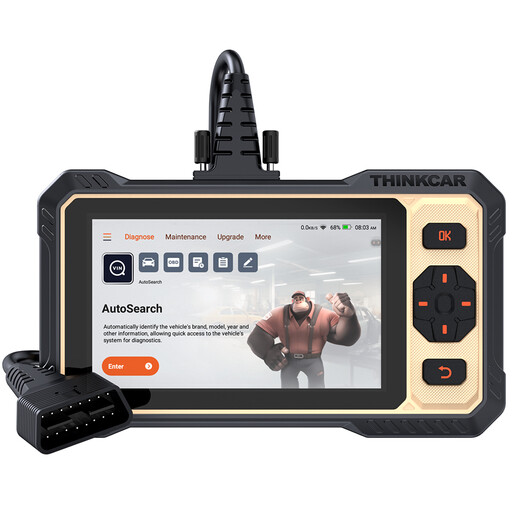
The Highlights: The ThinkScan 662 strikes the perfect balance between advanced features and an affordable price. Its CAN FD compatibility and free lifetime updates make it a smart, long-term investment, without the unpleasant surprise of a subscription.
Pros:
Who is it for?: Ideal for advanced enthusiasts and small workshops that need a versatile tool for common diagnostics, maintenance services, and active tests on a wide range of vehicles.
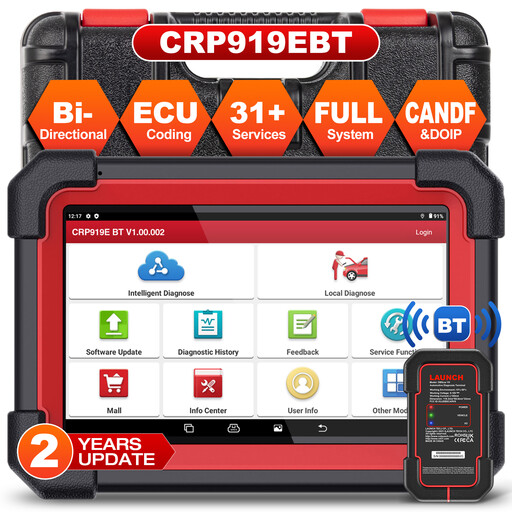
The Highlights: This is a clear step up. This model plays in the professional league with its Bluetooth connection, OE-level system coverage, and dual CAN FD and DOIP compatibility. A formidable solution for the most complex diagnostics.
Pros:
Who is it for?: For professional mechanics and workshops that demand maximum coverage, dealership-level diagnostic capabilities, and the flexibility of wireless operation.
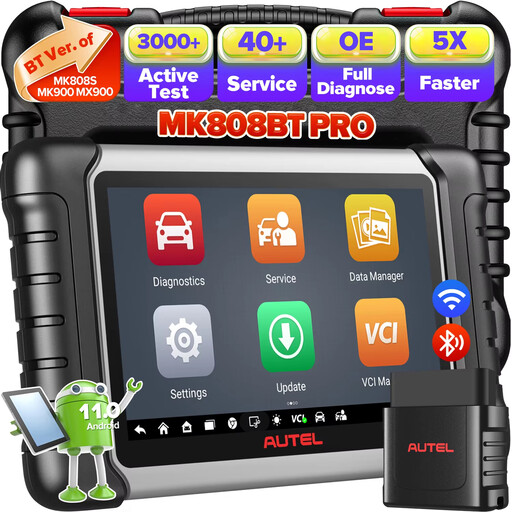
The Highlights: The Autel MK808BT PRO combines the power of full all-system diagnostics with the freedom of a stable Bluetooth wireless connection. It stands out with its impressive arsenal of over 38 service functions and its ability to interface with accessories (endoscope, battery tester).
Pros:
Who is it for?: Aimed at technicians who want to move freely around the workshop and have a true Swiss Army knife of diagnostics, capable of performing a very wide variety of maintenance tasks.
Our selection highlights particularly versatile tools, but the best choice is ultimately yours. Whether you're looking for niche functions, specific brand coverage, or a solution that fits a specific budget, the market is full of other gems.
Explore our full range to discover other devices and find the car diagnostic tool that perfectly matches your expectations.
Discover the Entire Car Diagnostic Tool Category
A simple OBD2 reader reads and clears standard error codes (EOBD/OBD2 standard) related to the engine and exhaust system, and that's about it. A multi-brand car diagnostic scanner, on the other hand, communicates with ALL of the vehicle's ECUs (ABS, airbag, transmission, climate control, BSI, etc.), displays real-time sensor data, performs active tests (bidirectional control), and carries out dozens of advanced service functions.
For hobbyist use, even for advanced users, ECU coding is rarely essential. It becomes relevant if you plan to replace electronic parts yourself that require "pairing" to the vehicle (injectors, modules...) or if you enjoy customising certain comfort options. For diagnostics and routine maintenance, a tool with good service functions and bidirectional control is more than sufficient.
Yes, they are absolutely fundamental. Every year, new models are released, and the software on existing cars is updated. Regular updates are the only guarantee that your car diagnostic tool will remain compatible and effective. Without them, your scanner will quickly become a tech brick, unable to communicate with recent vehicles.