
Livraison le jour même ou le lendemain

Qualité garantie

Débloquez vos offres de bienvenue: Livraison GRATUITE | Jusqu'à -80 % | 30 jours d'essai gratuits à JoyPlus
Téléchargez l'application
Looking for an Asian jelly to pop in your bag, an unusual dessert or a selection to share? From konjac jelly and jelly drinks to jelly sweets and individual desserts, the texture, ingredients and format can all make a difference to your experience.
Before you place your order, watch out for these three common pitfalls:
Search results can sometimes throw up a few surprises. For example, a product with ‘jelly’ in its name might be intended for pets, such as cat food. Before you check out, make sure you’ve checked the category, ingredients list and intended use.
Texture is often what sets different products apart.
Read the instructions carefully. Some products recommend gently squeezing the jelly into your mouth, then chewing it before swallowing. Children should be supervised, and some products advise against consumption below the age stated on the packaging.
Konjac, nata de coco, gelling agents, fruit juice and sweeteners all affect the taste and texture. To find a product that suits your preferences, check:
Recipes can vary between flavours in the same range. So a lychee, peach, grape or strawberry jelly won’t necessarily contain the same ingredients.
A 106–150 g pouch is easy to pop in your bag for a break at work or while travelling. Three 125 g pots are better suited to a snack or sharing. Jars of jelly straws are handy for parties, lunch boxes and sharing selections.
Compare the nutritional information per 100 g or 100 ml, then take into account how much you’ll actually eat. For example, some product listings give around 5–7 kcal per serving for konjac and sweetener options, while a gelatine-based sweet can contain more than 300 kcal per 100 g. These figures come from product listings; if they differ, the packaging label is the one to follow.
Remember to check the storage instructions, too. A jelly drink can often be kept at room temperature before opening. Once opened, however, a bottle will usually need to be refrigerated and consumed promptly.
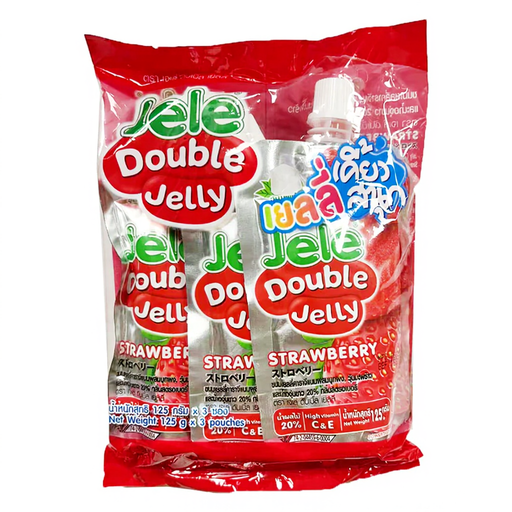
Why it suits this preference: This pack of three cups is a handy way to try strawberry jelly, with portions that are easy to share or save for later.
The individual portions help avoid leftovers and make it clear that this is a dessert jelly, not a drink to consume quickly.
Three 125 g portions, a two-layer texture and 65 kcal per 100 g according to the information provided.
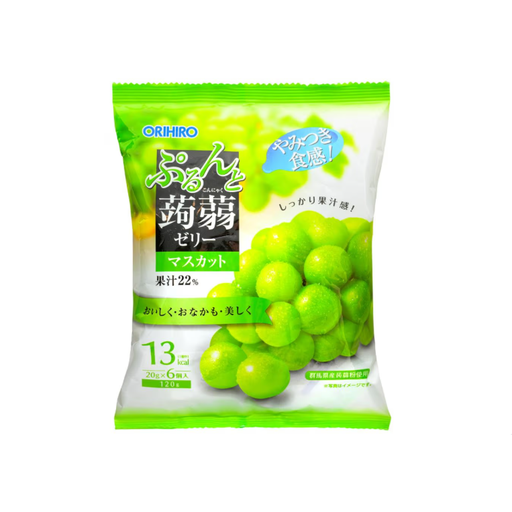
Why it suits this preference: The six 20 g pouches let you enjoy it in smaller portions, with a muscat grape flavour and soft konjac texture.
The individual packs make it easier to control how much you eat, while the product information explains how to enjoy the jelly gradually.
Six 20 g portions, a muscat grape flavour and 65 kcal per 100 g according to the information provided.
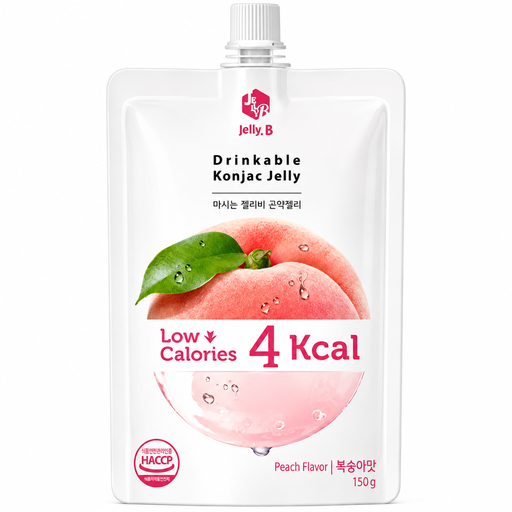
Why it suits this preference: The 150 g pouch is easy to take with you for a break at work, university or on the go.
The portion size is clearly stated, and the product information lists 7 kcal per 150 g pouch. If you’re sensitive to sweeteners, take the time to check which ones are used.
Peach flavour, konjac and a ready-to-enjoy format; the product information also states that no allergens are declared.
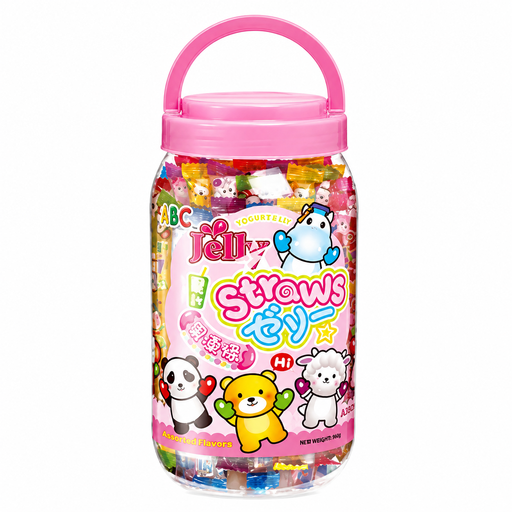
Why it suits this preference: This large jar brings together several flavours — strawberry, grape, apple, orange, mango and lychee — for plenty of variety.
Individually wrapped portions make sharing easy. However, the warning provided advises that children under 3 should not consume the product.
800 g, a selection of flavours and individual wrapping; the product information lists 83 kcal per 100 g.
We’ve put together a complete, real-time selection of products that meet these exacting criteria and European safety requirements.
Choose an individual 106–150 g pouch or cup, with a suitable closure or packaging that’s easy to open neatly. Peach-flavoured konjac jelly or a fruity jelly drink could be a good choice for a quick break. Check the consumption instructions before popping it in your bag.
It depends on the product. Jelly in a cup can generally be eaten straight after opening. A bottled jelly drink will often need to be refrigerated and consumed within one to two days. Always follow the instructions on the packaging.
No. Some products have a low energy value, particularly those containing sweeteners. Others are made with sugar or syrup. Compare the nutritional information per 100 g or per portion, and don’t rely on the word ‘konjac’ alone.