
Livraison le jour même ou le lendemain

Qualité garantie

Débloquez vos offres de bienvenue: Livraison GRATUITE | Jusqu'à -80 % | 30 jours d'essai gratuits à JoyPlus
Téléchargez l'application
Buying art drawing and colouring supplies isn’t simply about picking the box with the most colours. A palette that’s too generous can end up gathering dust at the back of a drawer, while poorly chosen paper can limit the final result, even with quality pencils or pens.
Before you fill your basket with fine art supplies, keep three common pitfalls in mind:
The most suitable choice therefore depends on your technique, how often you draw and the surface you plan to use.
For art drawing, fine-liner pens of 0.4 mm are ideal for outlines, annotations, mandalas and bullet journals. A tip reinforced with a metal sleeve holds up better when used with a ruler or stencil.
Brush pens offer a variable line width depending on the pressure you apply. They lend themselves well to illustration, creative lettering and soft washes. Pigment ink pens are worth considering if you want water-resistant lines once dry, provided you check the manufacturer’s instructions.
On non-porous surfaces, acrylic markers may be more suitable. They can be used on wood, glass, ceramic, stone or metal. Always test on an inconspicuous area first and follow the recommendations for the surface.
The paper should be chosen according to the technique you’re using:
Acid-free paper, and where stated, paper from FSC certified forests, is a good choice for keeping your drawings in good condition. With watercolour pencils, go for a watercolour pad or paper that’s thick enough to minimise warping.
For starting out with adult colouring or illustration, a selection of 12 to 24 shades is enough to experiment with blending and gradients. A larger palette becomes worthwhile if you regularly work on portraits, landscapes or highly colourful compositions.
Soft-core coloured pencils make it easier to create flat washes and smooth blends. Oil-based pencils generally offer a more even application, while soft pastels deposit a powdery material that often requires a suitable fixative. In every case, check the stated lightfastness, the type of binder and the storage conditions.
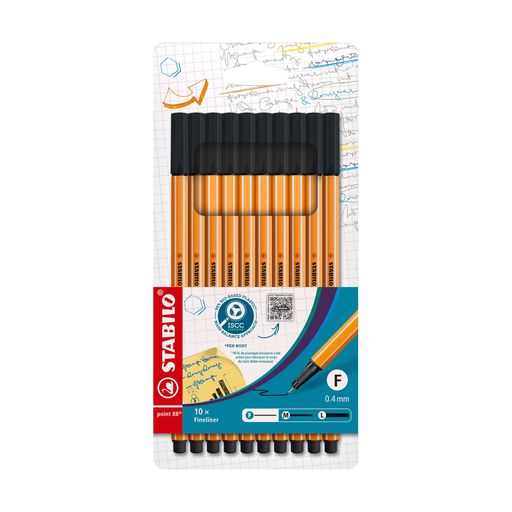
Why this choice suits this profile: The ten black 0.4 mm pens are ideal for first sketches, revision notes, diagrams and bullet journals, without needing to buy lots of different references.
The fine tip is reinforced with a metal sleeve, designed for use with a ruler and to reduce deformation from pressure.
0.4 mm line, water-based ink and a barrel made from 96% bio-based plastic, according to the product sheet.
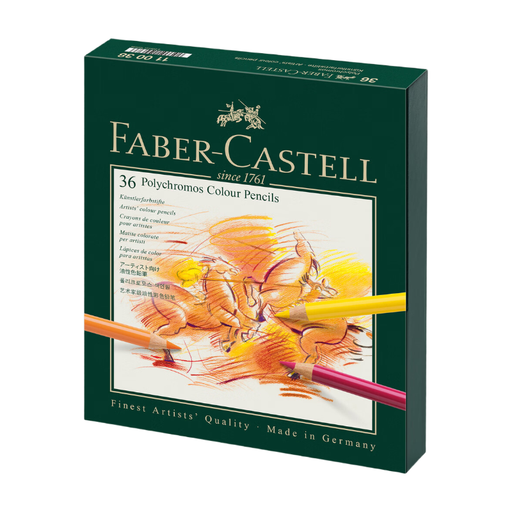
Why this choice suits this profile: This palette is aimed at those who create detailed illustrations, portraits or adult colouring with layered colour.
The 36 shades form a more structured range than a very large assortment, while the 3.8 mm core is suitable for layering.
Oil-based cores, pigments stated as lightfast by the manufacturer and a metal storage box.
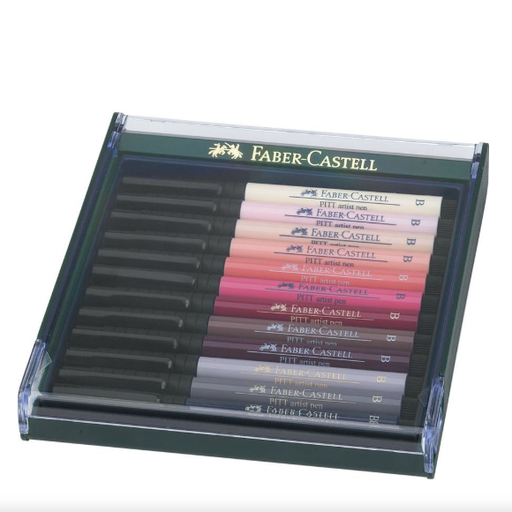
Why this choice suits this profile: The flexible tip responds to changes in pressure and is suitable for illustration, lettering, portraits and lines of varying thickness.
The flexible tip lets you vary your lines with a single tool, instead of buying several pens for each width.
Twelve portrait shades, brush tip and pigment ink stated as water-resistant after drying.
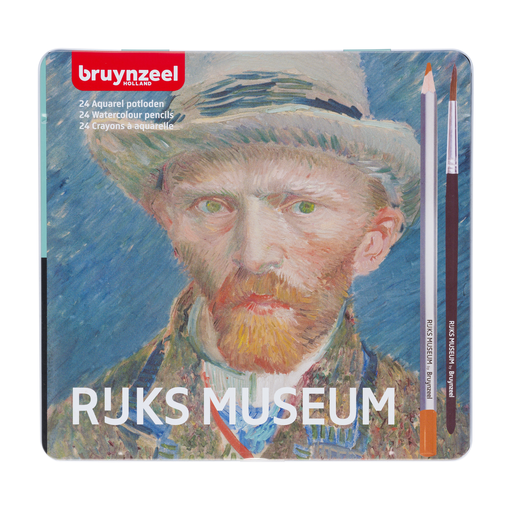
Why this choice suits this profile: This compact set lets you move from dry sketching to a watercolour effect, whether in the studio, in class or during an outdoor drawing session.
The included brush means you don’t need to buy an extra accessory to activate the pigments with water.
24 pencils, a brush and a metal box that’s easy to carry for drawing, watercolour and mixed media.
We’ve put together a comprehensive, real-time updated list of products that fully meet these strict selection criteria and European safety regulations.
To make your creative hobby supplies last longer:
A sketchbook, a few coloured pencils, a graphite pencil, an eraser and a set of fine-liner pens make a versatile starting kit. Add watercolour pencils if you want to experiment with washes without investing in a full palette straight away.
Choose a watercolour paper that’s thick enough, typically between 200 and 300 gsm. Acid-free paper absorbs water better and reduces buckling. Do a test if you plan to apply several wet layers.
Replace the cap firmly as soon as you’ve finished, keep them away from heat and direct light, and follow the storage position stated on the packaging. If you use them frequently, a closed case also protects the tips from dust.