
Livraison le jour même ou le lendemain

Qualité garantie

Débloquez vos offres de bienvenue: Livraison GRATUITE | Jusqu'à -80 % | 30 jours d'essai gratuits à JoyPlus
Téléchargez l'application
Watercolour pencils let you move from precise drawing to delicate wash effects with just a damp brush. This versatility appeals to art students, illustrators, watercolour enthusiasts and parents looking for easy-to-use creative materials. The trick is choosing a set that matches how you work.
Before you buy, it’s worth looking at the strength of the lead, the composition of the set and the storage solutions on offer. Here are the criteria to keep in mind to avoid any nasty surprises.
A box of 72 or 120 shades offers a wide choice of hues, but it’s not essential for beginners. A set of 12 or 24 pencils can be more than enough to learn gradients, blending and water activation. On the other hand, an illustrator used to portraits or landscapes will appreciate a richer palette that saves having to recreate certain shades for every drawing.
The number of pencils should match your practice, your storage space and your budget — not the promise of limitless creativity.
A water-soluble pencil should be usable dry, then transform when you touch it with a damp brush. Some ordinary coloured pencils can be slightly smudged, but they don’t offer the same finish or spread.
Read the product description carefully and look for mentions of water-soluble, watercolour or soluble in water.
A lead that breaks regularly increases pencil consumption and makes detailed work difficult. The type of box also deserves some attention: metal protects your materials effectively when you’re on the move, while a wooden set is better suited to studio use or as a smart presentation.
The strength of a lead depends on its formulation, its diameter and how it’s held in the wood. The Bruynzeel Expression set boasts a solid 2.9 mm lead, while some Faber-Castell Albrecht Dürer models feature a watercolour lead of 3.8 mm with SV reinforced bonding. These details matter if you draw with heavy pressure or regularly carry your set around.
A wider lead also lets you fill large areas quickly. However, it’s less practical for very fine details if it isn’t sharpened.
For watercolour pencils for beginners, 12 colours are usually enough to discover the basics without accumulating shades you rarely use. A set of 24 colours offers more possibilities for illustrations, travel sketchbooks and landscape studies. Formats of 48, 72 or 120 colours are aimed more at users who want to work on subtle transitions or find a precise shade straight away.
Also check whether a brush is included. The Bruynzeel sets of 24 pencils and some Faber-Castell ranges include this accessory, so you can try the wet technique without an extra purchase.
Thicker and more absorbent, watercolour paper limits warping when you add water. For a quick sketch, mixed-media paper can work. However, paper that’s too thin is likely to buckle after several wet passes.
After each use, let the brush and pencils dry before putting them away. Keep the set closed, away from moisture and direct sunlight. With children, follow the manufacturer’s recommendations: sharpened pencils and small parts are not suitable for children under 3.
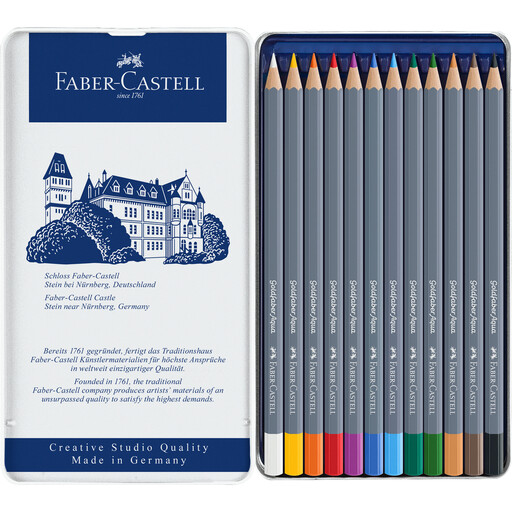
Why this choice suits this profile: Its 12-colour format is ideal for first attempts, classes and drawing on the go, without multiplying unused shades.
The limited palette stops you paying for lots of shades before you’ve mastered blending. The metal tin protects the pencils during travel.
12 watercolour pencils, water-soluble pigments, metal tin and use both dry and wet.
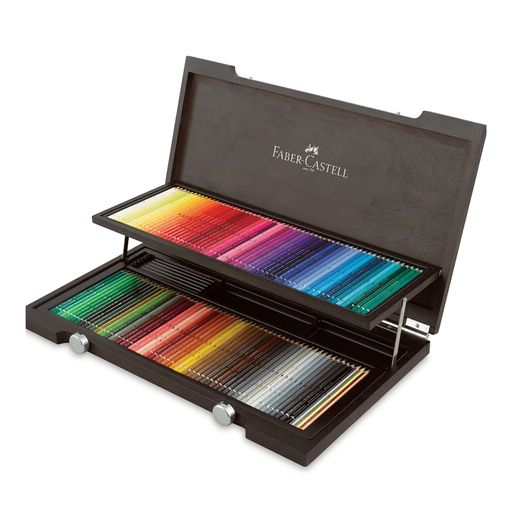
Why this choice suits this profile: Its extensive palette and wooden case are aimed at artists who work regularly in the studio and want durable storage.
The number of colours meets the needs of detailed work, while the compartmentalised storage stops pencils from getting scattered.
120 colours, 3.8 mm watercolour lead claimed to be break-resistant and a wooden case.
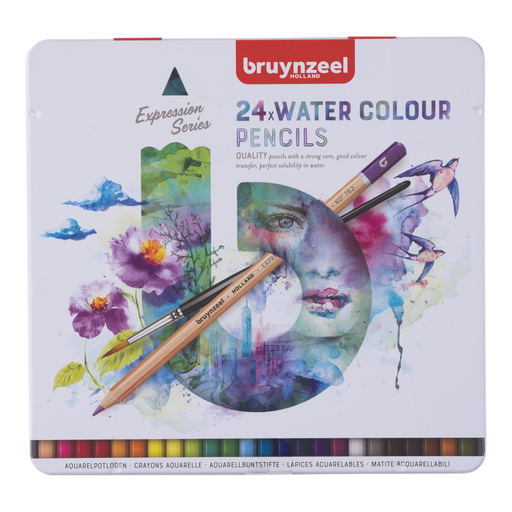
Why this choice suits this profile: This mid-range format works well for illustrations, landscapes and mixed projects that need a flexible palette.
The details about the solid 2.9 mm lead and water solubility let you check its compatibility with frequent use.
24 colours, brush included, 2.9 mm lead and a practical metal tin for storage.
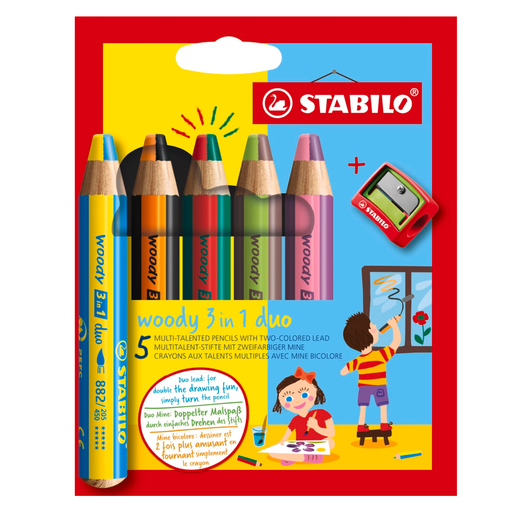
Why this choice suits this profile: Their chunky body and 10 mm lead are designed for little hands and varied creative activities.
The double-ended format and included sharpener mean you don’t need extra accessories for creative activities at home.
5 double-ended pencils, 10 colours, XXL 10 mm lead, water use and sharpener included.
We’ve put together a comprehensive, real-time updated selection of products that meet these demanding criteria and European safety standards.
Start by drawing on suitable paper, then run a slightly damp brush over the coloured area. Work gradually, using little water, to keep control over the spread. You can also wet the tip of the pencil directly to get a denser line. This method does require you to clean and dry the pencil thoroughly after use.
Their lifespan depends on how often you sharpen them, the pressure you apply and the storage conditions. A closed box kept in a dry place away from a heat source protects the wood and pigments. Avoid storing a still-wet brush or a damp pencil in a metal tin.
A set of 12 to 24 watercolour pencils is generally an excellent starting point. It lets you discover both dry and wet techniques, then add individual shades or move to a more complete set as your practice becomes more precise.