
Livraison le jour même ou le lendemain

Qualité garantie

Débloquez vos offres de bienvenue: Livraison GRATUITE | Jusqu'à -80 % | 30 jours d'essai gratuits à JoyPlus
Téléchargez l'application
Choosing an all-terrain electric bike is not simply a matter of looking for high power, long battery life and substantial suspension on a product page. In practice, a few details can make the difference between a great buy and a model that is completely unsuitable for your needs.
Before comparing an electric motocross bike, electric dirt bike or off-road electric bike, take the time to check the following points:
A 2,600 W or 3,500 W motor generally places the vehicle in a very different category from a pedal-assist electric bike designed for urban journeys. Dirt bike-style models are often intended for private land and dedicated tracks.
The YOZMA IN-10 and VIPCOO H3 are presented as vehicles intended for off-road use and not authorised for public roads. They must not be used on roads, pavements or cycle lanes without first checking the applicable regulations. In France, the vehicle category, speed, assistance system and approval status determine the requirements that must be met.
Battery life depends on the rider’s weight, terrain, temperature, tyre pressure, riding mode and battery condition. A 48 V, 23.4 Ah battery will not cover the same distance on a hilly trail as it will on flat ground at a steady speed.
Figures provided by manufacturers are therefore primarily useful for comparing configurations, rather than guaranteeing a specific distance. For longer rides, choose a removable battery or a charging solution that is compatible with your surroundings.
Some bikes are delivered partially assembled. Before first use, check that the handlebars, front wheel and footrests are securely tightened, and inspect the chain, brakes and battery. A quick check before every ride is still recommended, especially after using the bike on rough terrain.
A 48 V electric bike is a suitable basis for many all-terrain models, but voltage alone is not enough to assess endurance. Capacity, measured in ampere-hours, provides additional information: 23 Ah or 23.4 Ah, for example.
Also check:
The YOZMA IN-10 has a claimed removable 48 V, 23.4 Ah battery, with a range of between 56 and 85 km according to the product page, and an approximate charging time of 5 to 6 hours. These figures will, of course, depend on riding conditions.
On an electric bike with hydraulic suspension, check whether the suspension is fitted only to the front wheel or to both wheel assemblies. On uneven trails, rear suspension can improve comfort, but it also adds weight and requires more regular maintenance.
Wheel size affects both stability and manoeuvrability. The YOZMA IN-10 and VIPCOO H3 use 14-inch wheels at the front and 12-inch wheels at the rear. Puncture-resistant reinforced tyres or tyres with an all-terrain tread can help reduce incidents, but they do not remove the need to check tyre pressure and tread condition regularly.
An electric bike with disc brakes, particularly one equipped with hydraulic brakes, offers different control and braking power from a rim-brake system. Even so, the adjustment, pad wear and condition of the discs should be checked regularly.
Take the stated maximum load into account. The YOZMA IN-10 specifies a maximum load of 120 kg, while the ONESPORT OT08 lists 150 kg on its product page. This figure generally includes the rider and any equipment being carried.
On private trails and tracks, wear a suitable helmet, gloves, knee and elbow protection, goggles and closed-toe footwear. Riders aged 16 and over should also follow the age recommended by the manufacturer and gradually increase the power used, under adult supervision whenever the situation requires it.
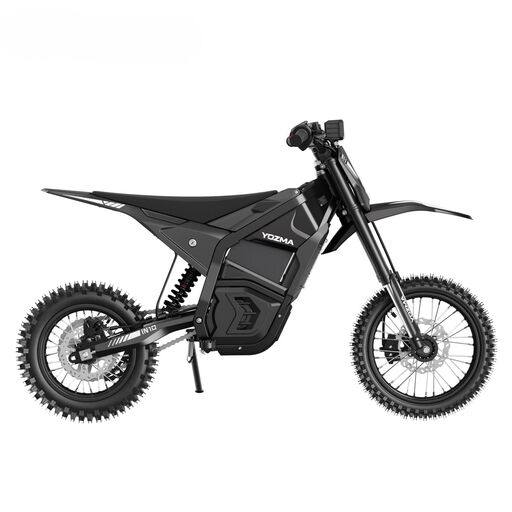
Why this choice suits this type of rider : Its compact design and three riding modes may suit anyone looking to get started on private land with clearly specified features.
The product page distinguishes off-road use from road use and specifies the range variations, required assembly and maximum load of 120 kg.
2,600 W brushless motor, removable 48 V, 23.4 Ah battery, independent suspension and hydraulic brakes.
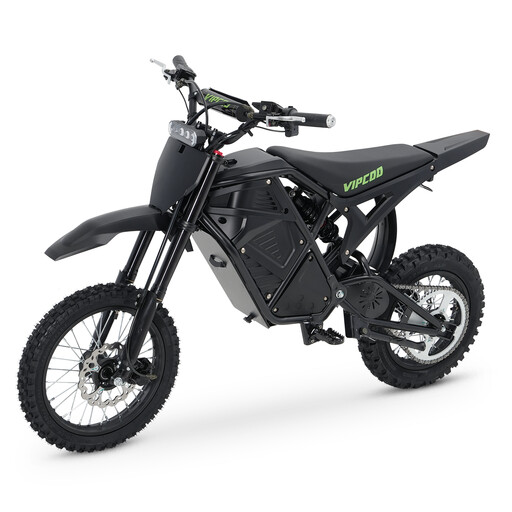
Why this choice suits this type of rider : This electric motocross bike is aimed at users looking for a claimed 3,500 W motor and full suspension for tackling demanding private terrain.
The product page clearly states that it is intended for private land or a dedicated track and reminds you that the vehicle is not approved for road use.
Motor rated at 3,500 W and 220 Nm, removable 48 V, 23 Ah battery, nitrogen front and rear suspension, and dual hydraulic disc brakes.
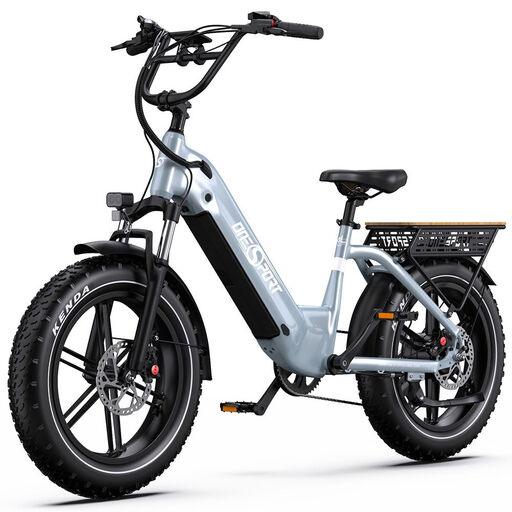
Why this choice suits this type of rider : Its 20-inch wheels and versatile design make it suitable for everyday journeys as well as trails and rides requiring a high load capacity.
The stated battery capacity of 864 Wh and range of up to 80 km provide useful reference points for planning journeys, without replacing real-world usage conditions.
Motor rated at 500 W, dual disc brakes, Shimano 7-speed transmission and a stated maximum load of 150 kg.
We have put together a complete, real-time updated selection of products that meet these strict criteria and European safety requirements.
A folding electric bike meets very different needs: storing it in a flat, transporting it by car or combining cycling with train travel. The LEMMO Zero Silver Carbon Folding E-Bike has a claimed 16-inch format, a range of 30 km and a maximum load of 120 kg. Its 159 Wh battery must be used with the supplied charger and stored away from moisture.
With its 20-inch wheels, front suspension fork and seven gears, the Oyama Skyline 500 folding bike is better suited to urban journeys and lightly uneven trails. Meanwhile, the adult road bike, the Hiland Alliance 700C, features an aluminium frame, 14 gears and 700C wheels, but its product page specifies that it is not designed for rough terrain.
Not necessarily. Dirt bike-style models and electric motocross bikes may be reserved for private land and dedicated tracks. Check the model’s technical specifications, followed by local regulations, before buying or riding it.
It depends entirely on the battery capacity and electricity tariff. To estimate the cost, multiply the energy used in kilowatt-hours by the price per kilowatt-hour. A 48 V, 23 Ah battery theoretically represents around 1.1 kWh, before taking charging losses into account.
This varies according to the quality of the cells, number of charge cycles, temperature, storage conditions and charging habits. Use the original charger, avoid extreme temperatures and never charge a damaged or unusually hot battery.