
Livraison le jour même ou le lendemain

Qualité garantie

Débloquez vos offres de bienvenue: Livraison GRATUITE | Jusqu'à -80 % | 30 jours d'essai gratuits à JoyPlus
Téléchargez l'application
An airtight glass jar is much more than a simple container. It's an essential ally for better food preservation, a more organized kitchen, and a more sustainable lifestyle. But with an overwhelming number of options making various promises, it's easy to make a mistake and end up with jars that don't hold up. To prevent a promising purchase from turning into a disappointment, it's best to know the common pitfalls to avoid before investing in a new set of glass jars.
Here are the key points to keep in mind to make an informed decision.
The "100% Airtight" Myth: Many lids, especially those made of wood or bamboo with a simple gasket, lose their seal after a few washes or over time. Air and moisture seep in, causing your cereal or cookies to lose their crunch. A reliable sealing mechanism is the foundation of true food preservation.
The Fragility of Standard Glass: Not all glass is created equal. A low-quality glass can crack from the slightest thermal shock, for instance, if you fill it with a still-hot preparation. This not only limits its use but also poses a real safety hazard in your kitchen.
Aesthetic but Impractical Design: An opening too narrow for a spoon, nearly impossible cleaning, and non-stackable shapes that waste space in your pantry... These design flaws, often hidden by a beautiful appearance, quickly make daily use a chore.
For pantry organization that is both practical and long-lasting, here are the three key points to check before you buy.
The type of lid determines the airtightness and dictates the jar's potential uses.
The type of glass directly impacts the durability and versatility of your glass food container.
Before buying a set of glass jars, carefully assess your needs. Do you need large containers for 1 kg of flour or pasta, or smaller ones for spices and seeds? Also, think about optimization: square or rectangular jars, if stackable, help maximize shelf space, unlike round jars.
We've selected a few models that check all the boxes for functionality and durability, designed to suit different needs.
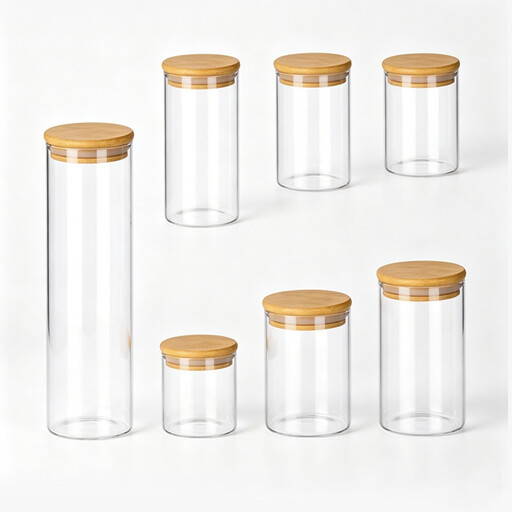
Why we chose it: This 7-piece set offers a full range of sizes (from 431 ml to 2178 ml), perfect for organizing an entire pantry—from spices and flour to bulk-purchased legumes.
Its wood-effect lid is equipped with a silicone seal that ensures a good airtight barrier, protecting dry foods from moisture, unlike low-end models that warp.
The wide variety of 7 sizes offers maximum versatility; a uniform and stackable design for optimized storage.
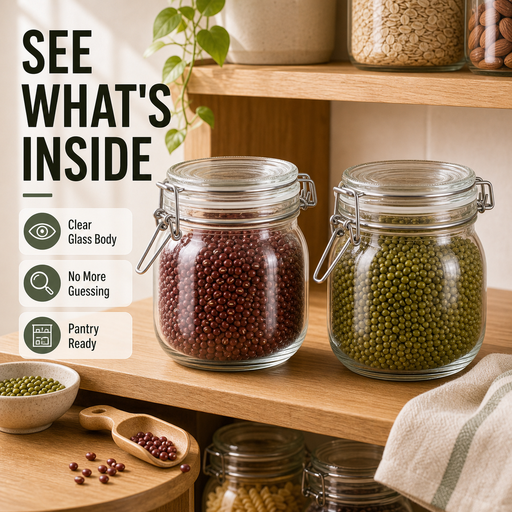
Why we chose it: This model is the perfect solution for those who demand maximum airtightness, whether for moisture-sensitive foods or homemade preparations (pickles, preserves, etc.).
Its stainless steel clip-top system, paired with a silicone gasket, creates mechanical pressure that guarantees a truly airtight and reliable seal over time—far superior to a simple press-on lid.
Borosilicate glass resistant to thermal shock; mechanical closure for a flawless seal.
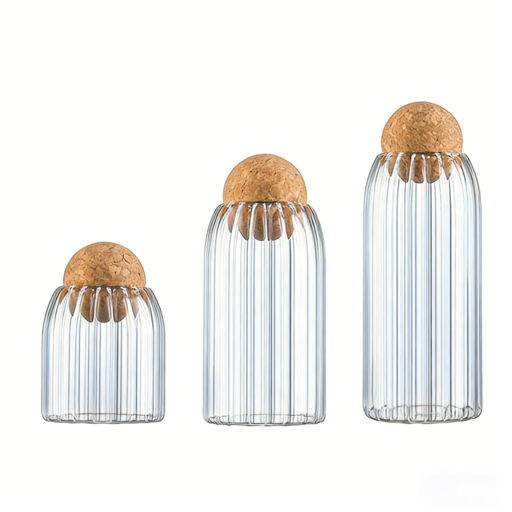
Why we chose it: This trio of jars with a clean, modern design fits perfectly into a contemporary kitchen. Their uniform size is ideal for harmonizing the storage of everyday items like sugar, coffee, or lentils.
Its simple design gets straight to the point, avoiding complex mechanisms that can break. The lid with a silicone seal provides an effective barrier for dry goods, without the false promises of some overly elaborate designs.
Sleek, stackable design; a set of 3 same-sized pieces for a very cohesive look on a shelf.
We have compiled a complete and up-to-date selection of products that meet our quality and safety criteria.
A good indicator is the presence of a quality gasket (silicone or rubber) and a system that applies pressure to the lid, like a clip or a sturdy screw thread. For dry foods, a good seal against air is sufficient. A simple trick to test it: close the empty jar and submerge it in water. If bubbles escape, the seal isn't perfect.
Most glass containers are dishwasher-safe, but caution is advised for the lids. Lids made of wood or bamboo must be hand-washed to prevent warping or damage. For lids with metal parts, thorough drying after washing is recommended to prevent rust. In all cases, consult the manufacturer's instructions.
Borosilicate glass contains boron, a component that makes it much more resistant to thermal shock (sudden temperature changes). This is a major advantage if you plan to store hot soups or move a container from the refrigerator to the microwave (provided the product is listed as microwave-safe). Regular (soda-lime) glass is much more sensitive and risks cracking under these conditions. This is a durability factor that should not be taken lightly.