
Livraison le jour même ou le lendemain

Qualité garantie

Débloquez vos offres de bienvenue: Livraison GRATUITE | Jusqu'à -80 % | 30 jours d'essai gratuits à JoyPlus
Téléchargez l'application
Children’s feet grow quickly, but inline skates may not be used every week: trips to the park, holidays, rides along a traffic-free route or their first practice sessions. Adjustable inline skates for children can help you avoid changing sizes so often, provided you look beyond claims of long-lasting use or colourful designs.
Before placing your order, three common pitfalls are worth avoiding:
The adjustable children’s inline skates in this selection use push-button adjustment, generally across four positions marked A-B-C-D. The process is simple: loosen the buckle and strap, press the button, then slide the front of the skate to the desired position.
The size printed on the box is not enough. Compare your child’s foot length with the range shown on the product page:
These measurements may vary from one reference to another. Measure both feet, use the length of the larger one and check that the adjustment holds the heel securely without squeezing the toes.
For recreational outings, 8-wheel PU inline skates are a common configuration. Several products in this selection use eight polyurethane wheels with a hardness of 82A, combined with ABEC-5 carbon steel bearings. This combination is described as suitable for smooth skating on prepared surfaces, but it will not eliminate the bumps caused by damaged or uneven ground.
Some models have a reinforced plastic frame, while the PW-132B-75 uses an aluminium alloy frame. The latter may suit children who skate regularly and want a little more support. However, you should also consider the weight, the comfort of the boot and the quality of the fastening. A more rigid frame is not necessarily the best choice for a beginner.
Other inline skates are fitted with PVC wheels and 608Z bearings. This configuration may be sufficient for occasional recreational use. The right choice will depend mainly on the type of surface, how often your child skates and their experience level.
Children’s inline skates should have a clearly identified brake that is securely attached. The models featured here include a wear-resistant stopper brake. Before every outing, check that it is firmly attached and that the frame screws are tight.
For comfort, look for a flexible boot, padded lining, hook-and-loop strap and safety buckle. The foot should not slide forwards, while the ankle should remain supported without any pressure points. Beginners should practise on a flat, clear surface away from traffic, under adult supervision.
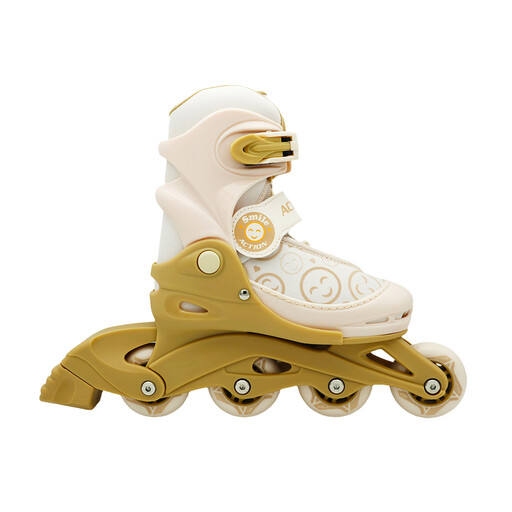
Why this choice suits this profile : This version covers the XS range from 26-29, with a flexible boot and four-position adjustment. It is suitable for first recreational outings, when allowing room for growing feet is a priority.
The length range is given in millimetres and the brake is included. This makes it easier to check compatibility before buying, rather than relying solely on the appearance.
8 PU 82A wheels, ABEC-5 bearings, safety buckle and hook-and-loop straps.

Why this choice suits this profile : Its aluminium alloy frame is designed for children who skate more regularly and want a boot with more structured support.
The frame material is clearly stated, as are the XS range of 27-30 and the inclusion of a brake.
Aluminium frame, 8 PU 82A wheels, ABEC-5 bearings and support strap.

Why this choice suits this profile : This kit includes the inline skates, a helmet, knee, elbow and wrist protection, as well as a carrying bag. It is a practical solution for families who want to buy all the essential starter equipment in a single order.
The parcel contents are clearly detailed: when buying a pair on its own, do not assume that protective gear is included.
Four-position adjustment, included brake, articulated protective gear and storage bag.
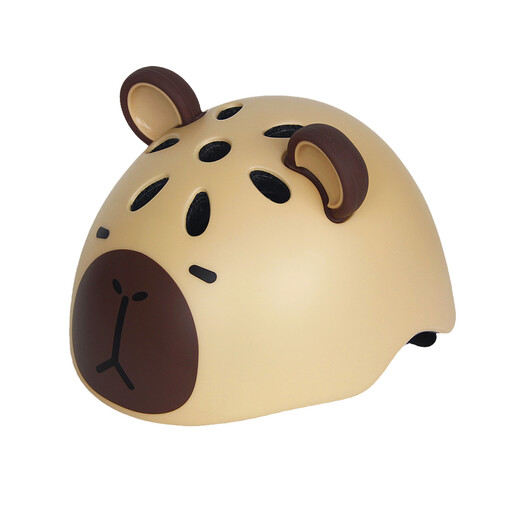
Why this choice suits this profile : This helmet can complement a pair of inline skates you already own and can also be used for cycling or riding a non-motorised scooter, thanks to its adjustable head circumference.
The product page mentions the EN1078 standard, seven ventilation openings and a quick-release buckle. However, always check that the helmet is correctly adjusted to your child’s head.
PC outer shell, EPS foam, adjustable head circumference and stated suitability for non-motorised wheeled sports.
We have compiled a complete, real-time updated list of products that fully meet these strict selection criteria and European safety regulations.
Before every session, check the buckle, straps, brake and frame screws. Wipe the wheels and bearings after skating on wet ground. Clean the flexible boots, linings and protective gear with a slightly damp cloth, then allow them to dry completely before storing them.
A children’s inline skating kit with helmet and protective gear should be used from the very first attempts: place the helmet flat on the head, and adjust the wrist guards, elbow pads and knee pads so they do not restrict movement. A helmet that has suffered a significant impact must be replaced, even if there are no visible cracks.
Measure the longest foot in millimetres, then compare this measurement with the range given for the model. The skate should hold the heel and ankle securely without squeezing the toes. Avoid choosing a significantly larger size in an attempt to extend its useful life.
They may suit a child who is new to inline skating if the model provides adequate support, a brake and a configuration suited to recreational use. The first sessions should be slow and take place on a flat surface, with an adult present and full protective equipment worn.
The lifespan depends on the condition of the equipment, how often it is used and any impacts it has sustained. Regularly inspect the straps, foam, shells and fasteners. After a significant impact, the helmet and any affected protective gear should be replaced in accordance with the manufacturer’s recommendations.