
Livraison le jour même ou le lendemain

Qualité garantie

Débloquez vos offres de bienvenue: Livraison GRATUITE | Jusqu'à -80 % | 30 jours d'essai gratuits à JoyPlus
Téléchargez l'application
An adhesive backsplash? On paper, it seems like the perfect solution for an easy, budget-friendly kitchen renovation. But the promise of a quick makeover can hide pitfalls that quickly turn into a nightmare. From tiles that peel off after a few weeks to a cheap, plastic finish or colours that yellow near your hob, disappointments are all too common.
Our mission? To help you cut through the noise. This guide breaks down the key factors to check before you buy, ensuring a result that’s as beautiful as it is durable.
The market is flooded with options, but they are far from being created equal. Here are the most common pitfalls and our advice on how to sidestep them.
To avoid these traps, focus on the three technical criteria that truly make a difference.
The material you choose determines both the realism and the lifespan of your backsplash.
This is a non-negotiable criterion for any kitchen or bathroom. Always check the manufacturer's technical specifications. For a peel-and-stick kitchen backsplash behind a hob, heat resistance is imperative. Reputable manufacturers will always state a safe distance to be maintained (typically 15 to 25 cm from the heat source). For an adhesive bathroom tile, ensure the product is certified "moisture-resistant," not just "washable." Note that most models are not waterproof and should not be submerged, for example, inside a shower.
The size of the tiles or panels plays a key role in both the final appearance and the ease of installation.
To help you choose, here are a few products that cater to different needs and budgets, all while meeting our quality standards.
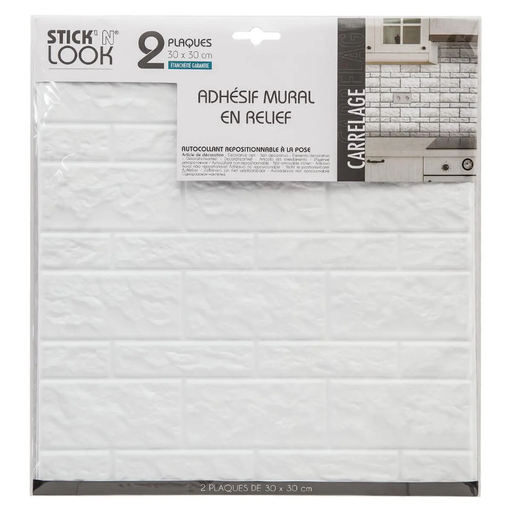
Why we chose it: Perfect for renters or for testing the waters on a small area (behind a hob, a toilet wall). This set allows you to modernise a small space at minimal cost.
Its PVC material, which is more robust than a simple vinyl sticker, ensures better adhesion and easy cleaning. It thus sidesteps the low-durability trap for moderate use.
Its 30x30 cm panel format and white stone-imitation pattern make it a clever solution for a clean, modern look without the hassle.
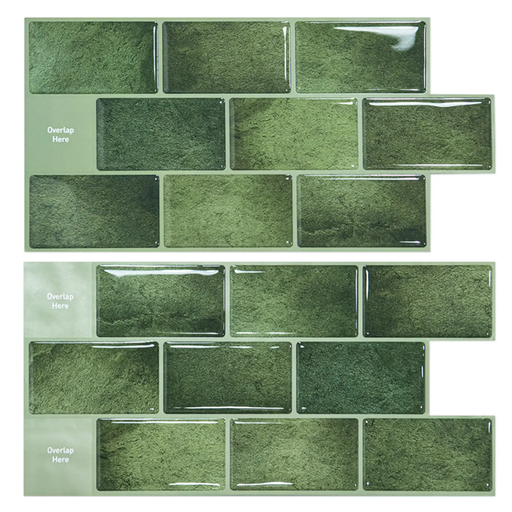
Why we chose it: Ideal for those looking to inject a splash of colour and a trendy "subway" style into their kitchen or bathroom. This green is perfect for creating a characterful accent wall.
This model tackles the flat "sticker" effect head-on with its 3D epoxy gel finish. The raised texture creates real depth and a stunningly realistic feel, mimicking a ceramic tile.
Its large 30x30 cm panels cover the surface quickly with minimal grout lines, creating a more uniform look and making installation incredibly simple.
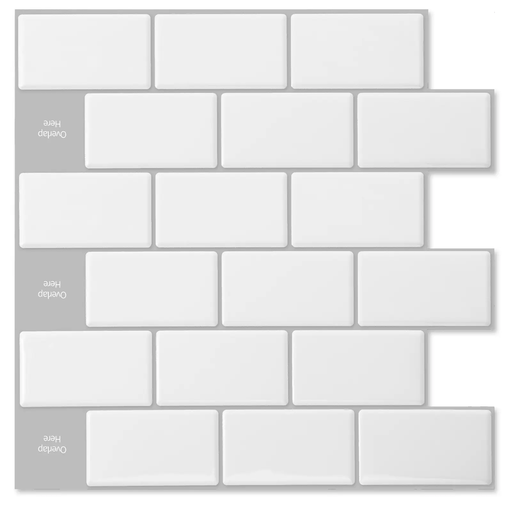
Why we chose it: For those undertaking a serious renovation and looking for a solution built to last. It's the peace-of-mind investment for high-use areas.
It counters adhesion and yellowing issues with a heavy-duty adhesive for a rock-solid bond and a gel formula that resists yellowing over time.
Its thicker design and high-density material give it superior durability and a pronounced 3D effect, for a visual finish that is almost indistinguishable from traditional tile.
Browse our full selection of products that meet our quality criteria and safety standards.
Yes, and that's one of this product's biggest advantages. The only condition is that the surface must be clean, dry, smooth, and non-porous. If your current tile has deep grout lines, applying a thin layer of filler to smooth the surface is a good idea to ensure perfect adhesion.
Its longevity depends primarily on the product's quality, the environment (humidity, heat), and the care taken during installation. An entry-level model in a low-exposure area might last 1 to 2 years. In contrast, a premium adhesive wall tile with 3D epoxy gel, when properly installed, can remain flawless for over 5 years.
Yes, for models specifically designed for this purpose, but there are rules to follow. It is crucial to check for a "heat-resistant" label and to respect the safety distance specified by the manufacturer (usually 15 to 25 cm), especially with gas hobs. For total peace of mind, adding a stainless steel or glass panel between the hob and the backsplash remains the best protection.