
Livraison le jour même ou le lendemain

Qualité garantie

Débloquez vos offres de bienvenue: Livraison GRATUITE | Jusqu'à -80 % | 30 jours d'essai gratuits à JoyPlus
Téléchargez l'application
Want to give your kitchen or bathroom a fresh new look without committing to a major renovation? The adhesive backsplash has emerged as the perfect solution: it's easy to install, budget-friendly, and ideal for modernising a wall, protecting the area behind a hob, or refreshing a bathroom. The only problem is that the market is a jungle where the best products sit alongside the worst. To help you see clearly, we've broken down the topic, identified the pitfalls to avoid, and listed the essential criteria to check before you buy.
The idea of an easy kitchen makeover is tempting, but it can quickly turn into a nightmare. Here are the most common disappointments:
To avoid these setbacks, there's no secret: you need to focus on a few key technical specifications.
The choice of material has a direct impact on the durability and aesthetics of your adhesive wall covering.
This is the crucial factor in a kitchen or bathroom. The golden rule: always check the manufacturer's specifications.
The format of the backsplash plays a key role in the ease of installation and the final look.
Because every project is different, here is our selection of products suited to various needs and budgets.
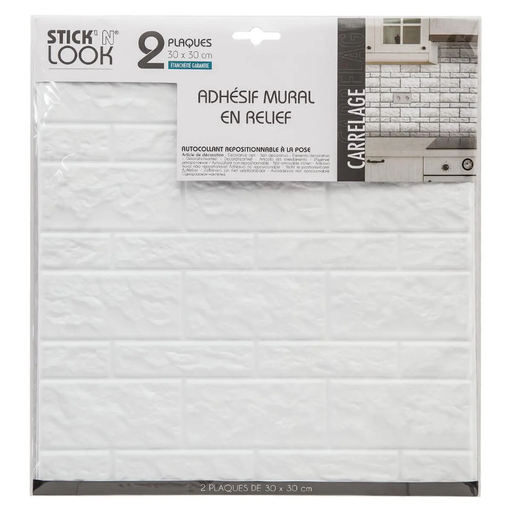
Why we love it: Ideal for getting some practice or refreshing a small area without breaking the bank. This set allows you to try your hand at applying decorative adhesives without a big investment, which is perfect for renters or those on a tight budget.
This product gets straight to the point. It avoids the "disappointing result" pitfall by opting for a classic, versatile white stone effect, without overselling a 3D realism it doesn't have.
Incredibly simple ("peel and stick") and a rock-bottom price to test the concept on a small area, like behind a sink or on stair risers.
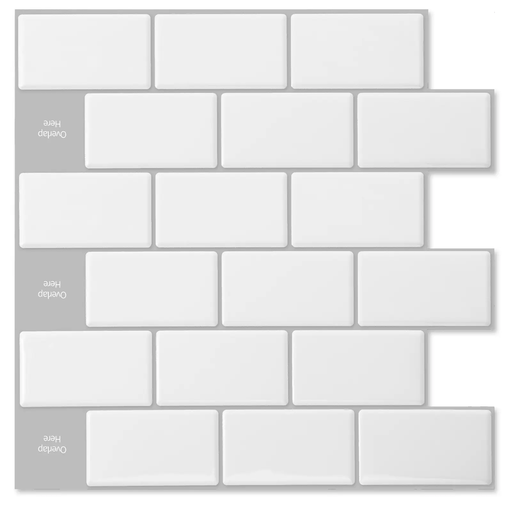
Why we love it: For those who want to make no compromises on the visual result. The "subway" style is a timeless classic, and the 3D gel texture provides stunning depth and realism, light-years away from simple flat stickers.
Its raised gel texture and thickness combat the dreaded "plasticky" effect. The manufacturer advertises an industrial-grade adhesive, a guarantee of better long-term durability.
A very convincing 3D effect that perfectly mimics the texture and shine of a real ceramic tile. It is heat-resistant and can be easily cut with a utility knife to fit around outlets and in corners.
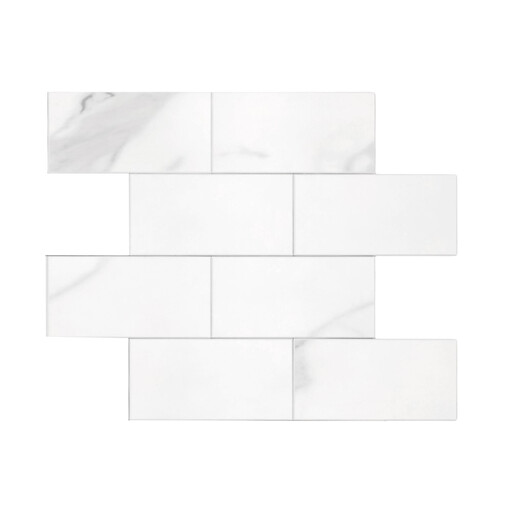
Why we love it: The solution for those who want to cover a large area or a wall that isn't perfectly smooth. A rigid panel is much more forgiving of surface imperfections and guarantees a uniform, sturdy, and ultra-easy-to-clean surface.
Its rigidity eliminates the risk of bubbles and premature peeling. Its smooth, non-porous surface is designed for quick maintenance, avoiding the pitfall of materials that mark or stain easily.
The perfect solution for covering old tiles without the grout lines showing through. It offers a clean, durable finish and greatly simplified installation over long distances.
Explore our complete selection of products that meet our quality criteria and safety standards.
1. Can you apply a peel and stick backsplash over existing tiles? Absolutely, that's one of its main advantages. The only condition is that the surface must be perfectly clean, dry, and degreased before application. If the grout lines of your old tiles are very deep, opt for a thick backsplash model or a rigid panel for a flawless result, without the old joints showing through.
2. How long does an adhesive backsplash last? Its lifespan depends on three factors: the quality of the product, the care taken during installation, and maintenance. A high-quality model, properly installed and cleaned with mild products, can last for several years without issue. Direct exposure to high heat or constant humidity remains its main enemy.
3. Is an adhesive backsplash heat-resistant behind a hob? Yes, but with important caveats. Most quality models can withstand the heat generated by ceramic or induction hobs, provided you maintain a safe distance of at least 10 to 15 cm. For gas hobs, however, the heat is too intense. It is therefore strongly advised not to install one directly behind them, unless the manufacturer explicitly authorises it. The rule of thumb: always read the product's technical sheet before buying.