
Livraison le jour même ou le lendemain

Qualité garantie

Débloquez vos offres de bienvenue: Livraison GRATUITE | Jusqu'à -80 % | 30 jours d'essai gratuits à JoyPlus
Téléchargez l'application
A simple wall hook can change everything, transforming a cluttered space into an organised interior. But the quest for the perfect hook is often a daunting task: adhesives that rip off paint, suction cups that fall in the middle of the night, or models that bend under the weight of a single coat. As a Product Specialist at Joybuy, my mission is to guide you through the jungle of options to find THE solution that fits your needs, while avoiding the marketing traps.
Before you choose, it's crucial to know how to spot the promises that often lead to disappointment.
For a successful purchase, focus on these three technical parameters that make all the difference in performance and durability.
The choice of mounting depends on your wall type, your status (renter or owner), and the object to be hung.
The maximum capacity indicated (e.g., 2 kg, 5 kg) measures a static load. To avoid unpleasant surprises, apply a common-sense rule: aim for a capacity at least double the weight of the object you plan to hang. This gives you a safety margin for dynamic loads (like when you grab your bag in a hurry in the morning).
In a bathroom or kitchen, humidity is public enemy number one. For a towel hook or a utensil holder, opt for rustproof materials:
These materials ensure that your hook will maintain its appearance and strength over time, even in a humid environment.
Every storage situation is unique. Here are some options that caught our attention for their smart design and reliability.
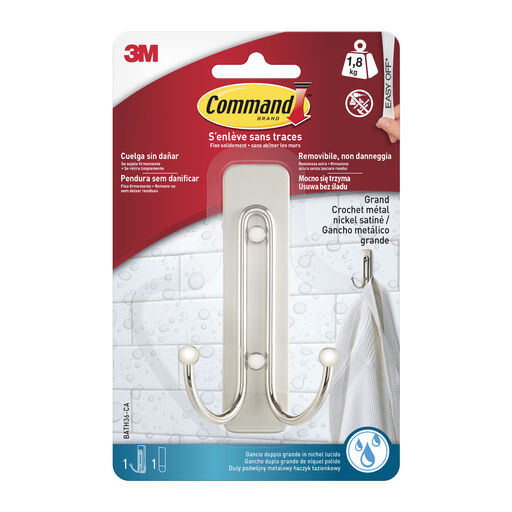
Why we chose it: It's the dream solution for those who can't (or don't want to) drill. Its adhesive technology is specifically designed for clean removal, which preserves the integrity of your walls... and your security deposit. Its water resistance makes it a top choice for the bathroom.
Unlike low-end adhesives, its stretch-release tab ensures clean removal without tearing paint or leaving sticky residue. The 1.8 kg capacity is realistic and proven for towels or a bathrobe.
Tool-free installation, damage-free removal. Water and rust-resistant, it's designed for humid rooms.
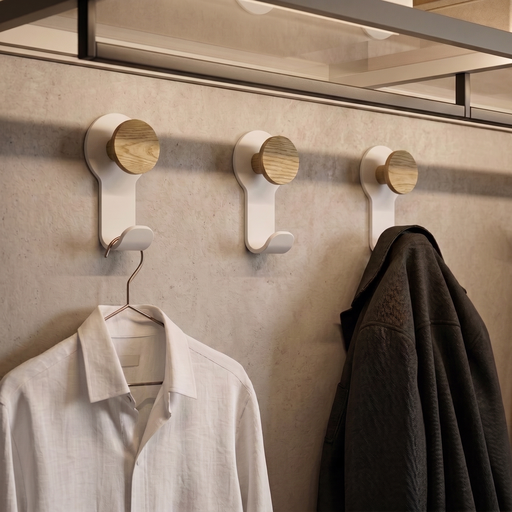
Why we chose it: For those looking for something solid, durable, and permanent. Perfect for an entryway, this screw-in system is designed to support heavy coats, backpacks, and other bulky items without ever budging.
No adhesive here, just a foolproof mechanical fastening. The 5 kg load capacity per hook is realistic for intensive daily use, a far cry from the fanciful promises of some heavy-duty adhesives.
Maximum strength and durability thanks to the aluminium alloy and screw-in mounting. The dual-hook design optimises storage space.
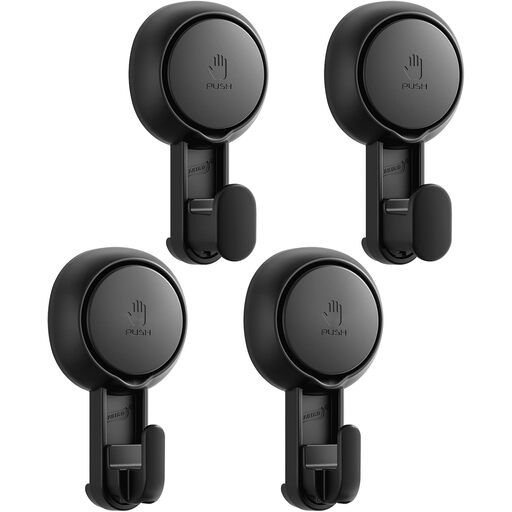
Why we chose it: The perfect solution for a powerful yet reversible hold on surfaces like tile or glass. This suction cup hook installs in a second and can be moved at will, with no tools or damage. Its 360° rotation gives it unique versatility.
It overcomes the main flaw of classic suction cups (loss of suction) with a patented technology that maintains constant pressure. The audible "pop" during installation confirms that the hold is optimal.
An impressive load capacity for a suction cup (up to 5 kg). Instant installation and removal at will, without leaving a single trace. Water and oil resistant.
We have curated a full range of products that meet our selection criteria and safety standards.
For models with a stretch-release tab (like those from the Command brand), simply pull the tab very slowly downwards, keeping it parallel to the wall. The adhesive will stretch and release without leaving a trace. For others, gently heat the area with a hairdryer to soften the glue. Then, slide dental floss or an old loyalty card between the hook and the wall to pry it off gently.
Absolutely not. A suction cup hook requires a perfectly smooth, non-porous, and airtight surface to create the vacuum that ensures its hold. A painted wall, even if it looks smooth, is always slightly porous and textured, which prevents the suction cup from adhering. Reserve them for glossy tile, glass, mirrors, or smooth metal.
A wall rack (or a wall-mounted coat rack) is most often a board or bar on which several hooks are fixed. It serves as a central storage point, usually in an entryway, and is almost always mounted with screws to support heavy loads. The single wall hook, on the other hand, is more versatile. It's used alone for a specific need, anywhere in the house, with a wider variety of mounting options.