People planning everyday snacks
If you’re planning regular snacks for a group of children, the first thing to consider is putting together a varied snack rather than making sweets the main feature. That’s the guidance from Manger Bouger.


For everyday nursery snacks, it’s best not to make sweets a staple. Manger Bouger recommends limiting sugary foods for children and offering a varied snack. If the nursery allows sweets for a one-off occasion, mini packs make it easier to hand out one to each child, while a sharing box requires an adult to organise the portions. Either way, check the ingredients, any ‘may contain’ warnings and the nursery’s guidance before buying.
If you’re planning regular snacks for a group of children, the first thing to consider is putting together a varied snack rather than making sweets the main feature. That’s the guidance from Manger Bouger.
If the nursery allows sweets to be handed out, you’ll need a format that you can count and serve in an organised way. E.Leclerc stocks an assortment of mini packs, while Haribo describes its Happy Box as a sharing box.
If anyone in the group has dietary restrictions, check each product before handing it out. Product information may list gelatine or warn that the product may contain traces of wheat or milk.
First, decide whether the snack is for everyday or occasional use. If the nursery allows sweets, the packaging, ingredients and quantity you need will help you choose.
| What to consider | What to check | Who this matters to |
|---|---|---|
| Everyday snacks | Distinguish between an everyday snack and a one-off occasion. Manger Bouger recommends limiting sugary foods for children. | If I’m preparing snacks every day, I want to avoid sweets replacing a varied snack. Around 40% of consumers put this concern first. |
| How they’re handed out | Check whether the sweets are already divided into individual packs or whether an adult will need to serve them from a box. Also check that the nursery allows them. | For an approved party, I need to know how to serve each child without leaving a box out for everyone to help themselves. This is the priority for around 30% of consumers. |
| Ingredients and traces | Read the ingredients list and any ‘may contain’ warnings for the exact product. Don’t assume what it contains based on the brand or its appearance. | If anyone in the group has dietary restrictions, I want to check for gelatine and any ‘may contain’ warnings before bringing in the sweets. Around 20% of consumers check this before considering the format. |
| Pack size | Compare the pack contents with the number of children, and follow the storage instructions if there are any sweets left over. | For a one-off occasion, I’d rather choose an appropriate quantity than automatically go for a large box. Around 10% of consumers prioritise this. |
According to Santé publique France, displaying the Nutri-Score is voluntary. The absence of the logo alone doesn’t tell you whether a sweet complies with regulations or what it contains.
If the logo is displayed, use it as additional information. Also check the nutrition declaration and ingredients list for the product in question.
Haribo describes the Happy Box as an assortment to share, not as a set portion for each child. An adult will therefore need to organise how the sweets are served.
Agree the number of children and how the sweets will be handed out with the nursery. If each child needs a separate pack, check that the chosen product actually contains individual packs.
Recipes vary from one product to another. Haribo warns that its Smurfs may contain traces of wheat and milk; Auchan’s product information for Lutti Bubblizz Balls lists gelatine and acidity regulators, among other ingredients.
Read the label on the pack you buy and follow the nursery’s guidance before handing out any sweets.
Manger Bouger recommends limiting sugary foods for children and offering a varied snack every day.
Save any sweets for a one-off occasion approved by the nursery, and put together everyday snacks differently.
Haribo presents its Happy Box as a sharing box containing a selection of different products.
The brand offers a range of gummy sweets, with recipes that vary from one product to another.
E.Leclerc lists a 500 g assortment of mini packs in this range.
For an approved one-off occasion, this assortment of individually shaped sweets may be worth considering if you want to count them before serving. Don’t assume that each sweet is individually wrapped.
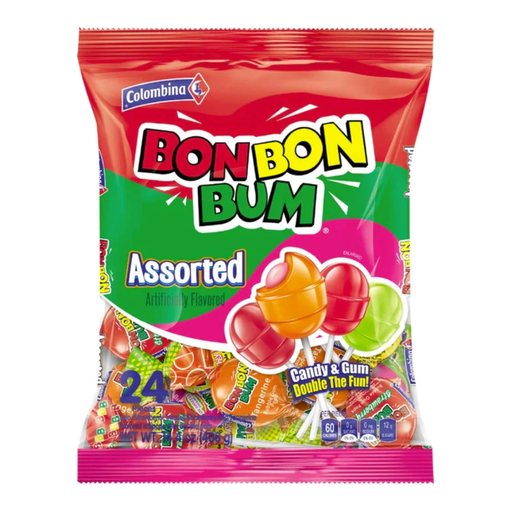 Image unavailable
The 24 fruit-flavoured sweets make it easier to prepare a counted distribution for an occasion approved by the nursery. Before buying, check the packaging for ingredients, any ‘may contain’ warnings, how each sweet is wrapped and whether the product is suitable for the children’s ages.
No. According to Santé publique France, producers can choose whether to display the Nutri-Score. If it isn’t shown, you should still check the product’s nutrition information and ingredients.
For children’s everyday snacks, Manger Bouger recommends limiting sugary foods and offering a variety of options instead. Consider sweets for a one-off occasion only, and only if the nursery allows them.
Mini packs are suitable when each child needs their own separate pack, provided you check what’s inside and follow the nursery’s rules. A box such as the Haribo Happy Box requires an adult to decide the portions and serve them.
Check that the nursery agrees, consider the children’s ages, then read the ingredients and any ‘may contain’ warnings on the exact pack. Information can vary between products, even within the same brand. Also follow any guidance provided for the group.