
Livraison le jour même ou le lendemain

Qualité garantie

Débloquez vos offres de bienvenue: Livraison GRATUITE | Jusqu'à -80 % | 30 jours d'essai gratuits à JoyPlus
Téléchargez l'application
Is clutter taking over and space running out?? A storage shelf is the perfect solution. But be careful—an impulse buy often leads to disappointment: a shelf that buckles under the weight, materials that wear out prematurely, or a unit that's simply wrong for your needs. To help you avoid this letdown, we've broken down the pitfalls to avoid and the essential criteria to check before you buy.
An attractive design or a rock-bottom price can hide critical flaws. Here are the key points to never overlook to avoid making a poor choice.
To choose the right storage unit, you need to focus on a few technical specifications that determine its performance and lifespan.
Robustness is the non-negotiable criterion, especially for a garage shelf or a model intended for storing heavy items. Always check the maximum load per shelf. This figure is much more telling for real-world use than the total load. For a heavy-duty shelf, aim for at least 150?kg per level. This is a solid baseline. Also, remember to distribute the weight properly: the heaviest objects should always be placed on the bottom shelves to maximize stability.
The choice of material depends directly on the use and location of your future shelf.
Optimizing your space comes down to choosing the right format.
We have analyzed several models for different user profiles, ensuring they meet our criteria for durability and safety.
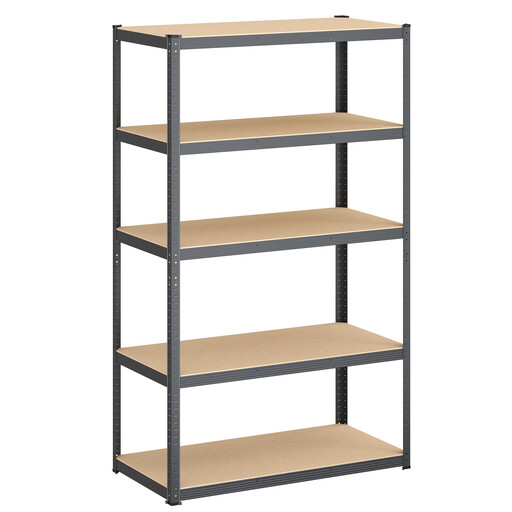
Why we chose it : This shelf is built for demanding environments like a garage or workshop. Its steel frame and high load capacity are perfect for storing tools, gardening equipment, or heavy archive boxes.
It avoids the overstated load capacity pitfall with a true capacity of 150 kg per shelf and the instability pitfall thanks to its included anti-tip kit.
Its modular structure can be assembled as one tall shelving unit or converted into two separate workbenches, offering maximum flexibility.
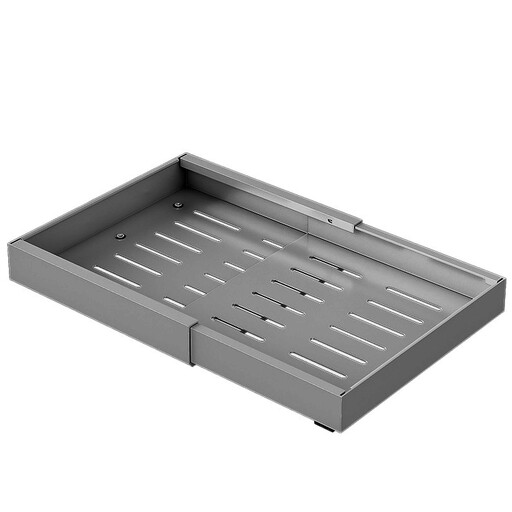
Why we chose it : This clever solution transforms a standard kitchen cabinet into an accessible and perfectly organized slide-out storage space. Ideal for renters or anyone who doesn't want to drill into their furniture, it makes it easy to access pots, spices, or cleaning supplies.
It avoids the unsuitable materials pitfall with its carbon steel structure with an enamel finish, which resists rust and kitchen humidity. Its no-drill installation keeps furniture intact.
Its extendable design (from 32 to 52 cm) fits most cabinets, and its sliding rails ensure easy, quiet access to all its contents.
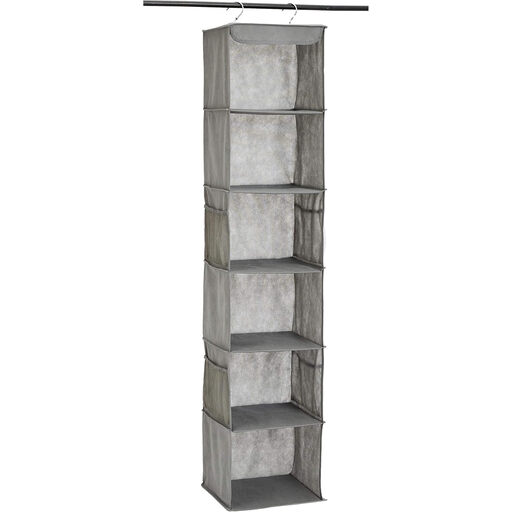
Why we chose it : This hanging organizer is the simplest and most effective solution for utilizing the vertical space in a closet. It allows you to store sweaters, t-shirts, and accessories, or can even serve as a makeshift shoe rack, all without taking up any floor space.
Designed for light-duty closet use, it avoids the unsuitable materials pitfall. Its reinforced fabric structure is made to support the weight of folded clothes, not heavy or sharp objects.
Instant, tool-free installation and a foldable design. The side pockets add clever storage for small accessories.
We've curated a complete selection of products that meet our selection criteria and current safety standards.
There are three points to check. First, strictly adhere to the load capacity per shelf indicated by the manufacturer. Second, distribute the weight by always placing the heaviest items on the lower levels. Finally, for any tall shelf, it is imperative to secure it to the wall with the provided anti-tip kit.
A metal shelf (steel) is much more resistant to moisture (if treated) and impacts, and it can support much heavier loads. It is the preferred choice for a garage or workshop. An MDF shelf, while cheaper, is very sensitive to moisture: it is likely to swell and warp, losing all its load-bearing capacity. It should therefore be reserved exclusively for dry rooms.
Absolutely not. The stability of the installation depends entirely on the type of wall. A load-bearing wall made of concrete or solid brick will provide a very sturdy anchor. For a plasterboard (drywall) partition, it is essential to use specific anchors (like Molly bolts) and to carefully check the maximum weight supported by the fastening. Attaching heavy loads to it is strongly discouraged.