
Livraison le jour même ou le lendemain

Qualité garantie

Débloquez vos offres de bienvenue: Livraison GRATUITE | Jusqu'à -80 % | 30 jours d'essai gratuits à JoyPlus
Téléchargez l'application
A cluttered cupboard, sliding lids and pans stacked on top of one another waste precious time every day. An expandable kitchen storage organiser can make accessing your cookware much easier, provided you check a few points before placing your order.
The stated dimensions, the number of dividers or simply the word "sturdy" are not always enough. Here are the main pitfalls to avoid and the criteria to examine when choosing a pan lid organiser, a kitchen shelf or a storage solution for pans that is genuinely suited to your space.
A telescopic model may seem very versatile, but its adjustment range must match the actual width of your cabinet. Measure the available space in several places: the sides of a cupboard are not always perfectly parallel.
Also consider the depth and height. A lid holder that is too deep can prevent the door from closing, while a shelf that is too tall may render the shelf above unusable.
Adjustable dividers allow you to create compartments for lids, chopping boards or baking trays. However, if they are too thin, poorly secured or lack protection, they can shift as soon as you remove an item.
A U-shaped groove, non-slip feet and a correctly adjusted fixing system help keep items upright. These features are far more telling than a vague promise of "universal" storage.
In a kitchen, storage can be exposed to steam, water splashes and grease residue. So check the frame material as well as the care recommendations.
Stainless steel, particularly 304 stainless steel, offers a surface suitable for regular cleaning with a damp cloth. A painted iron frame can also work, but avoid letting moisture linger and keep an eye on the condition of the coating over time.
For an expandable organiser, check the following three measurements:
The SRD 0175 adjusts from 12 to 23 inches, which is approximately 30.5 to 58.4 cm. This range can suit different cupboards, drawers or storage spaces on a worktop, provided you check the exact dimensions of your kitchen.
The number of compartments should match the composition of your cookware. If your lids are different sizes, opt for movable dividers rather than fixed spacing.
A storage solution for pans and lids can also accommodate chopping boards, baking trays or various accessories. However, before placing heavy utensils in it, check the stability of the support and the flatness of the floor or shelf.
Non-slip rubber feet limit movement and prevent direct contact with the surface. They are particularly welcome on a smooth worktop or in a drawer that is opened several times a day.
For maintenance, a slightly damp cloth is usually sufficient. Then dry the structure and avoid abrasive products, which can dull a black finish or scratch the dividers.
The following products meet different requirements. Compare their size, structure and intended use with the real constraints of your kitchen.
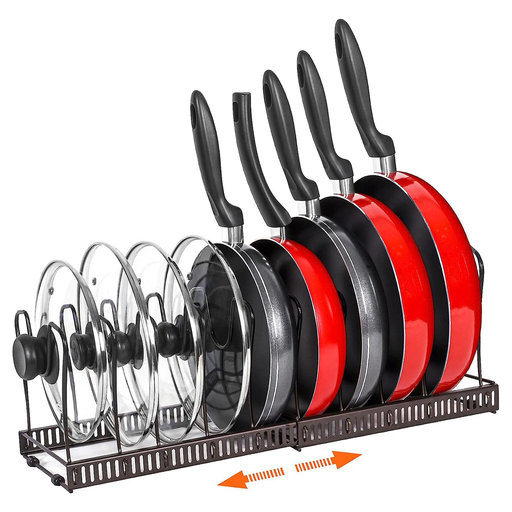
Why this choice suits this profile: Its tool-free installation and adjustment from 12 to 23 inches make it a simple solution for organising a first cupboard, drawer or worktop.
The 10 adjustable dividers per support prevent you from being stuck with fixed spacing. The non-slip feet limit movement when you remove a lid.
A 304 stainless steel structure, 20 dividers in total for the pack of two, and a tool-free design.
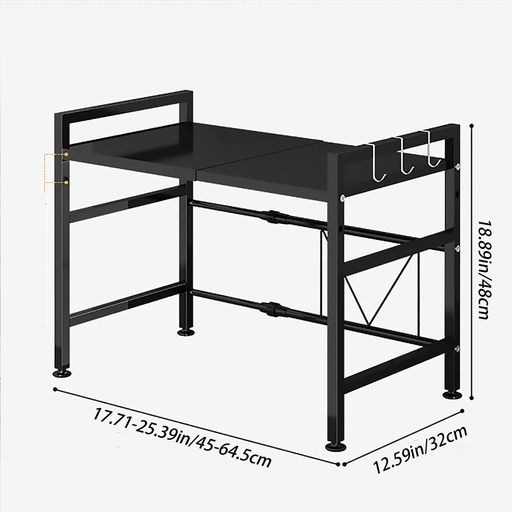
Why this choice suits this profile: Its eight adjustable levels allow you to create vertical organisation in a kitchen where every centimetre of worktop counts.
The three installation options prevent you from being dependent on a single cupboard or countertop format. The U-shaped grooves and silicone pads help keep lids in place.
A sturdy iron frame with a black sprayed finish, eight adjustable levels and assembly using the supplied parts.
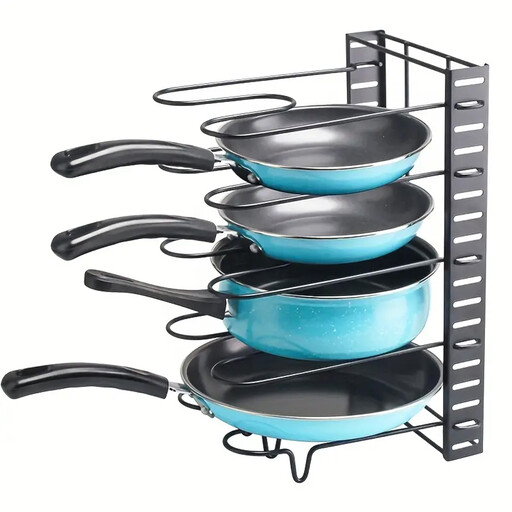
Why this choice suits this profile: Its eight-tier format suits kitchens that need to group several categories of utensils in a single area.
The multi-level organisation prevents stacking pans and accessories. However, measure the space before ordering to keep easy access to each level.
An eight-tier configuration and a structure stated with a thickness of 4.5 mm.
Before placing your cupboard organiser, empty the area and clean the surface. Then follow these few steps:
Avoid exceeding the capacity stated by the manufacturer. Cleaning with a damp cloth, followed by thorough drying, helps limit marks and the build-up of residue.
We have compiled a comprehensive, real-time updated list of products that fully meet these strict selection criteria and European safety regulations.
Most models are placed directly on a flat surface. First adjust the length, insert the dividers in the desired positions, then check the stability before storing lids and pans.
The depth depends on the diameter of the largest lid and the space available behind the cupboard door. Allow enough margin to be able to grasp each item without rubbing it against the sides or neighbouring items.
The lifespan depends on the material, the weight placed on the support, the frequency of use and exposure to moisture. A reasonable load, a stable surface and regular maintenance help preserve the frame, dividers and non-slip feet.