
Livraison le jour même ou le lendemain

Qualité garantie

Débloquez vos offres de bienvenue: Livraison GRATUITE | Jusqu'à -80 % | 30 jours d'essai gratuits à JoyPlus
Téléchargez l'application
Who hasn't dreamed of a perfectly organized home? Yet, the quest for the ideal house is often fraught with pitfalls, starting with choosing the right storage box. An impulse buy can quickly turn into a headache: boxes that sag, lids that warp, or dimensions that are completely unsuitable. To avoid buyer's remorse, it's crucial to know the most common mistakes and make an informed, long-lasting choice.
As a product expert at Joybuy, my mission is to help you find clarity and choose the solution that truly meets your needs, cutting through the marketing hype.
Here are the 3 mistakes to avoid:
To avoid these disappointments, a few technical points are essential. They are the guarantee of a reliable and long-lasting organization solution.
The term "plastic" covers a wide range of realities. For a storage box, polypropylene (PP) is the material of choice. It's known for its impact resistance, flexibility, and durability. Higher-quality models go a step further by indicating a 2.5 mm thickness or the presence of reinforcement ribs—true signs of sturdiness. For shoe boxes where visibility is key, a polystyrene (PS) door will ensure perfect transparency.
A good stackable box is more than just a flat lid. The best-performing models integrate grooves on the lid that interlock with the base of the box above. This locking system prevents any sliding. Combined with strong closing clips, it allows you to create a stable and secure storage column—a game-changer for optimizing closet organization or a small apartment.
The number one rule before any purchase: measure your destination space (height, width, depth of your shelves) and estimate the volume of the items to be stored.
Every organization project is unique. Here is a selection of products suited for specific user profiles, keeping in mind the quality criteria we've just discussed.
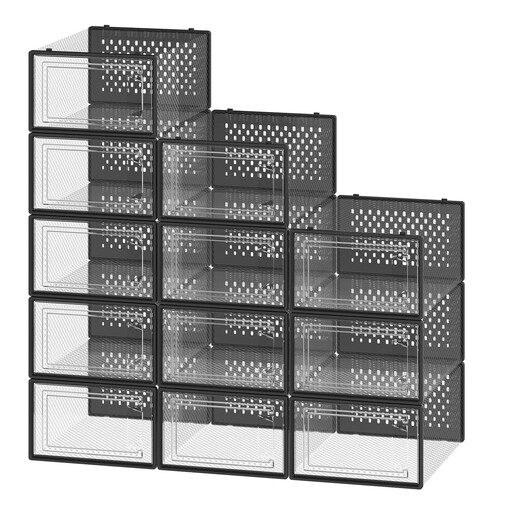
The Profile: Perfect for displaying and protecting your collection. The transparent front door lets you pick the right pair at a glance, without having to unstack anything. Integrated vents ensure good air circulation.
The structure is designed for stable stacking, with no risk of sagging. Its dimensions are suitable for most sneakers, avoiding the "too-small-box" trap.
The front access and immediate visibility. Its modular design allows you to expand your storage as your collection grows.
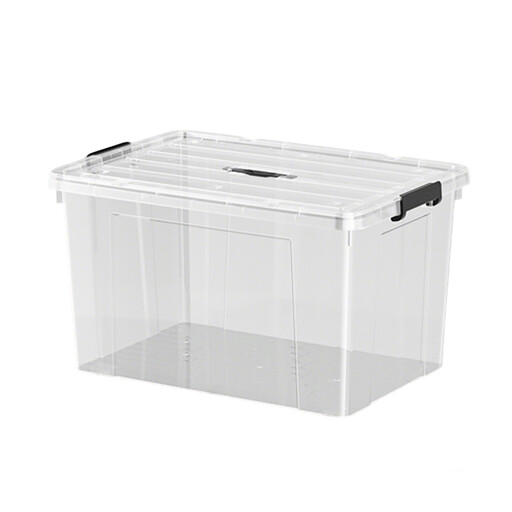
The Profile: Ideal for kids' toys, off-season clothing, or household linens. Its large capacity and transparency let you see the contents at a glance, while its sturdiness stands up to daily use.
The 2.5 mm thickened plastic and reinforcement ribs prevent any deformation under weight. The clip-on lid effectively protects against dust.
Its large capacity and reinforced structure, designed to support heavy loads. The integrated handles make it easy to carry.
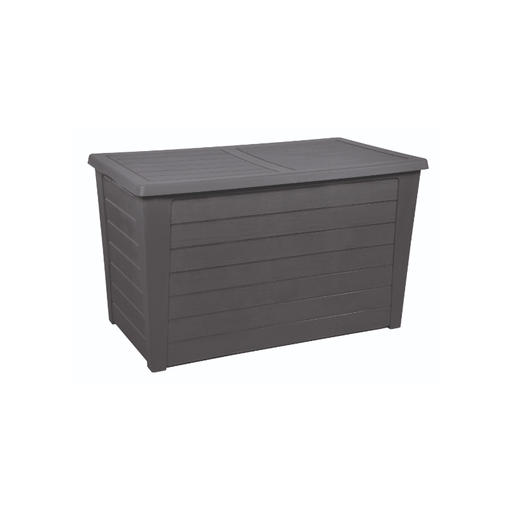
The Profile: The solution for storing gardening equipment, patio cushions, or garage tools. Its large 250L volume and wood-effect design allow it to blend into any outdoor setting.
Unlike an indoor box that would degrade in a few months, this chest is designed for the outdoors: UV treatment and a waterproof design protect it from the elements.
Its very large volume (250L) and weather resistance. A bonus: it's made in France from recyclable materials.
For professional use, very heavy loads, or special requirements, our selection of storage bins meets the strictest specifications for durability and safety.
Check three key points: the material (choose polypropylene, or PP), the structure (look for reinforcement ribs), and always respect the maximum load capacity indicated by the manufacturer, especially if you are stacking them.
Only if it is sold as an outdoor storage chest. These models are the only ones that are UV-treated (which prevents the plastic from becoming brittle) and have a design that guarantees they are fully waterproof. A standard indoor box will not last more than one season outside.
Opt for models designed for stacking, with lids and bases that interlock perfectly. The golden rule: always place the heaviest boxes at the bottom of the stack for maximum stability. Finally, make sure the floor is completely level.