
Livraison le jour même ou le lendemain

Qualité garantie

Débloquez vos offres de bienvenue: Livraison GRATUITE | Jusqu'à -80 % | 30 jours d'essai gratuits à JoyPlus
Téléchargez l'application
By Joybuy Product Recommendation Officer, August 27, 2026
A lack of space is a problem we all know too well. Between seasonal clothes, bulky duvets, and household linens, our closets and wardrobes quickly overflow. The storage bag then emerges as the perfect solution. However, a poor choice can quickly turn into a wasted purchase: a zipper that breaks on the first use, a vacuum bag that reinflates in a few days, or a box that collapses pathetically under the bed.
Before you invest, it's best to know the pitfalls to avoid. A poorly designed storage bag will only worsen the chaos instead of simplifying your life. Let's identify the key points to watch out for to make an informed choice.
To make the right choice, focus on a few objective technical features. These are what determine the durability and effectiveness of your storage solution.
The choice of material directly impacts the protection of your belongings and the longevity of the bag.
A good storage bag is a well-sealed one. This is what protects your duvets and clothes from dust, insects, and moisture.
The shape of the bag should match where you plan to store it.
Rather than a simple list, here are solutions that meet specific needs, validated against our quality and practicality criteria.
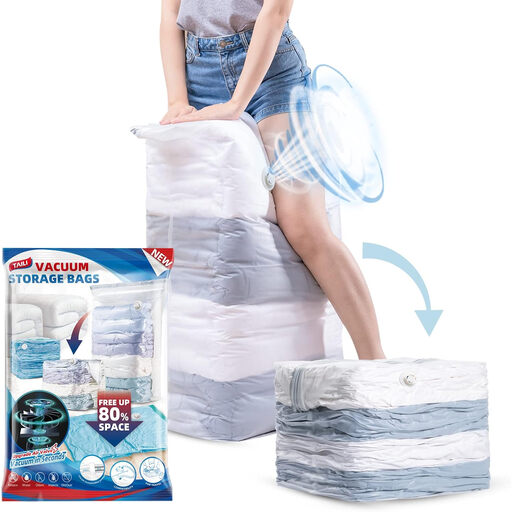
Why we chose it: The perfect solution for storing the bulkiest items like winter duvets or multiple pillows. Vacuum compression dramatically reduces their volume, freeing up precious space in your closets.
The PA + PE material is designed to last and resist punctures. The patented valve and double-zip closure were specifically engineered to end the nightmare of bags that reinflate.
Its cube structure stands up on its own, which makes filling it incredibly easy. A single bag can hold the equivalent of several classic storage bags.
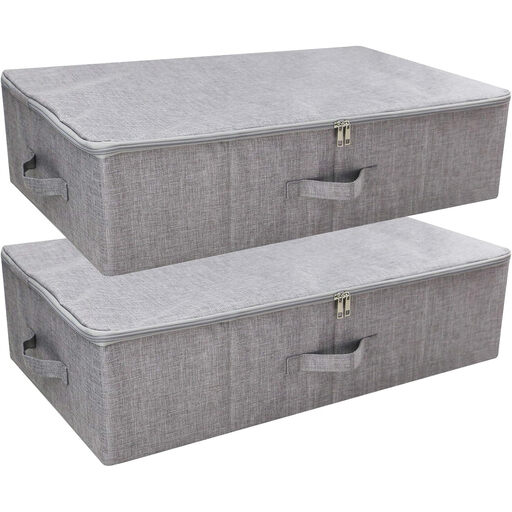
Why we chose it: Perfect for utilising the often-wasted space under the bed to store seasonal linen or clothes. The soft structure with a zipped lid protects from dust while remaining easily accessible.
The dimensions of 70 x 43 x 18 cm are clearly stated and designed for most standard beds. No more unpleasant surprises with a box that's too tall to fit.
Its foldable design allows the boxes to be stored flat when not in use. The set of two is perfect for organising by category (e.g., one for sheets, one for sweaters).
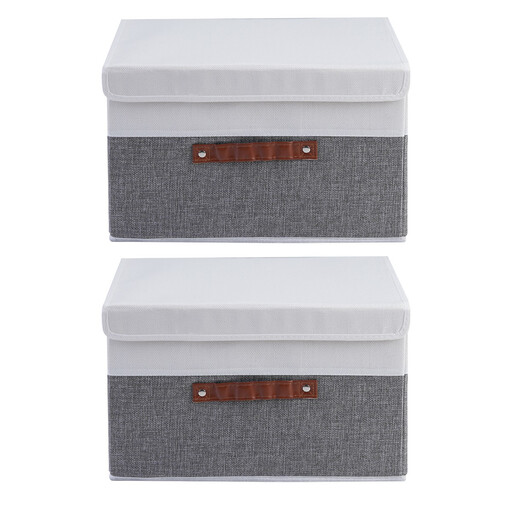
Why we chose it: For those who want storage to be synonymous with style. These boxes can be proudly displayed on a shelf in a living room, bedroom, or laundry room.
Its structure, reinforced by a removable base, doesn't collapse like cheap fabric boxes. The lid provides effective protection against dust.
Its stylish design, with leather-effect handles and neutral colours, makes it a truly decorative closet organiser. Easy to assemble and fold.
We have compiled a complete and updated list of products that meet our strict selection criteria and safety standards.
That's an excellent question. Extreme compression can indeed compact feathers and down, causing them to lose some of their precious loft over the long term. For duvet storage made of natural materials, here's our tip: don't remove 100% of the air. Instead, leave about 10-20% to preserve the fibre structure. For synthetic duvets, maximum compression generally poses no problem.
First step: measure the available height under your bed frame. Most beds offer a space of 15 to 20 cm. Choose an under-bed storage box with a height that is at least 1 to 2 cm less than this space. This will allow you to slide it in and out without forcing it, even when it's full. Also, consider the width and depth to maximise the space without the box sticking out.
Standard fabric bags (like non-woven polypropylene) are primarily dust barriers that allow air to circulate. Their protection against moisture is therefore very limited, if not non-existent. If you plan to store your belongings in a potentially damp place like a cellar or garage, opt for waterproof materials like PEVA or, for maximum security, PA+PE vacuum compression bags.