If you’re shopping for someone with diabetes, don’t choose a sparkling apple juice based only on the words ‘no added sugars’. Compare the sugars per 100 mL with the amount you plan to serve. The bubbles and lack of alcohol don’t remove the sugars naturally present in the juice. If the nutritional information on a product listing seems inconsistent, check the bottle’s label.
Who might find these criteria useful?
People checking the sugar in each glass
You want to relate the ‘of which sugars’ figure to the amount actually served, rather than relying on a ‘no added sugars’ claim. Anses points out that this claim doesn’t rule out sugars that are naturally present.
People planning an alcohol-free occasion
You’re looking for a sparkling drink for a celebration or pre-dinner drinks, while keeping the absence of alcohol separate from the sugar content.
People comparing labels and pack sizes
You check the nutritional information, ingredients and instructions for after opening before choosing a 75 cL bottle or a still juice.
What should you check before choosing?
When choosing apple juice in this context, start with the sugars per 100 mL and the size of the glass you plan to serve. Then check whether the bubbles, alcohol-free status and pack size suit what you’re looking for.
| Criteria | What to check | Who is it for? |
|---|
| Sugars per glass |
Read the ‘of which sugars’ figure per 100 mL and relate it to the amount actually served. |
When I pour a glass, I want to be able to assess its sugar content rather than rely on the front of the bottle; around 45% of consumers prioritise the sugars in their serving. |
| Alcohol-free sparkling drink |
Check the product description, ingredients and alcohol information; check the sugars separately. |
For a celebration, I’m looking for bubbles without alcohol, but I won’t assume the drink is sugar-free; this is a priority for around 36% of consumers. |
| Label and pack size |
Compare the volume, nutritional information and storage instructions after opening for the exact product. |
If a bottle is likely to be left open, I want a pack size that lets me follow the storage instructions; around 19% of consumers prioritise this practical choice and a clear label. |
Common misunderstandings to avoid
-
Reading ‘no added sugars’ as ‘sugar-free’
Anses explains that this claim doesn’t rule out sugars naturally present in the ingredients, including those in apple juice.
Check the ‘of which sugars’ figure per 100 mL, then take account of how much you’ll pour.
-
Confusing the contents of a bottle with a serving
A 75 cL bottle can be poured into several glasses. Based on the 11 g of sugars per 100 mL listed by Auchan for Thomas Le Prince, the whole bottle contains 82.5 g of sugars; this calculation doesn’t define a serving to drink.
Decide on the size of the glass before calculating the sugars from the chosen product’s label.
-
Trusting a nutrition table that contradicts the ingredients
The Joybuy listing for Champomy Original describes an apple juice-based drink, but also shows 0 g of carbohydrates and sugars per 100 mL. Don’t use this figure to conclude that the drink is sugar-free.
Check the nutritional information on the exact product’s bottle before calculating the sugars in your glass.
Brands to know
COEUR DE POM
Carrefour describes a 75 cL alcohol-free sparkling apple juice made with 99.6% apples and 0.4% CO₂.
- The recipe is described as having no added sugars.
- This claim doesn’t tell you how much sugar is naturally present: check the ‘of which sugars’ figure on the bottle.
Champomy
Joybuy describes Champomy Original 75 cL as an alcohol-free sparkling drink containing 99% apple juice.
- The ingredients and pack size make it easy to identify the drink you’re looking for.
- The listing’s figure of 0 g of sugars per 100 mL contradicts the recipe described; check the physical label.
Bio Village
E.Leclerc describes a 75 cL organic, alcohol-free sparkling apple juice made with 99.5% organic apple juice and carbon dioxide.
- The proportion of apple juice and the pack size are stated.
- Check the sugars per 100 mL on the label before deciding how much to serve.
Kidibul
Auchan describes a 75 cL sparkling apple drink made with concentrated apple juice.
- The listing gives 9.5 g of sugars per 100 mL.
- After opening, the listing says to keep the drink chilled and consume it within 24 hours.
Joker
The 1 L Joker apple juice described by Carrefour is a still option if you’re not looking for a sparkling drink.
- The listing describes a juice with no added sugars, made from concentrate and containing lemon juice.
- Carrefour states that the juice contains naturally occurring sugars; compare the ‘of which sugars’ figure on the product you buy.
Joybuy products to consider
These two products suit different occasions: Joker if you’re considering a still apple juice, or Champomy Original if you’re looking for an alcohol-free sparkling apple drink. In either case, check the sugars in the amount you plan to serve.
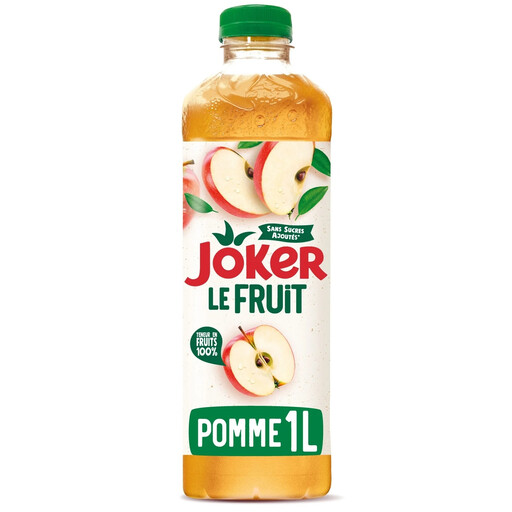 Image unavailable
JOKER apple juice with no added sugars, 1 L
Worth considering if you’d like a still apple juice and plan to measure the amount you serve.
Size: 1 L. ‘No added sugars’ doesn’t mean ‘sugar-free’; check the sugars per 100 mL on the label.
View on Joybuy
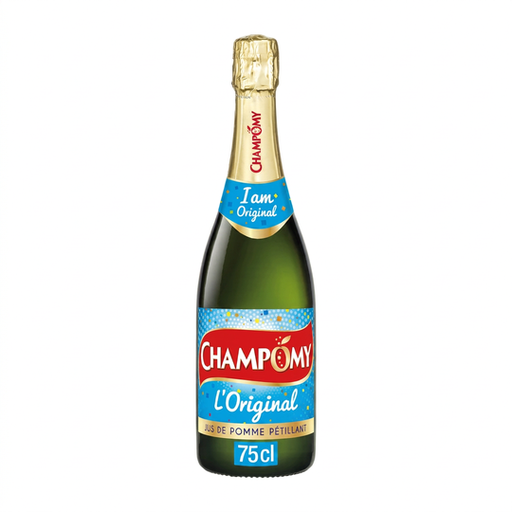 Image unavailable
CHAMPOMY Original, sparkling apple drink, 750 mL
Worth considering if you’re looking for an alcohol-free sparkling apple drink for a celebration.
The Joybuy listing describes a recipe made with 99% apple juice. However, it shows 0 g of carbohydrates and sugars per 100 mL. Check the bottle’s label before using a nutritional figure to calculate the sugars in your glass.
View on Joybuy
Frequently asked questions
Does ‘no added sugars’ mean that apple juice is sugar-free?
No. According to Anses, this claim doesn’t rule out sugars naturally present in the ingredients. To compare apple juices, check the ‘of which sugars’ figure per 100 mL and take account of the size of your glass.
Is an alcohol-free sparkling drink automatically suitable for someone with diabetes?
No. The absence of alcohol tells you nothing about the drink’s sugar content. Check its nutritional information and how much you plan to serve. Assurance Maladie points out that diets for people with diabetes should be tailored to individual needs.
Should you compare sugars per bottle or per glass?
To find out how much sugar is in the amount served, start with the figure per 100 mL and the size of the glass. The bottle size doesn’t necessarily correspond to a serving.
How should you store sparkling apple drinks after opening?
Follow the instructions on the exact product. Auchan’s Kidibul listing says to keep it chilled and consume it within 24 hours of opening; instructions may differ for other recipes.


