For a family lunch, a “sweet” soya drink may suit you if you’re looking for a mild taste, but that doesn’t necessarily mean it’s made without added sugars. Carrefour France lists 2.35 g of added sugars per 100 g for its Carrefour Bio Soja Douceur product. If avoiding added sugars is your priority, compare it with a plain option such as Sojasun Sans Sucres, which Carrefour France lists as “100% soya juice”. For a lunch served in an institutional setting, Anses recommends not serving soya-based foods, regardless of the age of the people eating.
Who is this choice for?
Parents looking for a mild flavour
For a family lunch during the holidays, you may be looking for a soya drink with a mild taste, but don’t assume that “sweet” means no added sugars. Carrefour France’s product information for Carrefour Bio and Bjorg shows why it’s worth checking the ingredients for each one.
Families who prefer a plain recipe
You’d rather check that there are no added sugars than choose a sweet or vanilla flavour. Carrefour France’s product information for Sojasun Sans Sucres lists a recipe made from 100% soya juice.
Organisers of group holiday meals
For a school canteen, holiday activity centre or holiday camp, the setting changes the decision: Anses recommends not serving soya-based foods in institutional catering, for any age group.
What should you check?
First, distinguish between a family lunch and a meal served in an institutional setting. At home, compare the recipe and nutritional information on the specific carton rather than relying on the word “sweet” alone.
| Criteria |
What to check |
Who is it for? |
| Mild flavour |
Read the ingredients to tell a sweetened recipe from a flavoured one; the name “sweet” isn’t enough. |
For a family lunch, I’m looking for a mild flavour, without assuming that a child will like a particular drink. Around 31% of consumers would make flavour their main criterion. |
| Added sugars |
Compare the ingredients and any added-sugar information shown on the products, using the same unit of comparison. |
I prefer a plain recipe and accept that it won’t taste like a “sweet” version; avoiding added sugars would be the priority for around 31% of consumers. |
| Age and meal setting |
Check the child’s age and whether the meal is a family or group meal. Anses advises against soya in institutional catering; its infant feeding recommendations also rule out replacing breast milk or infant formula with an ordinary plant-based drink. |
Before comparing flavours, I need to know whether the drink is suitable for the child’s age and the lunch setting. This would come first for around 23% of consumers. |
| Nutritional content |
If this matters to you, check the protein per serving and any added nutrients on the label for the exact product. |
I compare recipes with different nutritional profiles rather than choosing by name; around 15% of consumers would prioritise protein or added nutrients. |
Mistakes to avoid
-
Confusing “sweet” with no added sugars
According to Carrefour France, Carrefour Bio Soja Douceur contains cane sugar and has 2.35 g of added sugars per 100 g.
To choose between a sweet and a plain version, compare the ingredients and nutritional information on both cartons.
-
Replacing an infant’s milk with an ordinary plant-based drink
Anses says ordinary drinks, whether plant-based or animal-based, aren’t suitable for children under one as a substitute for breast milk or suitable infant formula.
For an infant, don’t choose a soya drink from the drinks aisle as a replacement; ask a healthcare professional for advice on feeding your baby.
-
Applying a family choice to a group meal
For institutional catering, Anses recommends not serving soya-based foods to avoid excessive isoflavone intake, for all age groups.
If lunch is being served in a school canteen, holiday activity centre or holiday camp, take this recommendation into account before comparing flavours.
-
Assuming one product’s ingredients apply to the whole brand
Carrefour France lists different recipes: Sojasun Sans Sucres contains 100% soya juice, while Carrefour Bio and Bjorg’s Douceur products contain cane sugar.
Check the ingredients and nutritional values for the specific product you’re considering buying.
Brands to compare by recipe
Carrefour Bio
The Soja Douceur Bio product gives you a recipe presented as mild to consider for a family lunch.
- According to Carrefour France, this product contains 97% soya juice, as well as cane sugar and sea salt.
- Its product information lists 2.35 g of added sugars per 100 g: “sweet” doesn’t mean “no added sugars”.
Bjorg
Soja Douceur Bio is another recipe to consider if you’re looking for a flavoured drink.
- Carrefour France’s product information lists soya-based tonyu, cane sugar and natural vanilla flavouring.
- Its ingredients don’t mean you can assume a child will prefer it or that it contains less sugar than another product.
Sojasun
The Sans Sucres product is an option if you’re looking for a plain rather than flavoured soya drink.
- Carrefour France’s product information lists “100% soya juice” in its ingredients.
- A plain recipe may not suit you if you’re looking for a mild or vanilla flavour.
Alpro
The Protéinée Nature product is an example of choosing based on nutritional content rather than looking for a mild flavour.
- Carrefour France lists 10 g of protein per 200 ml serving for this product.
- This information applies to Protéinée Nature only: it doesn’t describe all Alpro soya drinks or tell you whether your child will like the taste.
Soya drinks available on Joybuy
This selection features a soya drink described as having less sugar than its classic version, in individual cartons. Don’t confuse it with a plain recipe with no added sugars or a drink explicitly named “sweet”.
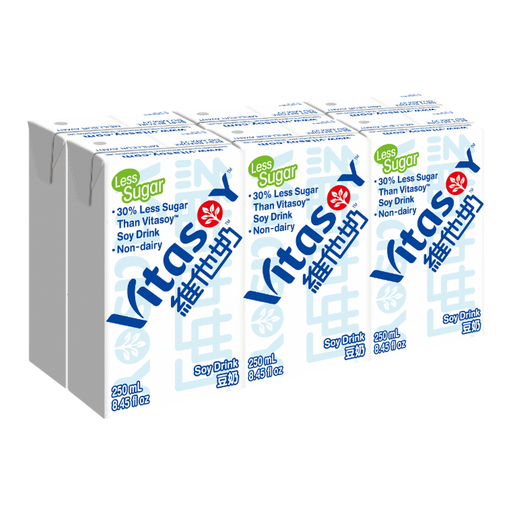 Image unavailable
Vitasoy Soya Bean Milk with Less Sugar, 6 × 250 ml
For a family lunch where you’d like to compare a soya drink described as having less sugar than the classic version. This description doesn’t tell you whether your child will like the taste.
The pack contains six 250 ml cartons. The recipe includes sugar and fructose: check the carton label if avoiding added sugars is your priority.
View on Joybuy
Frequently asked questions
Does a “sweet” soya drink always contain no added sugars?
No: Carrefour Bio Soja Douceur contains cane sugar and has 2.35 g of added sugars per 100 g, according to Carrefour France. Read the ingredients on the carton you choose rather than guessing from its name.
Can I replace the milk of a child under one with a soya drink?
No. According to Anses, an ordinary soya drink isn’t a replacement for breast milk or suitable infant formula for a child under one. Ask a healthcare professional for advice on feeding an infant.
Can soya be served for lunch at a holiday activity centre or camp?
Anses recommends not serving soya-based foods in institutional catering, for all age groups, to avoid excessive isoflavone intake. This recommendation applies to this type of meal setting; it isn’t a general ban on eating soya as a family.
What should I do if my child has a confirmed soya allergy?
Avoid the allergen and follow your doctor’s advice, in line with the guidance on food allergies from Assurance Maladie. Check the ingredients of every drink you’re considering.
What should I look for on a carton of soya drink?
Start with the product name, ingredients list and nutrition declaration to compare recipes. DGCCRF lists these among the details shown on pre-packed food labels; always check the carton you buy.


