When shopping with diabetes in mind, first compare the carbohydrate and sugar figures on soy drinks, then consider them in relation to how much you pour. Assurance Maladie recommends checking the ingredients and nutrition information rather than relying on a single claim on the front of the pack. If you regularly use the drink instead of milk, check the protein content and whether it is fortified with calcium and vitamin D separately. A fortified option is not necessarily sugar-free.
Who are these criteria useful for?
People keeping an eye on declared sugar content
You want to compare the carbohydrate and sugar content of soy drinks, while also considering how much you actually consume. Assurance Maladie recommends checking the nutritional values per 100 ml to compare products.
People who often use soy drink instead of milk
Whether it’s for breakfast or cooking, you may also want to check the protein content and, if you’re looking for these nutrients, the calcium and vitamin D. These details vary by product, so check the one you’re considering.
People looking for a cooking ingredient
For pancakes, sauces or cereal, you may prefer an unflavoured recipe with a short ingredient list. Still, check its nutritional values and whether it is fortified.
Which criteria should you compare first?
Start with the amount you use and the corresponding nutritional values. Then check for fortification or review the ingredients, depending on whether you often use the drink instead of milk or mainly use it for cooking.
| Criteria |
What to check |
Who is it for? |
| Carbohydrates and sugars |
Compare “carbohydrate” and “of which sugars” on the same basis, usually per 100 ml, then consider how much you pour. A figure given per 100 g should not be presented as a figure per 100 ml. |
If I add this drink to my coffee or cereal, I want to know what’s in my portion rather than relying only on a “no added sugars” claim. Around 50% of consumers are said to rank carbohydrates and sugars as their top criteria. |
| Regularly using it instead of milk |
Check the protein content and, if you’re looking for a fortified product, the calcium and vitamin D information. Also check the sugar content of that specific product. |
If I regularly use a drink instead of milk, I want to check the nutrients listed without assuming that a fortified version is sugar-free. Fortification is said to be the main priority for around 30% of consumers. |
| Cooking |
Check the ingredients and nutritional values of the unflavoured recipe you’re considering. If fortification matters to you, check for it separately. |
For pancakes or sauces, I prefer a neutral-tasting base with a short ingredient list. This simplicity is said to be the priority for around 20% of consumers. |
Which shopping shortcuts should you avoid?
-
Choosing based only on “no added sugars” or the Nutri-Score
These claims don’t replace checking the carbohydrates, sugars and amount consumed. Assurance Maladie recommends comparing products’ ingredients and nutritional values.
Check both the “carbohydrate” and “of which sugars” figures, along with their units, before relating them to your portion.
-
Assuming that fortified means sugar-free
These are two separate features. According to information published by Sojasun, its Calcium + Vitamin D drink contains 2.3 g of sugars per 100 ml.
If you’re looking for a fortified drink, check the calcium and vitamin D information, sugar content and ingredients for that specific product.
-
Forgetting about other soy foods you eat regularly
In 2025, Anses highlighted the risk of exceeding toxicological reference values for isoflavones among consumers of soy-based foods. Its recommendation not to serve them applies to collective catering; it does not set an individual limit that applies to every adult.
If you regularly eat several soy-based foods or have a particular medical condition, ask a healthcare professional for personalised advice rather than using this information alone to work out an amount.
A few brands to consider
These examples show why it’s important to compare specific products from a brand, rather than judging by the name alone.
Sojasun
The brand offers an unflavoured soy drink and a Calcium + Vitamin D version.
- According to Sojasun, its unflavoured drink contains soy juice and provides 0.1 g of sugars and 4.7 g of protein per 100 ml.
- The Calcium + Vitamin D version contains 2.3 g of sugars per 100 ml. Don’t assume it has the same nutritional values as the unflavoured drink.
Bjorg
Bjorg offers a 1 L carton of Soja Nature Sans Sucres, made with water and organic soya beans.
- According to Bjorg, this product contains 0.7 g of carbohydrates, less than 0.5 g of sugars and 3.9 g of protein per 100 g.
- If you’re buying it for its calcium or vitamin D content, check whether these are included in the product you choose rather than assuming they are because it says “no added sugars”.
Alpro
A 1 L Alpro soy drink is described on its Carrefour product page as containing added calcium and vitamins.
- The ingredients list published by Carrefour includes calcium and vitamins D2, B2 and B12 for this product.
- The same list includes sugar. If you’re looking for an unsweetened recipe, compare the carbohydrates and sugars in the exact product.
Single-serve soy drinks on Joybuy
This range includes soy drinks in individual cartons, including recipes featuring black sesame and one labelled “Less Sugar”. When shopping with diabetes in mind, compare the carbohydrates and sugars listed on each pack. The claim on the front and the number of cartons don’t tell you how much you’ll consume.
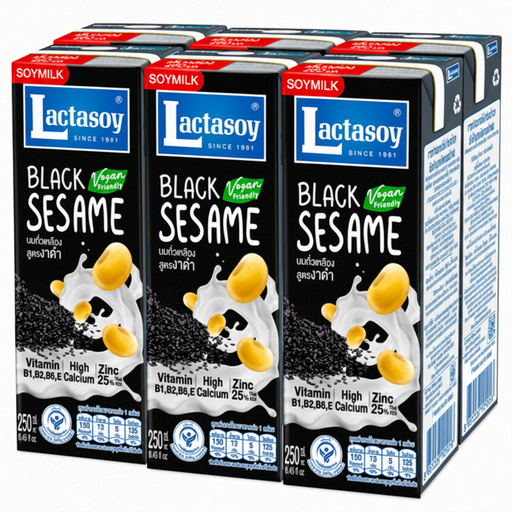 Image unavailable
Lactasoy soy and black sesame drink, 6 × 250 ml
This multipack of individual cartons may suit anyone who wants to take one with them or keep track of serving sizes. It contains six 250 ml cartons.
To compare this recipe with other soy drinks, check the carbohydrates and sugars on the pack for one carton or the amount you actually drink. Also check the ingredients if soy or sesame is an allergen for you.
View on Joybuy
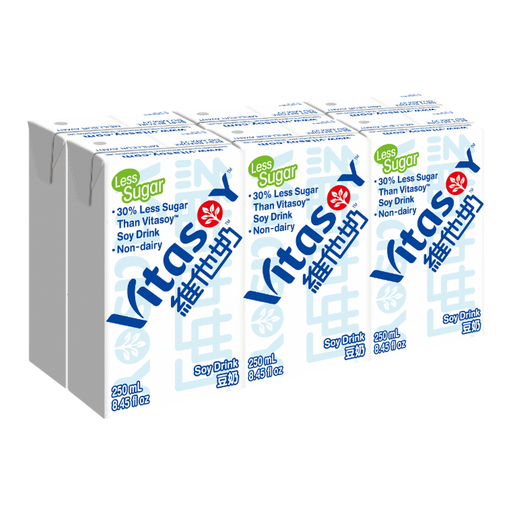 Image unavailable
Vitasoy Soya Bean Milk with Less Sugar, 6 × 250 ml
The six 250 ml cartons are handy for individual servings. The “Less Sugar” wording in the name doesn’t tell you how much carbohydrate or sugar the drink contains.
If these figures matter to you, check the nutritional table and ingredients on the pack before comparing this drink with an unflavoured recipe.
View on Joybuy
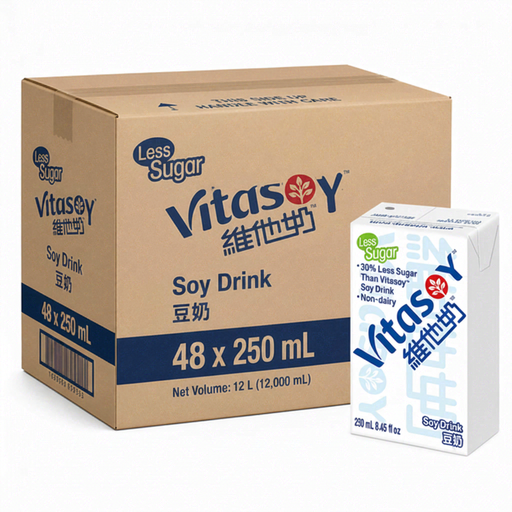 Image unavailable
Vitasoy Soy Drink Less Sugar, 48 × 250 ml
This pack of 48 individual 250 ml cartons is ideal if you’re looking for plenty of single servings rather than one large carton.
Before relying on the “Less Sugar” claim, check the carbohydrates and sugars on the pack, using the same unit as for the other drinks you’re comparing. If protein content matters to you, check that figure on the nutritional table too.
View on Joybuy
Frequently asked questions
Does “no added sugars” mean “no carbohydrates” in a soy drink?
No. These refer to different entries in the nutritional table. For its Soja Nature Sans Sucres drink, Bjorg lists 0.7 g of carbohydrates and less than 0.5 g of sugars per 100 g. Check the unit shown before comparing it with a drink whose figures are given per 100 ml.
Does a fortified soy drink necessarily contain less sugar?
No. Fortification and sugar content should be checked separately. According to Sojasun, its Calcium + Vitamin D drink contains 120 mg of calcium and 2.3 g of sugars per 100 ml. Choose according to how you plan to use it, checking both figures on the specific product.
Can an ordinary soy drink replace milk for an infant?
No. Anses states that everyday plant-based or animal-based drinks are not suitable for children under one and cannot replace breast milk or infant formula. For advice about a particular situation, speak to a healthcare professional.
What should you know about Anses’ advice on soy isoflavones?
Anses’ 2025 recommendation not to serve soy-based foods applies to collective catering and aims to limit excessive isoflavone consumption. It does not set an amount of soy drink that applies to every adult. If you often eat several soy-based foods or have a particular medical condition, seek personalised advice.


