
Livraison le jour même ou le lendemain

Qualité garantie

Débloquez vos offres de bienvenue: Livraison GRATUITE | Jusqu'à -80 % | 30 jours d'essai gratuits à JoyPlus
Téléchargez l'application
Lighting up your garden or driveway with a solar garden light is an appealing idea. With no cables to run and no increase in your electricity bill, the promise is certainly attractive. However, the market is flooded with products of widely varying quality, and the risk of ending up with lights that fail after just one season is very real. To help you see things more clearly, here are the 3 mistakes to avoid and the essential criteria to check before you buy.
Before you fall for a sleek design or a rock-bottom price, beware of these flaws that can quickly turn a good deal into a disappointment.
To avoid these pitfalls, you need to focus on a few objective technical specifications. These are the true guarantors of the performance and longevity of your future outdoor solar lamp.
The autonomy of your light depends entirely on this duo.
A solar light is an investment for several years.
Luminous performance isn't just about power.
To help you visualise how these criteria apply in practice, here are a few options that meet specific needs while avoiding the aforementioned pitfalls.
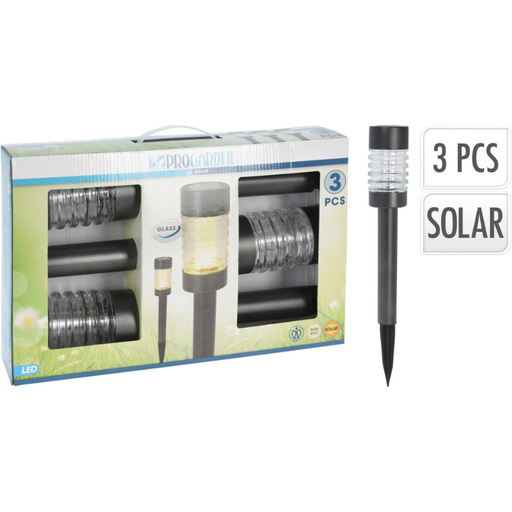
Why we love it: Perfect for creating a harmonious lighted path along a driveway or around a patio. The set of 3 solar lights format ensures a cohesive and stylish setup right from the start.
Its 201 stainless steel anthracite-coloured structure and glass diffuser ensure excellent long-term durability, a far cry from the fragility of plastic models. The warm white (2700-3000 K) LED guarantees a soft and welcoming atmosphere.
The combination of robust materials (stainless steel, glass) and a sleek design. The 300 mAh Ni-MH battery provides a solid foundation for decent battery life.
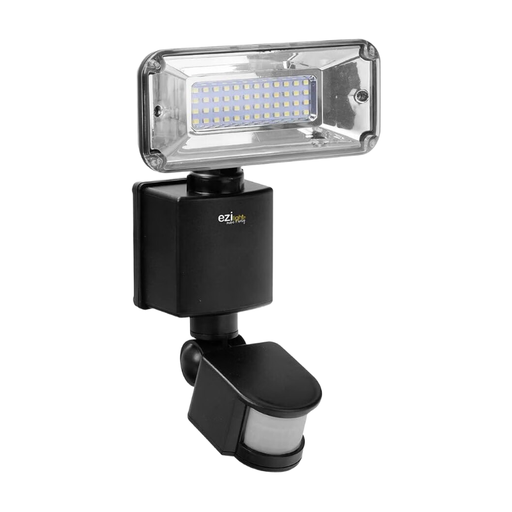
Why we love it: Ideal for securing a garage entrance, a doorway, or a dark passageway. Here, the goal isn't ambience, but effectiveness: to see, be seen, and deter.
It bypasses the battery life vs. power dilemma thanks to its motion detector. The light only turns on at full power when needed, preserving its battery to last the whole night without fail.
The motion detector and adjustable head combination. A solution that blends active security, smart energy management, and precise lighting.
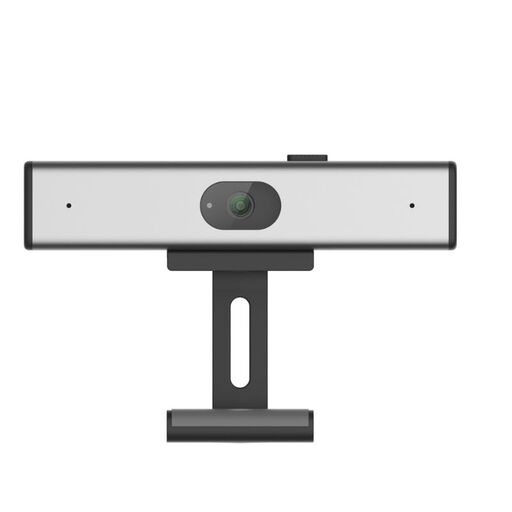
Why we love it: For those who want an ultra-simple-to-install solar garden stake with a minimalist design and a silver finish that offers a change from the traditional black or anthracite.
By focusing on the essential (path marking), it avoids complications. Its metal structure and silver finish are a guarantee of durability far superior to all-plastic alternatives.
Its modern look and disarmingly simple installation: you stake it, it's on.
Explore our full selection of products that meet our quality criteria and safety standards.
It all depends on the components. The LED itself has a virtually unlimited lifespan (often over 20,000 hours). The weak link is the rechargeable battery, which will typically need to be replaced after 2 or 3 years. The robustness of the lamp's body (stainless steel, aluminium, glass) will ensure it maintains its aesthetic appeal over time.
Yes, but with reduced performance. Even on an overcast day, a solar panel captures diffuse light, but it charges the battery much more slowly. The nightly runtime will therefore be logically shorter in winter than in the middle of summer. Models with high-performance panels and high-capacity batteries will naturally fare better.
Maintenance is minimal, but crucial. Regularly clean the surface of the solar panel with a soft, damp cloth to remove dust, pollen, or bird droppings that can block the light. In the autumn, be sure to clear away any fallen leaves. Also, remember to check that the light's location remains well-sunlit throughout the day (watch out for cast shadows that change with the seasons).