
Livraison le jour même ou le lendemain

Qualité garantie

Débloquez vos offres de bienvenue: Livraison GRATUITE | Jusqu'à -80 % | 30 jours d'essai gratuits à JoyPlus
Téléchargez l'application
Buying a side table seems like a simple task, right? In theory, yes. But in practice, who hasn't been disappointed by that small piece of furniture that looked perfect in photos, only to find it wobbly, flimsy, or simply the wrong size once in the living room? Choosing the right side table is about finding the perfect balance between aesthetics, functionality, and durability. To save you from another letdown, let's review the most common mistakes so you can make a truly informed choice.
The market is flooded with designs, each more tempting than the last. But be careful, as certain design flaws can quickly turn a dream purchase into a headache. Here are the points to watch closely.
end table is so low it's useless next to your armchair.To avoid falling into these traps, here are the few technical details that make all the difference.
A side table's stability relies on its winning combination: the frame and the feet. A frame made of sturdy metal, often paired with wood in an industrial side table style, offers excellent rigidity. Pay close attention to the design of the feet. U-shaped structures or well-distributed geometric frames ensure better balance. One detail that makes all the difference: adjustable feet. They allow you to compensate for minor floor irregularities and ensure a perfectly level, wobble-free surface.
Don't let aesthetics fool you. For tabletops, E1-grade particleboard is a quality standard that ensures low formaldehyde emissions and better density. Check that the veneer covering it is advertised as water- and scratch-resistant. A well-designed wood and metal side table combines the visual warmth of wood with the structural strength of metal, offering a durable compromise.
The first rule before buying: pull out your tape measure and measure the available space. Also, consider the height: an end table should be level with your sofa's armrest for optimal comfort. If you're short on space, an end table with storage—either vertical (shelves) or integrated (basket, drawer)—is a brilliant solution for optimising every square inch.
After vetting several models based on our criteria for stability, quality, and practicality, here is our selection for different uses.
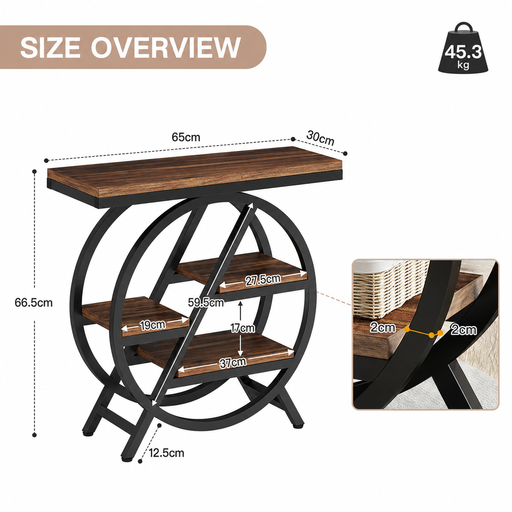
Why we love it: Ideal for fans of industrial style who want to maximise storage without sacrificing floor space. With its three shelves, it organises books and decor in a living room just as well as it replaces a nightstand.
Its metal frame and 4 adjustable feet guarantee rock-solid stability. The E1-grade particleboard top with a wear-resistant veneer ensures its longevity.
Its 3-tier vertical storage is a real space-saver. Sturdy and stable structure.
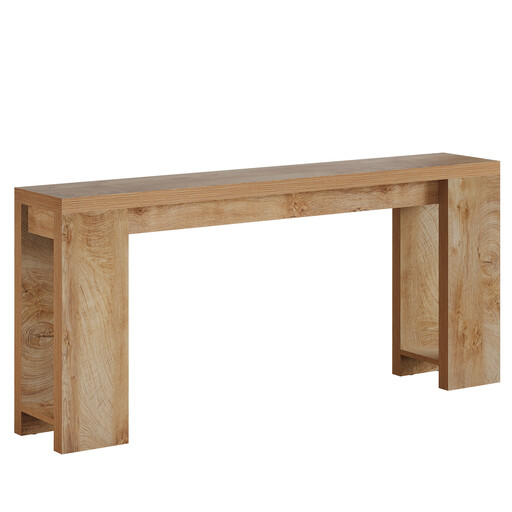
Why we love it: The perfect solution for furnishing 'wasted' spaces: an entryway, a long hallway, or behind a sofa. Ultra-slim (less than 30 cm deep), it offers a large surface without ever obstructing the walkway.
It sidesteps the dimension trap by being specifically designed for narrow areas. Its reinforced structure with thick E1-grade panels supports a substantial load without buckling.
Its slim, elongated design is ideal for hallways. An impressive load capacity for such a slender silhouette.
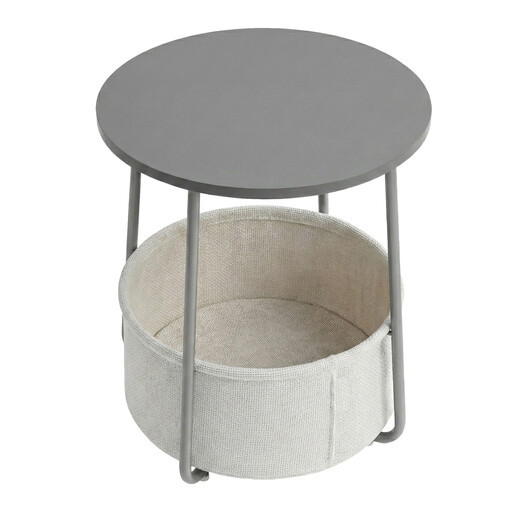
Why we love it: Perfect for fans of minimalist and functional design. Its round shape breaks up the strict lines of a room, while its fabric basket adds a cosy touch and clever storage. Excellent as a modern nightstand or next to a reading chair.
Its single-piece U-shaped steel legs provide an ultra-stable base. The double-layer polyester fabric basket is as sturdy as it is stylish. Bonus: it assembles in under 10 minutes flat.
Its clean, contemporary design. The smart storage provided by the high-quality fabric basket.
Explore our full selection of side tables that meet our demanding standards for quality and design.
What is the right height for an end table? As a general rule, the tabletop should be level with your sofa's armrest, or just 2 to 5 cm lower. This ensures perfect, effortless access to your cup or remote control. The key is to measure the height of your armrests before you order.
How do I care for a wood and metal side table? It couldn't be simpler. For the metal: a dry (or slightly damp) microfibre cloth is all you need. For the veneered top: a soft cloth is your best friend. Avoid harsh cleaning products and wipe up any spills immediately to preserve the finish.
Can a side table be used as a nightstand? Absolutely! A small side table is often a more stylish and original alternative to a traditional nightstand. Just make sure its height and dimensions match those of your bed. A model with a shelf or storage basket is a must for keeping your essentials (book, phone, alarm clock) within easy reach.