
Livraison le jour même ou le lendemain

Qualité garantie

Débloquez vos offres de bienvenue: Livraison GRATUITE | Jusqu'à -80 % | 30 jours d'essai gratuits à JoyPlus
Téléchargez l'application
Finding the perfect piece of furniture to complete a living room or bedroom can be a challenge, especially when space is at a premium. The side table, often called an end table or used as a nightstand, is a true asset, blending style with functionality. It needs to be practical and integrate seamlessly into your decor without encroaching on valuable space.
With a myriad of options available, it's easy to feel overwhelmed. To help you make a clear choice, this guide breaks down the essential criteria and presents a selection of models that meet specific needs, whether you're looking for an industrial style, a sleek designer look, or a solution with storage.
Before you take the plunge, let's review the key points to check to ensure you make the right choice.
First, and most importantly: get out your tape measure. A side table should neither obstruct pathways nor look lost in a corner of the room. Next, consider its primary function: will it hold a lamp and a book by your bed? Or will it keep your mug and remote control within reach of the sofa? For an end table, a height equal to or slightly lower than the sofa's armrest is generally recommended. For a nightstand, align it with the height of your mattress for effortless access.
Visual harmony is key: your side table should complement the rest of your furniture.
In modern homes, every square inch counts. A side table with storage is therefore a major asset. Whether it's shelves, drawers, or an integrated basket, these solutions help conceal everyday clutter (remotes, magazines, chargers) and keep surfaces clear. A small coffee table with multiple tiers can also offer clever vertical storage.
Now for our selection! Here are the models that caught our eye for their style, practicality, and excellent value for money.
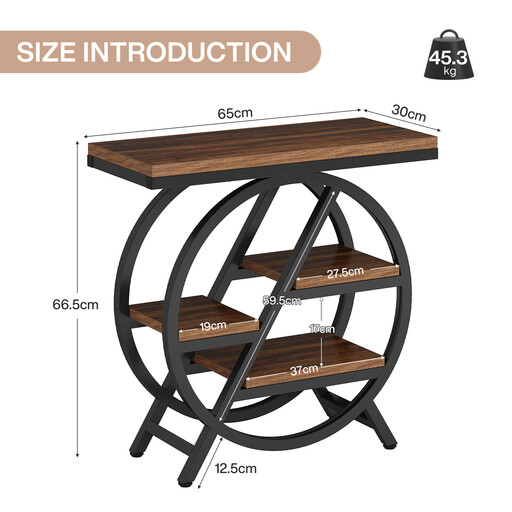
Why it stands out?: This model maximises vertical storage without taking up valuable floor space. Its geometric metal design and rustic wood shelves make it a real statement piece.
Highlights?:
Best for?? Ideal for those who need maximum storage in a compact space and love the industrial style.

Why it stands out?: Larger than a typical side table, this small coffee table is an excellent alternative for those looking for a functional centrepiece for a small living room. Its dual-shelf design offers valuable storage space.
Highlights?:
Best for?? For those with a bit more space who are looking for a central coffee table with practical storage options.
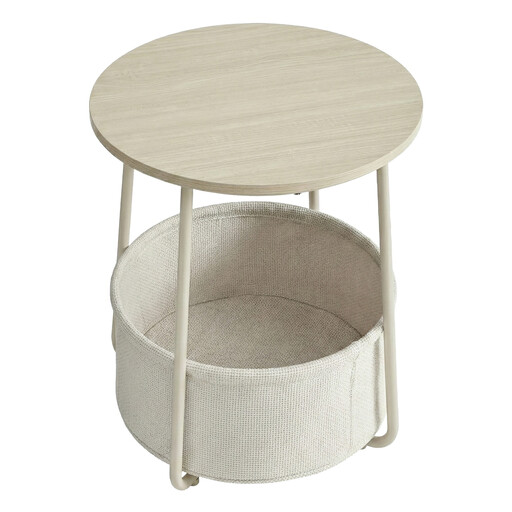
Why it stands out?: This model combines a minimalist design with a very clever storage solution. The integrated fabric basket is perfect for keeping small items handy but out of sight.
Highlights?:
Best for?? Perfect for studios or small rooms, and for anyone looking for an elegant and discreet storage solution with a Scandinavian or contemporary feel.
Not completely sold on our suggestions? If you're looking for a modular set with a clean, minimalist style, take a look at our selection of white nesting coffee tables. Their flexibility and design might be the perfect solution for you.
Discover Our Nesting Coffee Tables
1. What's the difference between a side table and an end table?? In everyday language, the two terms are often used interchangeably. Technically, an end table is placed, as its name suggests, at the end of a sofa. A side table is more versatile: it can be placed next to an armchair, serve as a nightstand, or even hold a plant.
2. What height should a side table be?? The golden rule is to choose a table that is the same height as or slightly lower than the armrest of your sofa or armchair (usually between 50 and 60?cm). When used as a nightstand, aim for a height similar to your mattress for comfortable access from your bed.