Hosts looking for a contrast in texture
For sharing at an aperitif, seeded bread can add a different texture alongside fougasse served with antipasti or grilled vegetables. Check that the bread you choose contains the seeds you’re looking for.


Choose an olive fougasse if you want to serve bread that’s already seasoned. If you’re mainly looking for a contrast in texture, serve seeded bread alongside the fougasse. If you’re specifically looking for a seeded fougasse, check the ingredients for the product you choose: its name alone won’t tell you how many seeds it contains, how much fibre it provides or which allergens it may contain.
For sharing at an aperitif, seeded bread can add a different texture alongside fougasse served with antipasti or grilled vegetables. Check that the bread you choose contains the seeds you’re looking for.
Olive fougasse is a good choice if you want to serve bread that’s already flavoured and can be sliced to share with your meal. Auchan and PAUL each offer an olive fougasse; check the ingredients for each product individually.
Before sharing a meal, check the ingredients and allergen information for each bread, especially if anyone needs to avoid a particular ingredient. The ingredients in a fougasse won’t necessarily be the same as those in the bread served alongside it.
First decide whether you want bread that’s already seasoned or one that adds a different texture. Then check the exact recipe before adding it to your menu.
| Criteria | What to check | Who is it for? |
|---|---|---|
| Texture and sharing | Whether it contains seeds, which seeds they are, and whether the size suits the way you plan to serve it. | When sharing antipasti, I’m looking for seeded bread that contrasts with the fougasse. Around 40% of consumers would put this difference in texture first. |
| Pairing with the menu | The main flavourings, such as olives, cheese or meat, in relation to the dishes you’ve already planned. | If the meal already includes several dishes with olives, I want to choose the bread’s flavouring accordingly. Around 30% of consumers would make pairing it with the menu their priority. |
| Ingredients | The ingredients and allergens in the exact product, and its nutritional values per 100 g if these matter to your choice. | If a diner needs to avoid an ingredient, I want to know what’s in the bread before serving it. Around 30% of consumers would prioritise checking this. |
On its own, this description doesn’t tell you how many seeds the bread contains or how much fibre, salt or fat it provides.
Compare the ingredients list and nutritional values per 100 g for the product you plan to serve. Don’t use figures from a different recipe.
Carrefour also offers fougasse topped with bacon pieces, chorizo or salmon. The aisle where you find the bread won’t tell you what’s in every recipe.
For a vegetarian menu, check the ingredients for the product you’ve chosen or look for an explicit statement on its product page.
Flour, toppings and seeds vary from recipe to recipe. In France, Service-Public.fr says that allergen information must also be provided for bread sold unpackaged.
If a diner needs to avoid an allergen, check the label or ask the bakery for the information available before you buy.
A page featuring several types of bread doesn’t confirm that the fougasse or seeded bread you want will be available at your chosen store.
Check which products are listed for your store before you finalise the menu.
Carrefour lists fougasse and cereal breads in its fresh bread section, so you can look at topped bread and another type of loaf separately.
Auchan’s product page for a 400 g olive fougasse lets you check its ingredients and nutritional information before comparing it with another bread.
PAUL lists olive fougasse separately from its speciality breads, which include varieties with linseed or black sesame.
These sesame grissini can be served alongside fougasse at an Italian-themed evening. They’re not fougasse or cereal bread.
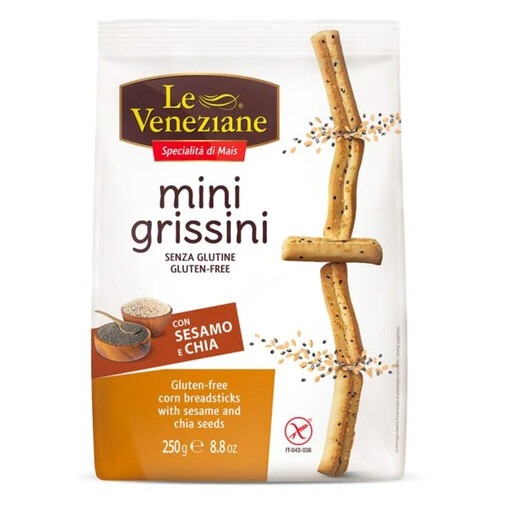 Image unavailable
Consider these as a separate accompaniment if you’d like to serve grissini alongside the fougasse. The pack is listed as 250 g and the product contains sesame. If a diner needs to avoid an allergen, check the information on the packaging, including details of any possible traces.
The name doesn’t tell you how much fibre it contains. Check the nutritional values per 100 g for the specific fougasse you’re thinking of buying, then compare them with another product on the same basis.
It depends on the recipe. PAUL describes its own olive fougasse as vegetarian, but that doesn’t apply to other fougasse. Check the product information for the one you plan to serve.
Check the information for the exact product before you buy, including when it’s sold unpackaged. In France, Service-Public.fr says allergen information must also be provided for bread sold in bakeries. In particular, check the cereal ingredients and seeds in the recipe you’ve chosen.
Follow the storage instructions for the fougasse you’ve bought. Auchan says its 400 g olive fougasse should be stored at room temperature, but those instructions shouldn’t be assumed to apply to another recipe.
A range page featuring fougasse and seeded breads isn’t enough to identify a fougasse that has both characteristics. Check the product page for the one you want and confirm it’s available at your chosen store before adding it to the menu.