
Livraison le jour même ou le lendemain

Qualité garantie

Débloquez vos offres de bienvenue: Livraison GRATUITE | Jusqu'à -80 % | 30 jours d'essai gratuits à JoyPlus
Téléchargez l'application
The home fitness boom has made the resistance band the must-have accessory of the moment. Practical, affordable, and versatile, it promises effective muscle strengthening without turning your living room into a gym. But here's the catch: in a market saturated with options, it's easy to fall into common traps and see a good investment turn into a disappointment. Before you make your choice, it's crucial to know how to spot the products that won't live up to their promises.
As the Head of Product Recommendations at Joybuy, my mission is to help you see things more clearly. Let's review the three most common mistakes to avoid and the criteria to scrutinize when choosing THE perfect resistance band for your goals.
For a successful purchase, it's better to focus on objective features than on marketing hype. Here are the three technical points to check.
The choice of material is critical, as it determines comfort, grip, and durability.
A band's resistance is usually indicated in kilograms (kg) or pounds (lbs). For a beginner, a resistance of 5 to 10 kg (10-20 lbs) is a good starting point. More advanced athletes can look for tensions of 15, 20 kg (30-45 lbs) and up.
The smartest solution is to opt for a resistance band set that includes several bands. This allows you to not only adapt the resistance to each muscle group (as your legs can handle much more than your arms) but also to support your progress over the long term.
To help you put this advice into practice, here are a few options that meet specific needs, checking all the boxes for quality and functionality.
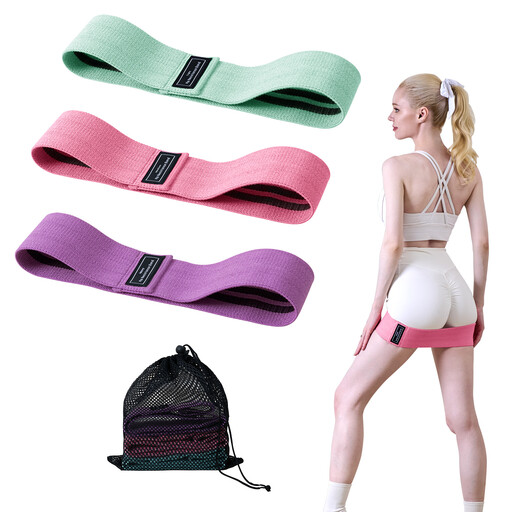
Who is it for? Ideal for beginners or those focusing on the lower body. This set helps sculpt legs and glutes with optimal comfort, at home or on the go.
Its high-quality cotton fabric design prevents it from rolling up or slipping during squats and hip thrusts. Goodbye to the most frustrating problem!
The set includes three resistance levels (Light, Medium, Heavy) for well-defined progression. It comes with a convenient carrying bag.
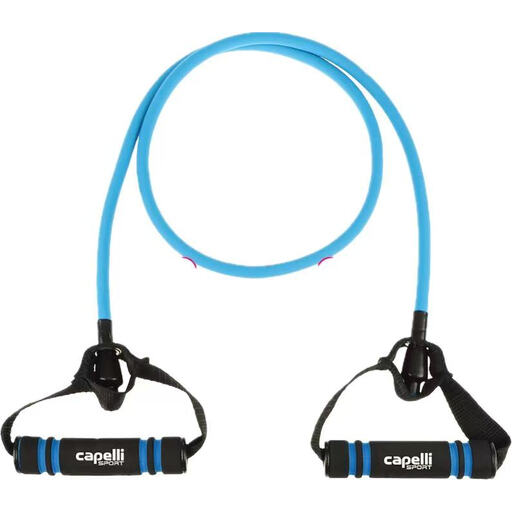
Who is it for? Perfect for those looking for an all-in-one solution to work the upper and lower body. It allows you to replicate a wide range of classic strength training movements.
The foam handles ensure a secure and comfortable grip, preventing the discomfort and slipping that often occurs with bare tubes.
Its tube-with-handles format is ultra-versatile for strengthening arms, shoulders, back, and chest. The TPE material is an excellent latex-free alternative.
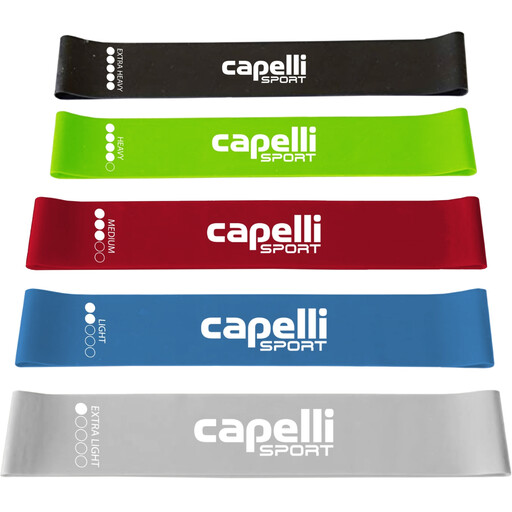
Who is it for? For athletes of all levels, from beginner to expert, who want an ultra-complete set to vary their exercises (strength, Pilates, yoga, physical therapy) and progress over the long term.
This set tackles the problem of vague resistance by offering five clearly identified levels with a colour-coded system, ranging from "Extra Light" to "Extra Heavy." This ensures you have perfect control over adjusting the difficulty.
Made from durable natural latex, it ensures superior elasticity and longevity. The set is ultra-comprehensive, covering all needs from warm-ups to intense strengthening.
We have compiled a complete and up-to-date list of products that meet our strict selection criteria and current safety regulations.
The lifespan of a resistance band depends on its material, frequency of use, and maintenance. A high-quality latex band used several times a week can last one to two years. Fabric bands, on the other hand, are generally more robust. To make them last, inspect them for any tears before each use, never stretch them beyond their capacity, and store them away from direct sunlight and heat.
Absolutely. It is entirely possible to build muscle with resistance bands. The secret lies in progressive overload: to grow, a muscle must be subjected to ever-increasing tension. With a set of multiple resistances, you can increase the difficulty as you progress, just as you would add more weight to a barbell. The continuous tension exerted by the band throughout the movement is also incredibly effective for stimulating muscle fibres.
It's very simple. For latex or TPE bands, a wipe with a damp cloth and a little mild soap is sufficient, then let them air dry. Above all, avoid harsh chemicals. As for fabric bands, most can be hand-washed in cold water. Finally, always store them in their bag, lying flat and without any knots, to avoid creating weak spots.