
Livraison le jour même ou le lendemain

Qualité garantie

Débloquez vos offres de bienvenue: Livraison GRATUITE | Jusqu'à -80 % | 30 jours d'essai gratuits à JoyPlus
Téléchargez l'application
A resistance band might seem like a simple accessory, but the market is flooded with so many options it's easy to get lost. Between materials that wear out prematurely and kits overloaded with useless accessories, purchase regret is common. This guide cuts through the noise to help you find the perfect workout band for your goals, whether for at-home strength training, yoga, Pilates, or physical therapy.
Before diving into the technical specs, let's review the most common disappointments so you don't fall into the same traps.
To avoid these pitfalls, focus on three criteria that determine the quality and suitability of a resistance band.
The choice of material directly impacts the band's durability, feel, and elasticity.
The band's format will depend on your preferred exercises.
Colours usually indicate the resistance level (e.g., yellow for light, black for extra heavy), but be warned: this code is not standardized across brands. A "heavy" band from one manufacturer might be equivalent to a "medium" from another. Instead, rely on clear labels like "Light / Medium / Heavy" or, even better, the resistance value in kilograms or pounds. A good starter kit should include several levels to allow you to progress.
We've selected a few models that stand out for their quality, each tailored to a specific user profile.

Why we chose it: Perfect for beginners or for practices like yoga, Pilates, and rehab. Its versatility and three resistance levels allow you to adjust the intensity smoothly.
Made from natural latex, it offers reliable durability and elasticity, steering clear of the low-grade material trap. This set gets straight to the point: simple, effective, and free of unnecessary accessories.
The soft feel, lack of odour, and progressive nature of the three resistances make it a very comfortable and versatile tool for mobility and light strengthening.
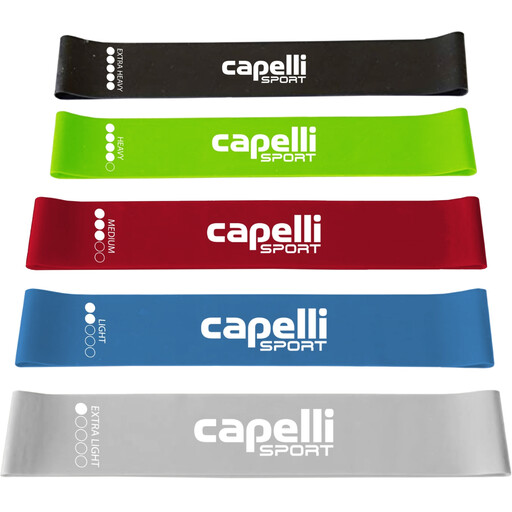
Why we chose it: Ideal for specifically targeting the legs, hips, and glutes. The five resistance levels allow for a very fine-tuned progression, from simple warm-ups to intense strengthening.
This kit focuses on one type of band and perfects it. It sidesteps the "all-in-one" trap by offering a specialized and incredibly effective solution for a specific goal.
The five resistance levels allow you to follow the principle of progressive overload, which is essential for building strength. Its compact size makes it ideal for training on the go.
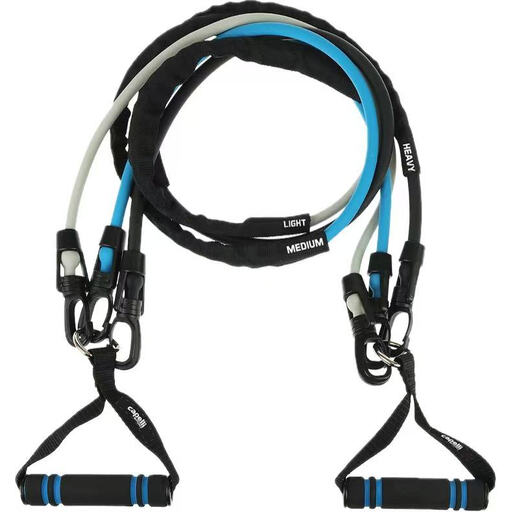
Why we chose it: For those who want to replicate the feel of a traditional strength training workout. The interchangeable tubes and handles allow you to work the entire body with adjustable resistance.
This kit is modular and smart. Instead of piling on parts, it focuses on a clipping system that lets you combine the 3 bands to vary the intensity. It's an "all-in-one" kit, but a well-designed one.
The foam handles ensure a comfortable and secure grip, which is essential for strength exercises like rows or presses.
We've compiled a complete list of products that meet our strict requirements for quality and safety.
The lifespan depends on the material, frequency of use, and care. A high-quality natural latex band, used several times a week, can last one to two years. Always inspect it before each use for any small tears or signs of wear. To extend its life, store it away from direct sunlight and extreme temperatures.
Yes, absolutely. It is entirely possible to build muscle mass with resistance bands. The key principle is progressive overload, which involves constantly increasing the tension placed on the muscles. With bands, this can be done by moving to a higher resistance, combining multiple bands, or changing the range of motion to increase tension.
Maintenance is a breeze. After use, simply wipe the band with a damp cloth. If needed, use a little mild soap, but avoid harsh chemicals that could degrade the material. Let it air dry away from a direct heat source, and never leave it in direct sunlight. Storing it properly in its carrying bag is the best way to ensure its longevity.