
Livraison le jour même ou le lendemain

Qualité garantie

Débloquez vos offres de bienvenue: Livraison GRATUITE | Jusqu'à -80 % | 30 jours d'essai gratuits à JoyPlus
Téléchargez l'application
Choosing a new refrigerator often turns into a headache. Between the hundreds of models, endless spec sheets, and marketing hype, it's easy to make a mistake or pick an appliance that doesn't truly fit your needs. Our mission at Joybuy is to guide you. Let's review the most common mistakes and the criteria that really matter to make the right choice.
A refrigerator is an investment that's meant to last. Yet, many people regret their purchase after just a few months, often due to these three classic errors:
To avoid falling into these traps, let's break down the few technical features that truly make a difference.
The cooling system has a direct impact on how your food is preserved and how you maintain the appliance.
The usable volume, expressed in litres, should match your household size and shopping habits.
For an appliance that's plugged in 24/7, two criteria need to be examined closely.
To help you bring your project to life, here are a few options that cater to distinct user profiles, taking into account the criteria we've just discussed.
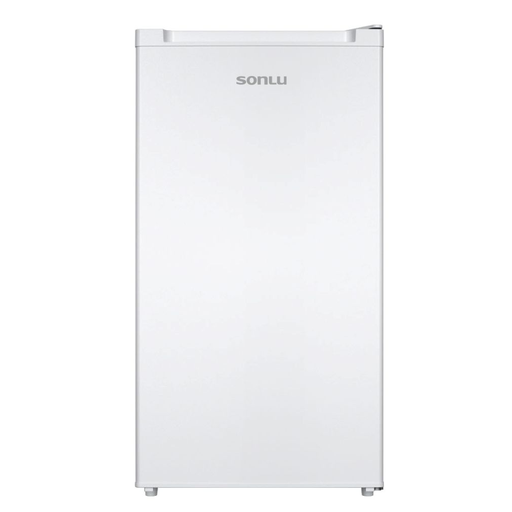
The profile: Ideal for a student, a single person, or as a secondary fridge. Its compact 82 L size is enough for essential needs without taking up space in a small kitchen or studio apartment.
This model gets straight to the point. No superfluous (and costly) technologies like No Frost, which is of little relevance for such a small volume. Its simple yet effective layout, with adjustable shelves and a vegetable crisper, makes use of every square inch.
Smart layout: Despite its small size, it offers adjustable glass shelves, a vegetable crisper, and practical door bins. Controlled consumption: At 84 kWh/year, its energy use is very reasonable for daily operation.
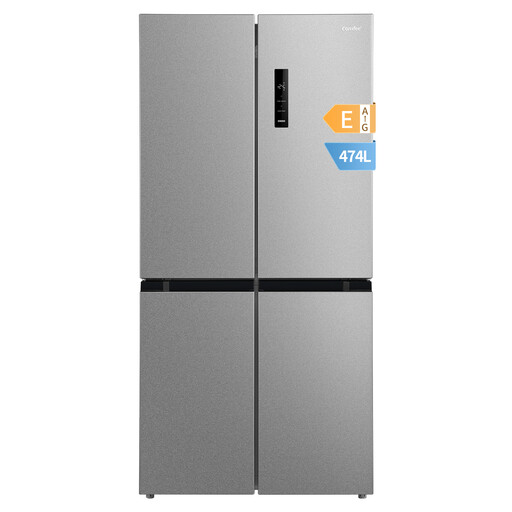
The profile: With its 474 L capacity and multi-door format, it's designed for families who store a lot of food and demand impeccable organization. Each compartment is independently accessible, which limits the loss of cold air.
It tackles the problem of "false capacity" with an ultra-flexible layout. The Vario Box system and the temperature-adjustable vegetable drawer allow you to adapt the space to each food item, making every litre truly useful.
Maximum flexibility: The vegetable drawer with 3 temperature settings and the "Flip Tray" freezer drawers that can be combined offer rare modularity. External controls: The front-facing touchscreen lets you adjust everything without opening the door, saving cold air and energy.

The profile: For those who want top-tier performance, XXL capacity, and life-changing features. Its 628 L are managed by cutting-edge technologies for optimal preservation and maximum user comfort.
It dispels the notion that a large fridge is necessarily energy-guzzling. Thanks to its Inverter Linear Compressor, it continuously adjusts its power and maintains a D class rating, which is highly efficient for a unit of this size. The Door-in-Door feature limits cold air loss, optimising daily consumption.
Door-in-Door technology: Direct access to drinks and snacks without opening the main door. Smart and economical. Performance and silence: The Inverter compressor is renowned for its reliability, efficiency, and quiet operation.
Explore our full selection of refrigerators, all approved by our experts according to the same demanding criteria.
The lifespan of a refrigerator is typically between 10 and 15 years. This longevity depends on the build quality (especially of the compressor), usage, and maintenance. Regularly cleaning the rear ventilation grilles and door seals can greatly contribute to its lifespan.
After delivery, you must let it rest upright for at least 4 hours before plugging it in. This time is necessary for the refrigerant fluid to settle. Place it on a flat, stable surface, leaving a space of at least 5 cm on the sides and 10 cm at the back to ensure good air circulation and prevent overheating.
This was true in the past, but technologies have evolved significantly. Today, thanks to Inverter compressors, the gap has narrowed considerably. A modern, well-rated no frost fridge can have an annual consumption very close to, or even lower than, a fan-assisted model of the same volume, with the added comfort of "zero defrosting." The rule of thumb remains the same: compare the kWh/year value on the energy label.