
Livraison le jour même ou le lendemain

Qualité garantie

Débloquez vos offres de bienvenue: Livraison GRATUITE | Jusqu'à -80 % | 30 jours d'essai gratuits à JoyPlus
Téléchargez l'application
Playing a game of Tetris every time you put away your groceries? Making endless trips to the supermarket while your old fridge consumes as much power as it makes noise? It might be time to upgrade to an American-style refrigerator. With their XXL capacity and smart features, these cooling giants are the perfect allies for large families and batch cooking enthusiasts. This guide is here to demystify the market and help you make the right choice, without getting lost in a jungle of technical specs.
To ensure you make the right decision, here are the key points to check before you buy.
Storage volume is, of course, the number one advantage of a side-by-side refrigerator. Measured in litres, the capacity often exceeds 500?L, more than enough to handle your weekly grocery haul. But be aware: large volume means imposing dimensions. Be sure to measure your space carefully before purchasing, leaving a few centimetres of clearance for proper ventilation.
The cooling technology is another decisive factor. Nearly all recent models feature fan-assisted cooling (or No Frost) technology. This system circulates dry, even air to prevent ice build-up. The result: better food preservation and, best of all, an end to the chore of manual defrosting!
An American-style fridge isn't necessarily an energy guzzler. To figure it out, the new energy label (rated from A to G) is your best friend. A model with a C rating is now considered highly efficient and guarantees controlled energy consumption.
Noise is also a crucial point, especially if you have an open-plan kitchen and living area. Expressed in decibels (dB), the noise level should be as low as possible. A refrigerator is considered quiet if it operates below 40?dB.
A front-facing water, crushed ice, and ice cube dispenser is the little extra that makes a big difference in daily life. Two options are available: models that connect to a water line for a continuous supply, and those that are easier to install, featuring a manually refillable tank. In terms of design, black, grey, or brushed stainless steel finishes allow you to match your fridge to your kitchen's style.
To help you see more clearly, our editors have reviewed three models that caught our eye, each with its own unique strengths.
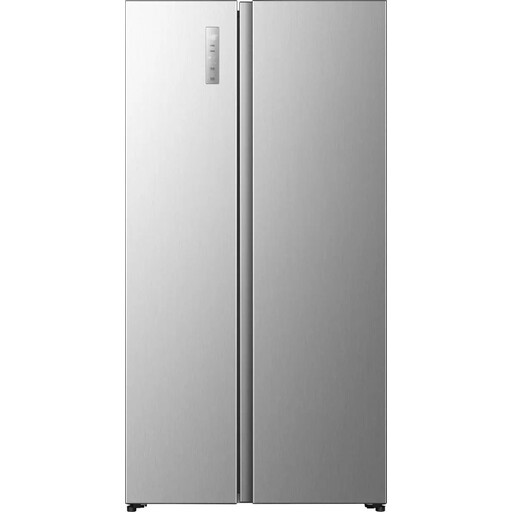
Key Feature: This Hisense model combines a generous 544-litre capacity with the simplicity of a tank-based water dispenser, saving you the hassle of plumbing. Its No Frost technology and Multi-Air Flow system ensure optimal food preservation, all while operating at a particularly quiet 37?dB.
Pros:
Who is it for? For families who want a large capacity and a water dispenser without the installation hassle.
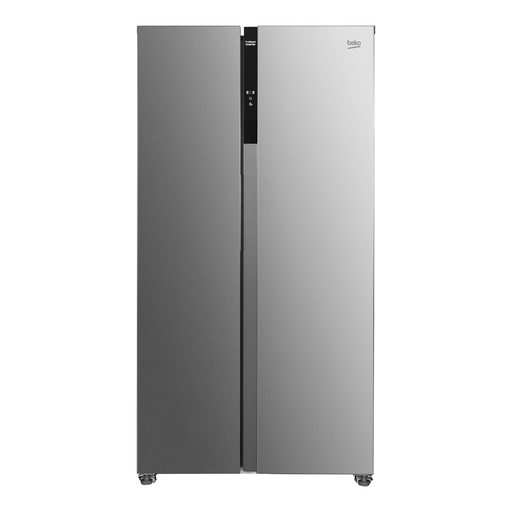
Key Feature: The Beko GNO5324XPN shines with its efficiency. Rated C on the new energy label, it boasts a consumption of just 200?kWh/year—an excellent point for your wallet. Its 532-litre capacity and total fan-assisted cooling system make it an excellent value for families.
Pros:
Who is it for? For those looking to control their electricity bill without sacrificing capacity or modern cooling technologies.
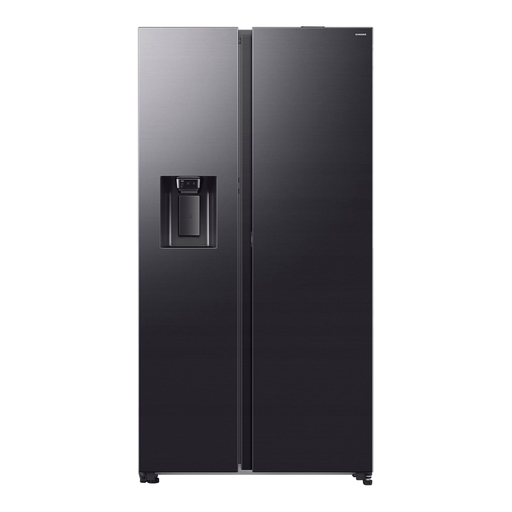
Key Feature: With its XXL 640-litre capacity, this Samsung model is aimed at very large families and storage pros. Wi-Fi connected, it allows you to optimise its consumption via the SmartThings app and its AI Energy mode. Add to that a water and ice dispenser (plumbing required) and nearly silent operation (36?dB), and you have a very comprehensive appliance. Its graphite black finish gives it a very contemporary touch of elegance.
Pros:
Who is it for? For tech enthusiasts and large families who want the best of the best: maximum capacity, smart features, and a sleek design.
Our selection is just a glimpse of the many models available on the market. To explore other sizes, finishes, or price points, feel free to browse our full catalogue.
Discover All Our Refrigeration Appliances
It mainly depends on its energy class, but also on its size and built-in technologies. With the new label, a model rated C or D is already considered very economical. For example, the Beko model in our selection consumes 200?kWh/year, which is very reasonable for its size. The best practice: always check the energy label for a precise estimate.
Not always! There are two systems: