People comparing sugar at breakfast
If you want to keep jam on your toast, the ‘reduced-sugar’ label alone isn’t enough to tell two jars apart. The ‘of which sugars’ figure per 100 g lets you compare their stated sugar content.


For your toast, choose reduced-sugar jam if you want to stick with this type of product and compare its sugar content with that of regular jam. Choose a no-added-sugar fruit spread if avoiding added sugar is your priority. In either case, compare the sugars per 100 g, the proportion of fruit and the ingredients. ‘No added sugar’ does not mean ‘sugar-free’, and recipes may contain sweeteners or other ingredients you’ll want to take into account.
If you want to keep jam on your toast, the ‘reduced-sugar’ label alone isn’t enough to tell two jars apart. The ‘of which sugars’ figure per 100 g lets you compare their stated sugar content.
You can opt for a no-added-sugar fruit spread while still taking into account the sugars naturally present in the fruit, which are included in the nutritional information.
The fruit, ingredients list and any sweeteners all matter when making your choice. If you need to avoid wheat, check the ingredients for the exact product: the Gerblé strawberry spread featured by Carrefour contains wheat dextrin.
Worth considering: if you want to buy jam whose sugar reduction is stated against a comparison product.
Bear in mind: ‘reduced-sugar’ does not mean ‘sugar-free’. The Auchan raspberry jam described as reduced-sugar contains 37 g of sugars per 100 g.
Worth considering: if avoiding added sugar is your priority and you’re happy with a product described as something other than ‘jam’.
Bear in mind: the sugars in the fruit are still there, and the recipe may contain other ingredients. The Gerblé strawberry spread featured by Carrefour contains maltitol, sucralose and wheat dextrin, among other ingredients.
| What to compare | What to check | Who is it for? |
|---|---|---|
| Sugar content | Compare the ‘of which sugars’ figure per 100 g for products intended for the same use, then consider how much you spread on your toast. | If I want to reduce the sugar in my toast, I need a figure to compare rather than relying on the claim on the front of the jar. Around 36% of consumers would make this comparison a priority. |
| Fruit and recipe | Check the stated proportion of fruit, the flavour, the product description and the ingredients that give it its texture. | To find a fruity flavour I’ll enjoy on my toast, I want to know which fruit is in the jar and in what form. This would be the priority for around 29% of consumers. |
| Ingredients to avoid | Read the ingredients list and allergen information for the exact product, especially if sweeteners or wheat are a concern for you. | If certain ingredients don’t suit me, the ‘no added sugar’ label doesn’t tell me about the rest of the recipe. Around 21% of consumers would make this suitability their main criterion. |
| Availability and size | Check that the product is available where you do your shopping, and look at its weight and storage instructions after opening. | If I shop at a particular store, I want to be able to find a jar there in a size that suits how I’ll use it. Availability and size would come first for around 14% of consumers. |
These labels don’t describe the same recipe. Reduced-sugar jam can still contain added sugar, while a no-added-sugar fruit spread can contain sugars naturally present in the fruit.
Before choosing something for your toast, compare the ‘of which sugars’ figure per 100 g and read the ingredients list.
The Gerblé strawberry spread featured by Carrefour contains maltitol, sucralose and wheat dextrin. Another flavour or brand may have a different recipe.
Check the ingredients and allergen information on the jar you plan to buy. Don’t assume that one product’s recipe applies to the whole range.
How long a product keeps, and how it should be stored, can affect which size you choose. For its strawberry spread featured on Joybuy, Lucien Georgelin says to keep it in the fridge and eat it within 10 days of opening.
Check the instructions for each product and choose an amount that suits how often you’ll use it.
A jar that’s too large for how quickly you’ll use it can lead to waste.
The range includes reduced-sugar strawberry jam.
The retailer offers several reduced-sugar jams, including a raspberry variety.
Its no-added-sugar strawberry spread offers an alternative to jam for toast.
The brand offers a range of no-added-sugar fruit spreads.
The brand offers an ‘intense’ reduced-sugar strawberry jam.
These three Lucien Georgelin products are no-added-sugar fruit spreads. If you’re looking for reduced-sugar jam instead, bear in mind that they’re different types of product and compare the labels before choosing.
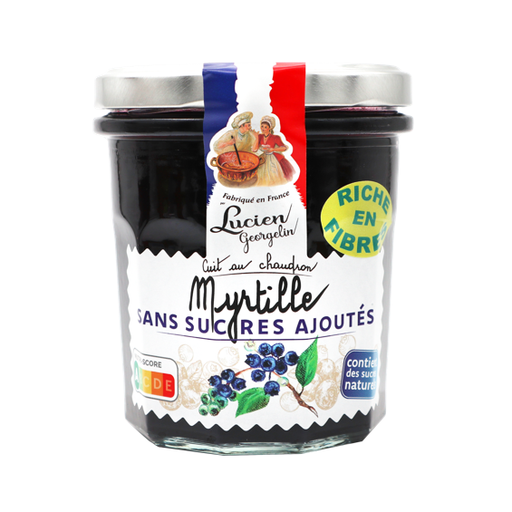 Image unavailable
Worth considering if you’d like a blueberry spread for your toast rather than reduced-sugar jam. To compare it with another recipe, check the sugars per 100 g and the ingredients for this product.
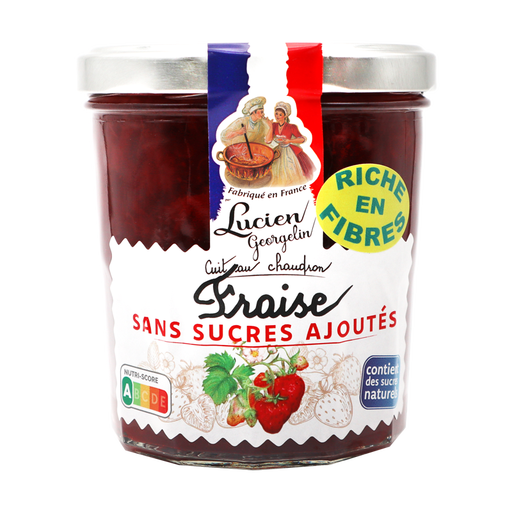 Image unavailable
Worth considering if you prefer strawberry on your toast and are looking for a no-added-sugar spread. The Joybuy listing states that it contains 65% strawberries and 26 g of sugars per 100 g, so the label on the front doesn’t mean it’s sugar-free. Once opened, keep it in the fridge and eat it within 10 days.
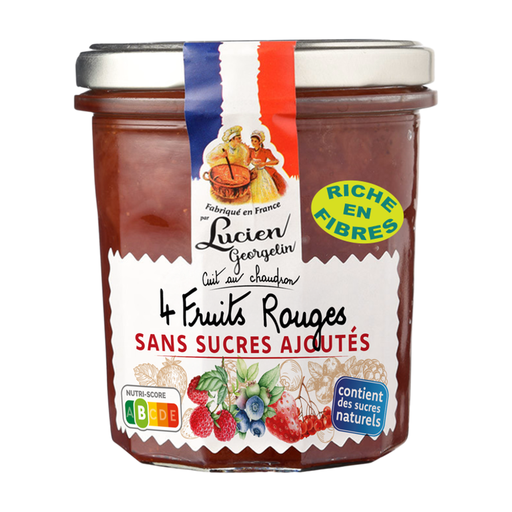 Image unavailable
Worth considering if you’d like to try a mix of fruits rather than choosing a strawberry or blueberry spread. Before buying, compare the sugars per 100 g and the ingredients list for this product with those of the other jars you’re interested in.
No. The Auchan raspberry jam described as reduced-sugar contains 30% less sugar than regular jam, but still has 37 g of sugars per 100 g. To compare jars, check the ‘of which sugars’ figure using the same 100 g basis.
No. Sugars naturally present in the fruit still count. The Joybuy listing for Lucien Georgelin’s no-added-sugar strawberry spread states that it contains 26 g of sugars per 100 g.
The two descriptions shouldn’t be taken to mean that the recipes are identical. If the difference matters for your toast, check the product description on the jar, its ingredients list, the stated proportion of fruit if provided, and its nutritional information.
Check the storage instructions for after opening and choose a size that suits how often you’ll use it. For its strawberry spread featured on Joybuy, Lucien Georgelin says to keep it in the fridge and eat it within 10 days of opening. Follow the instructions on the jar you choose.