Toast lovers looking to cut down on sugar
You want to keep jam on the breakfast table while comparing how much you actually spread. Check the sugars per 100 g, then factor in your usual portion.


When choosing jam for breakfast, start by comparing the sugars per 100 g: reduced-sugar jam still contains sugar, and a no-added-sugar spread does not necessarily contain the least sugar overall. Then check the fruit content, ingredients and how much you spread on your toast. You can compare standard jam using the same criteria.
You want to keep jam on the breakfast table while comparing how much you actually spread. Check the sugars per 100 g, then factor in your usual portion.
The amount of fruit and the ingredients matter just as much to you as the claims on the front of the jar. Compare the details for the specific flavour you’re buying.
You’re looking for a product that fits your shopping habits. Check the pack size and whether it’s available in your local store or for online grocery shopping, as ranges can vary.
Worth considering: if you want to compare a recipe with added sugar against standard jam.
Bear in mind: a reduced-sugar claim does not mean sugar-free; the difference depends on the products you compare.
Worth considering: if no added sugar is your starting point.
Bear in mind: fruit also contains sugars, so check the total sugars and the product’s exact description.
Worth considering: if you prefer a familiar recipe or flavour and want to compare it with the other options.
Bear in mind: a marketing term such as “intense” does not, by itself, tell you how much sugar the jam contains.
| What to compare | What to check | Who it matters to |
|---|---|---|
| Sugar intake | Sugars per 100 g and the amount you usually spread. | On my toast, I mainly want to spot a meaningful difference in the sugar content for the amount I use. Around 42% of consumers rank reducing sugar as their top priority. |
| Fruit and ingredients | The stated fruit content and the ingredients for the flavour you’ve chosen. | If fruit flavour and the recipe guide my choice, a reduced-sugar claim alone isn’t enough. Ingredients are the top priority for around 33% of consumers. |
| Shopping and pack size | Whether the jar is available at your usual retailer, its size and storage instructions after opening. | I’m looking for a jar I can buy at my local shop and finish while following its storage instructions. This practical need comes first for around 25% of consumers. |
Reduced-sugar jams from Materne, Auchan and E.Leclerc still contain sugar. The claim alone doesn’t tell you how much you’ll consume on a slice of toast.
Compare the “of which sugars” figure per 100 g, the ingredients and your usual portion.
The Nutri-Score is no substitute for checking the recipe. The E.Leclerc product listing for Douceur du Verger strawberry jam also states that its D score was calculated using the method in place before April 2025.
Use the displayed score as an additional guide, and check the sugars, fruit content and ingredients of the jar you’re buying.
Instructions vary between products and may affect which pack size suits how often your household uses jam.
Read the jar’s instructions before choosing a size, then follow them once it’s open.
A jar that isn’t used often may need to be thrown away before it’s finished.
Bonne Maman is one of the brands in Auchan’s reduced-sugar jam range. Its products include a 335 g reduced-sugar peach jam.
Carrefour sells a 340 g reduced-sugar strawberry jam under this brand.
Auchan’s range includes reduced-sugar jams in several flavours, including strawberry and fig.
E.Leclerc sells a 340 g reduced-sugar strawberry jam under this brand.
ALDI France’s jam range includes Grandessa “Confiture Intense”, in a 335 g jar.
These three Lucien Georgelin fruit spreads are presented as breakfast options in the “no added sugar” category. To compare them with reduced-sugar or standard jam, check the sugars per 100 g and the ingredients of each jar.
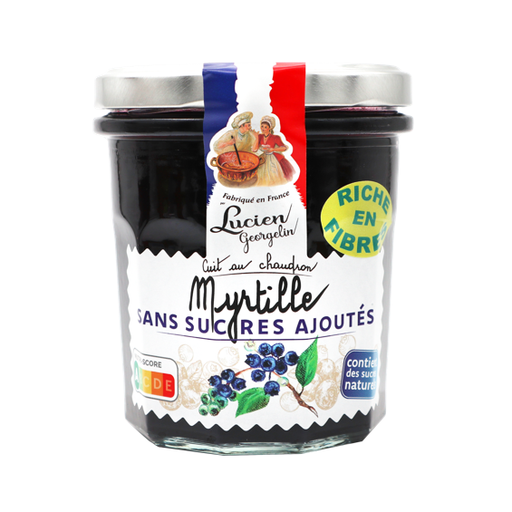 Image unavailable
A spread to consider for breakfast toast if you’re looking for a recipe labelled as having no added sugar.
Compare the sugars per 100 g and check the fruit content on the jar’s label. Also follow its storage instructions after opening.
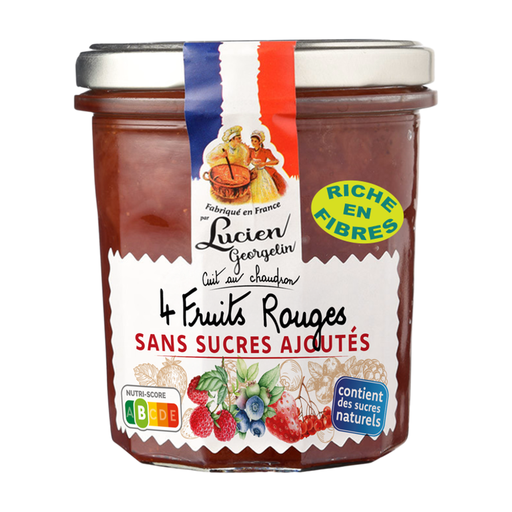 Image unavailable
A spread labelled as having no added sugar to consider for breakfast, including as a topping for pancakes.
Check the sugars per 100 g and the fruit content on the label for this recipe. Follow the jar’s instructions after opening.
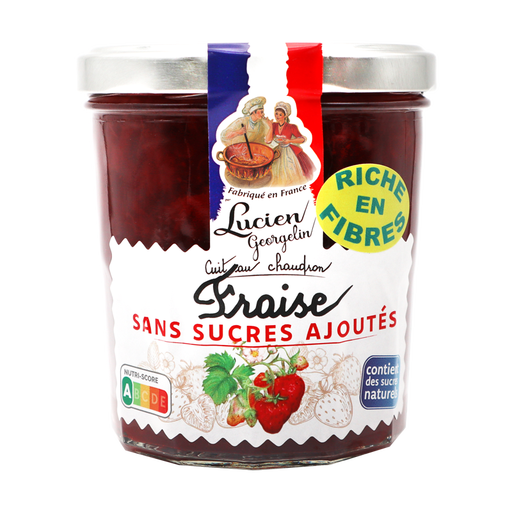 Image unavailable
A spread to consider for breakfast toast if you’re looking for a recipe labelled as having no added sugar.
To compare it with the other flavours, check the sugars per 100 g and the strawberry content on the label. Follow the storage instructions after opening.
No. “Reduced sugar” does not mean “sugar-free”. Product listings for reduced-sugar jams from Materne, Auchan and E.Leclerc still show sugar content. Check the “of which sugars” figure per 100 g for the product you’re interested in.
Compare the total sugars per 100 g, then look at the ingredients and fruit content. The two claims refer to different criteria: “no added sugar” doesn’t mean the fruit contains no sugar.
No. The Nutri-Score is an additional guide, not a substitute for the nutritional information and ingredients list. Displaying it is voluntary. If you’re comparing several jars, also check the sugars and fruit content, as well as the calculation method stated if an older score still appears on a product listing.
Follow the instructions on the jar you’ve bought, as they depend on the recipe. Check them before choosing a larger jar too, especially if you don’t eat jam often.