Anyone looking to cut down on sugar while still enjoying jam
You’re looking for a stated reduction compared with a standard recipe. The percentage on the label doesn’t replace checking the grams of sugars per 100 g on the jar you choose.


Choose reduced-sugar jam if you’re looking for a stated reduction compared with a standard jam, while bearing in mind that the recipe may still contain added sugar. If avoiding added sugar is your priority, look instead for fruit spreads with no added sugar. These still contain the sugars naturally present in fruit. When stocking your cupboard, also compare the “of which sugars” figure per 100 g, the jar size and the storage instructions once opened.
You’re looking for a stated reduction compared with a standard recipe. The percentage on the label doesn’t replace checking the grams of sugars per 100 g on the jar you choose.
You prefer a fruit spread with no added sugar. As Anses points out, this claim doesn’t mean the product is free from sugars naturally present in fruit, so check the ingredients and the “of which sugars” figure too.
You’d like to choose several flavours or sizes that suit how quickly you’ll use them. Before buying several jars, check the storage instructions for each recipe once opened.
First decide whether you’re looking for a lower sugar content or no added sugar; then check the label and size of each jar.
| What to consider | What to check | Who is it for? |
|---|---|---|
| Sugar content | The “of which sugars” figure per 100 g; for reduced-sugar jam, the percentage reduction and what it’s compared with. | I want to cut down on the amount of sugar in the jam I regularly spread on my toast, rather than relying on the word “reduced” alone; around 46% of consumers in this group would prioritise this numerical comparison. |
| Added sugars | The “no added sugars” claim and the ingredients list, followed by the total sugar content per 100 g. | If my deciding factor is that no sugar is added to the fruit spread, I can tell this recipe apart from jam that’s simply reduced in sugar; around 27% of consumers would have this as their priority. |
| For your cupboard | The net weight, flavour and storage instructions for the specific jar once opened. | To enjoy a range of flavours without opening more jars than my household can finish, I choose sizes to suit how we use them; around 27% of consumers would put this practical consideration at the heart of their choice. |
The first claim means there’s been a relative reduction; the second means no sugar has been added. Andros’ reduced-sugar strawberry jam, for example, contains sugar in its recipe, according to the brand.
Decide which distinction matters to you, then check the ingredients and nutrition information for the products you’re considering.
A stated reduction doesn’t tell you the product’s sugar content on its own. Andros lists 40 g of sugars per 100 g for its reduced-sugar strawberry jam, despite claiming a 30% reduction compared with traditional jam.
Compare the “of which sugars” figure per 100 g across the flavours and recipes you’re actually planning to buy.
The product information consulted for Andros and Auchan reduced-sugar jams says to refrigerate after opening and consume quickly.
Choose the size and number of jars to suit how often you use them, then follow the instructions printed on each one.
An opened jar that you can’t finish within the stated storage period could go to waste.
The range includes reduced-sugar strawberry jam in a 350 g jar.
The brand offers a range of fruit spreads with no added sugars, separate from its reduced-sugar jams.
Carrefour offers reduced-sugar strawberry jam in a 340 g jar.
The retailer offers reduced-sugar strawberry jam in a 340 g jar, among other products.
Auchan lists Bonne Maman reduced-sugar peach jam in a 335 g jar.
These two 320 g Lucien Georgelin jars are a good option if you’re looking for a fruit spread with no added sugars for toast or desserts. To choose between the flavours, check the nutrition information and storage instructions on each jar.
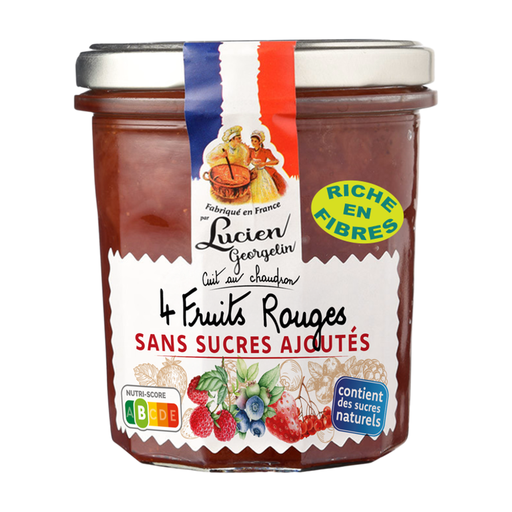 Image unavailable
Worth considering if you’re looking for a red fruit spread with no added sugars for toast or desserts.
320 g jar. Check the “of which sugars” figure and storage instructions once opened on the label.
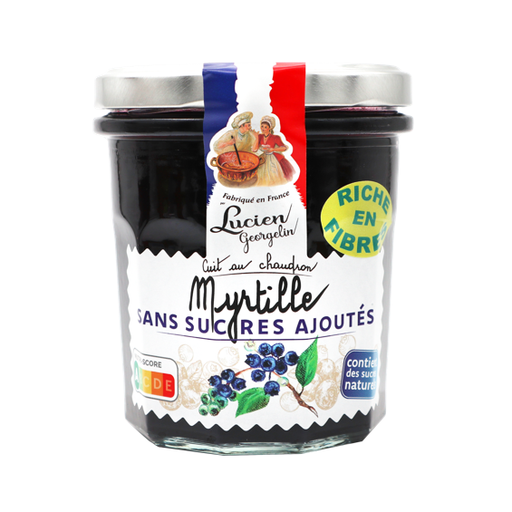 Image unavailable
Worth considering if you prefer blueberry on toast or as a dessert topping, with no sugar added to the spread.
320 g jar. Compare its “of which sugars” figure with those of other flavours and follow the jar’s instructions once opened.
No: this claim indicates a reduction compared with a standard product, not that the jam contains no sugar. Andros, for example, states that its reduced-sugar strawberry jam contains 30% less sugar, while also listing 40 g of sugars per 100 g and sugar in the ingredients.
No: fruit naturally contains sugars, as Anses points out. To compare two fruit spreads, check their “of which sugars” figures per 100 g rather than relying on the claim on the front of the pack.
Start with the product name, ingredients list, net quantity and nutrition information, especially the “of which sugars” figure per 100 g. The DGCCRF notes that prepacked food labels must also include an applicable durability date; check the information on the jar you buy.
Follow the instructions on the jar you buy. The product information for Andros and Auchan reduced-sugar jams says to refrigerate them after opening and consume them quickly, so choose a size that suits how often you use them.