Shoppers looking for a ‘reduced-fat’ claim
If this claim is essential to you, don’t treat ‘no added sugar’, ‘organic’ or a simple comparison of nutrition figures as a substitute. Check the wording that applies to the whole bar.


If you’re looking for a cereal bar that is genuinely ‘reduced in fat’, check that the claim applies to the whole bar and tells you what it is being compared with. A low figure per 100 g alone isn’t enough to substantiate the claim. If you simply want to choose between the recipes available for your order, compare their fat content per 100 g, then check the sugars, ingredients and pack size. The DGCCRF reminds consumers that nutrition claims are subject to conditions of use.
If this claim is essential to you, don’t treat ‘no added sugar’, ‘organic’ or a simple comparison of nutrition figures as a substitute. Check the wording that applies to the whole bar.
If you don’t need a ‘reduced-fat’ claim, the fat figures per 100 g let you compare the cereal bars you’re looking at on a like-for-like basis. Then check any other nutritional information that matters to your choice.
A fat content that suits your search doesn’t mean you can skip the ingredients list and allergen information for the exact product. If these details are important to you, check the packaging you receive before eating the bar, too.
First decide whether you need a claim that applies to the whole bar or simply want to compare the stated fat content. Pack size and ordering options come next.
| Criteria | What to check | Who is this for? |
|---|---|---|
| ‘Reduced-fat’ claim | Check that the claim applies to the whole bar and specifies what it is being compared with. The DGCCRF says nutrition claims are subject to conditions of use. | If this claim is essential to my purchase, a recipe that simply contains less fat than another doesn’t meet the same need. Around 37% of consumers prioritise this comparative evidence. |
| Fat content | Compare the fat content per 100 g across cereal bars, then check the sugars and serving size. | When choosing between the recipes in my order, I want to compare their fat content on a like-for-like basis without needing a ‘reduced-fat’ claim. This is the main priority for around 27% of consumers. |
| Ingredients and allergens | Read the ingredients list, declared allergens and any ‘may contain’ warnings for the specific variety. | If I need to avoid an ingredient, I first check that the bar I’m considering is suitable before comparing fat content. This is a priority for around 18% of consumers. |
| Pack size and availability | Check the net weight, number of bars and ordering options for your address or shop. | To complete my order, I mainly need the pack size I want to be available for delivery or collection. Around 18% of consumers put this practical consideration first. |
Auchan’s product listing for the Pure Via hazelnut, chocolate and banana bar says ‘no added sugar’, but also states that it contains 26 g of fat per 100 g. A claim about sugars doesn’t tell you the fat content.
Check the ‘fat’, ‘of which saturates’ and ‘sugars’ figures separately in the nutrition information.
Carrefour’s listing for its Bio seed and almond bar states that it contains 39 g of fat per 100 g. The recipe name alone doesn’t tell you its fat content or whether it meets this criterion.
Compare the figure per 100 g and check the ingredients for the variety you choose.
Ingredients and ‘may contain’ warnings vary between recipes. Bars from the same brand don’t necessarily carry the same information across different varieties.
Check the details for the exact product, then read the packaging you receive as well.
The figures below apply to the specific products named, not to every bar from each brand.
Two Kellogg's cereal bar recipes show why it’s worth comparing product listings one by one.
The Carrefour Bio cereal bars mentioned here have different recipes and fat content.
Auchan’s range includes a variety of cereal bar recipes, including an Auchan Bio chocolate bar.
You can consider this product if you’re comparing cereal bars by their nutrition information and don’t need a ‘reduced-fat’ claim for the whole bar.
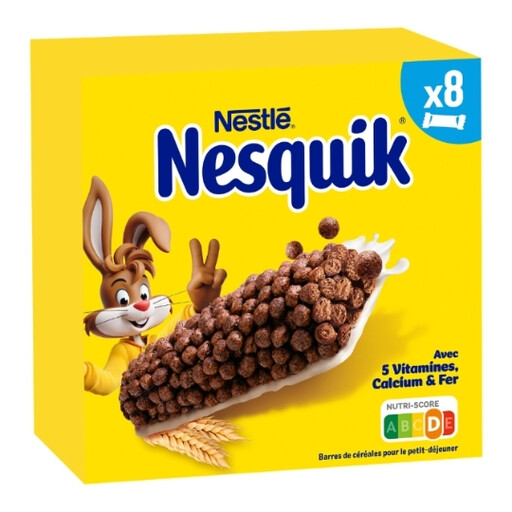 Image unavailable
Worth considering if you want to compare the nutrition information for individually portioned bars, without assuming that the whole bar is ‘reduced in fat’. The ‘fat-reduced’ claim shown on the product listing refers to the cocoa powder in the recipe, not the whole bar. If allergens matter to you, check the information on the packaging you receive. Before ordering, also check delivery options for your address.
No. A figure per 100 g, even if it’s lower than that of another bar, isn’t enough on its own to support a comparative claim. The DGCCRF reminds consumers that nutrition claims are governed by Regulation (EC) No 1924/2006 and are subject to conditions of use. Check the claim that applies to the whole bar and what it is being compared with.
No. Auchan’s product listing for the Pure Via hazelnut, chocolate and banana bar pairs a ‘no added sugar’ claim with a fat content of 26 g per 100 g. Read the ‘sugars’ and ‘fat’ figures separately.
Start by comparing fat content per 100 g so you’re using the same basis for each cereal bar. Then check the stated serving size to see what the figures mean for one bar from the pack you’ve chosen.
No. According to Santé publique France, displaying the Nutri-Score is voluntary. It doesn’t replace checking the fat figures in the nutrition information or the ingredients, or verifying any claim that applies to the whole bar.
Once you’ve chosen the recipe that meets your main criterion, check the number of bars, net weight and ingredient information for the exact product. Then confirm delivery or collection options for your address or shop and your preferred time slot.