What should you check before buying?
First decide whether you’re looking for an everyday snack or something to take out occasionally. Then compare the ingredients and the amount in each bar.
| What matters |
What to check |
Who is this for? |
| A varied snack |
Decide whether you’re buying a bar for occasional convenience or whether it could regularly replace other foods at snack time. |
If I prepare snacks every day, I want to know where a bar might fit without routinely leaving out bread and fruit. Around 38% of consumers put variety at the top of their needs. |
| Portability and portion size |
Check how many bars are in the pack, the weight of each bar and the nutritional information per portion. |
For a day out, I mainly need a snack that’s individually wrapped and easy to pop in a bag. Around 23% of consumers prioritise this convenience. |
| Allergens |
Read the ingredients and check which allergens are highlighted on the pack for the recipe you’ve chosen. |
If a child needs to avoid certain ingredients, I need to rule out any unsuitable recipe before considering its format. Around 31% of consumers prioritise whether a product is suitable for people avoiding particular ingredients. |
| Sports nutrition claims |
Check what the bar is intended for, then compare the nutritional information per bar. |
If I’m buying for an older child who does sport, I want to distinguish this from an ordinary snack. Around 8% of consumers prioritise this distinction. |
An individually wrapped option on Joybuy
For an occasional day out, this multipack of individually wrapped protein bars is one format to consider. Whether it’s right for a child depends on what the packaging says.
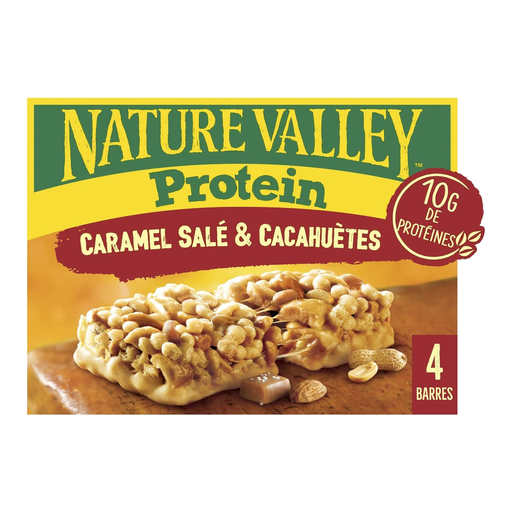 Image unavailable
NATURE VALLEY Protein Bar, Salted Caramel & Peanuts, 4 × 40 g
This pack of four 40 g bars could suit anyone looking for portions to take out as an occasional back-up. Before offering one to a child, check the ingredients, allergens and nutritional information for this recipe on the pack. Its format and name alone aren’t enough to show that it’s suitable for this purpose.
View on Joybuy
Frequently asked questions
Can a protein bar become a child’s everyday snack?
It shouldn’t be the default choice: for children aged 4–17, Manger Bouger recommends limiting foods that are high in fat and sugar and offering a varied snack. A bar may be convenient when you need something easy to carry, but the word ‘protein’ shouldn’t override this guidance.
How should you compare two multipacks of bars?
First compare the nutritional information per 100 g, then check the information per bar if it’s shown on the packaging, so you can take the portion size into account. Look at energy, fat, sugars, protein and salt in particular. The DGCCRF explains these details in its guidance on nutrition declarations for relevant prepacked foods.
What should you check if a child needs to avoid an allergen?
Read the ingredients list for the exact recipe and format you’re buying. The DGCCRF explains that allergenic ingredients must be highlighted. Depending on the products listed by Carrefour and Auchan, recipes may contain peanuts, milk, soya, wheat or nuts.
Is a bar labelled ‘after exercise’ automatically suitable after a child’s sports session?
No. That label describes how the product is marketed, not whether it’s generally suitable for children. Auchan describes Eat’N Move as a range for sportspeople to eat after exercise. Check the ingredients, allergens and intended role of the snack before choosing it.


