
Livraison le jour même ou le lendemain

Qualité garantie

Débloquez vos offres de bienvenue: Livraison GRATUITE | Jusqu'à -80 % | 30 jours d'essai gratuits à JoyPlus
Téléchargez l'application
An underinflated tire isn't just an inconvenience: it's a genuine safety risk and a cause of increased fuel consumption. The portable air compressor has thus become an essential accessory for many drivers, motorcyclists, and cyclists. The problem: the market is saturated with often misleading marketing promises. Before you choose, it's crucial to know how to distinguish genuine assets from clever gimmicks.
This guide is designed to shed light on the technical criteria that truly matter and help you find the right model for your needs, far from the marketing hype.
Marketing often highlights flashy features that can hide deal-breaking weaknesses in daily use. Here are the key points to keep in mind.
To make an informed choice, focus on the technical specifications that truly matter for the performance and reliability of your mini-compressor.
The choice of power source is critical: it depends on your need for mobility and your standards for reliability.
These two values define the true power of your device.
A good digital pressure gauge is essential. Favour models that are transparent about their margin of error. The auto-shutoff feature, which stops inflation once the target pressure is reached, is a major bonus for accuracy and convenience. It prevents over-inflation and frees up your mind (and your hands) during the process.
Rather than a random laundry list, here are a few models that cater to specific user profiles, keeping in mind the pitfalls and criteria we've just discussed.
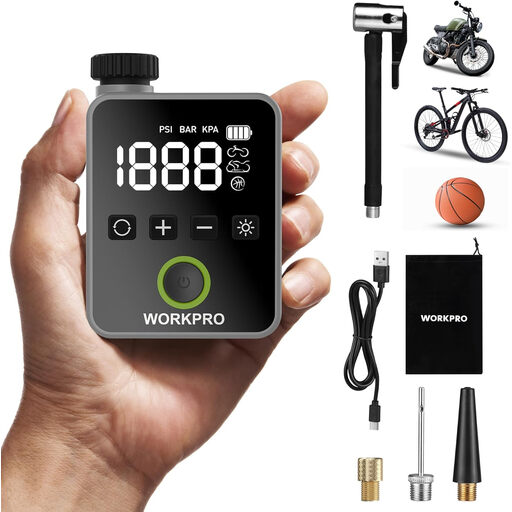
Why it's a perfect match: Ideal for those looking for a "just-in-case" device. Its featherlight design (270g) lets you slip it into a glove box or backpack and forget about it. Perfect for a quick pressure top-up before a long trip or for inflating a bicycle tire on the fly.
It sidesteps the "phantom" battery trap with its power bank feature, which encourages more frequent use. Its simple USB-C charging makes it effortless to keep ready for action.
Versatility: 4 preset modes (bicycle, motorcycle, ball, custom) and an LED flashlight function with SOS mode. Extreme Compactness: One of the lightest and most compact on the market.
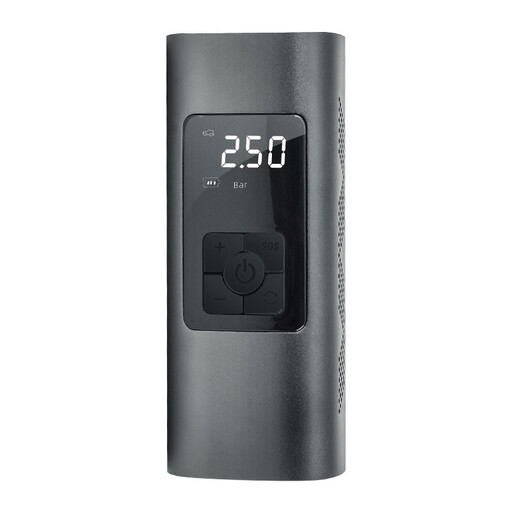
Why it's a perfect match: For someone who uses their car or motorcycle every day, reliability is non-negotiable. The dual power supply (6000mAh battery and 12V socket) guarantees the compressor will always be operational, even if you've forgotten to charge it.
It eliminates the risk of a dead battery thanks to its 12V corded mode. This provides absolute peace of mind for a roadside emergency, without ever depending on the internal battery's charge level.
Dual Power: The best of both worlds, combining the freedom of cordless with the reliability of 12V. High-Capacity Battery: The 6000mAh ensures good runtime and doubles as a power bank.

Why it's a perfect match: For cyclists, motorcyclists, and campers looking for a versatile and high-performing device. Its 5 inflation modes (car, motorcycle, bicycle, ball, custom) and respectable 17 L/min airflow rate make it effective in a multitude of situations.
It tackles the pitfall of illusory inflation speeds by advertising an honest airflow rate (17 L/min) and concrete performance (according to the manufacturer, it can top up a 195/65R15 tire from 30 to 36 PSI in 1.5 min). It also emphasizes the accuracy of its sensor.
Balanced Performance: An excellent compromise between speed, portability (460g), and battery life. Comprehensive Features: 5 modes, 4 pressure units, 3-mode LED light, and a power bank function.
We have compiled a complete and up-to-date selection of products that meet our selection criteria and safety standards.
The lifespan primarily depends on its lithium-ion battery. To preserve its longevity, it's advisable to recharge it at least once every three months, even when not in use. Avoid storing the device in extreme heat or cold (e.g., in direct sunlight inside a car during summer). With proper care, the battery can remain effective for several years.
Yes, 150 PSI is more than enough. The recommended pressure for an SUV tire is typically between 2.4 and 3.0 bar (35-45 PSI). The real challenge for a larger SUV tire is the airflow rate (L/min) and the battery capacity. A model with a high airflow rate and a large-capacity battery (6000mAh or more) or a 12V compressor will be better suited for quickly and efficiently inflating a tire of this size.
No, that is absolutely not recommended. A 12V compressor is designed for occasional use. It's even better to start the vehicle's engine before plugging it in to avoid draining the car's battery, especially if the inflation is expected to take a while. Once the job is done, unplug it and store it away.