
Livraison le jour même ou le lendemain

Qualité garantie

Débloquez vos offres de bienvenue: Livraison GRATUITE | Jusqu'à -80 % | 30 jours d'essai gratuits à JoyPlus
Téléchargez l'application
Outdoor solar lighting looks great on paper: no wiring to run, no increase in your electricity bill... Yet, the market is flooded with products offering wildly inconsistent performance, and disappointment is all too common. As a Product Expert at Joybuy, my mission is to help you navigate the marketing traps and make a truly enlightened choice.
Before you buy, here are the three classic pitfalls that lead to buyer's remorse:
To avoid these traps, the solution is simple: stick to objective technical criteria.
Forget the marketing hype and focus on these three technical specifications. They are what separate a cheap gimmick from a lasting investment in your outdoor solar lighting.
These two elements go hand in hand. Brightness, measured in lumens (lm), indicates the lamp's actual light output.
Of course, high brightness requires a battery that can keep up all night. The battery's capacity, measured in milliampere-hours (mAh), is therefore crucial. A capacity of at least 1200-1800 mAh is a good starting point for a full night of illumination.
The IP rating is an international standard that classifies a device's resistance to solids (like dust) and liquids (like rain). For outdoor use in our unpredictable climate, an IP65 rating provides peace of mind.
Any product with a rating lower than IP44 should be avoided for direct exposure to the elements.
Beyond the basic specs, certain features can truly make your life easier:
To put theory into practice, here are a few products that tick all the right boxes for different needs.
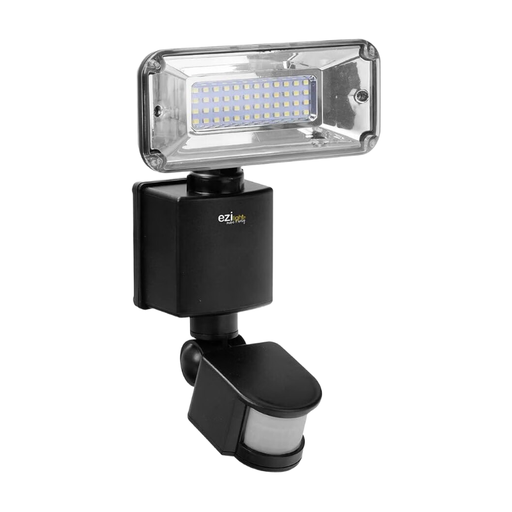
Why we chose it: Perfect for securing an entryway, garage, or a dark area of your garden. This LED solar floodlight combines high brightness with smart power management for maximum visibility, only when you need it.
The built-in motion sensor is the answer to the battery life trap. The light only activates at full power upon detection, preserving the battery to last through the night.
Its adjustable head allows you to direct the light beam with precision. Its sturdy build and waterproofing ensure a long lifespan.
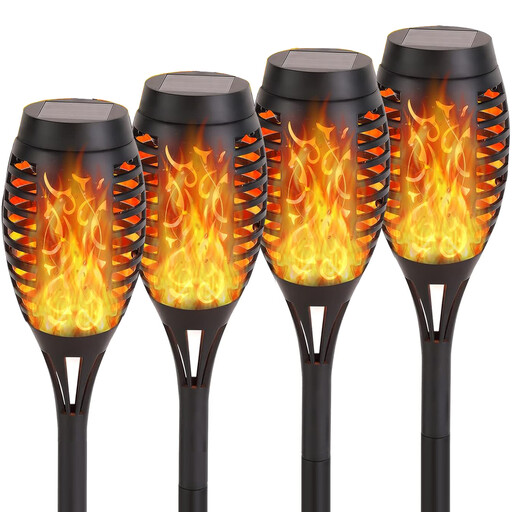
Why we chose it: Perfect for creating an elegant and welcoming garden light display. The flickering flame effect adds a charming touch for lining a pathway or defining a patio on summer evenings.
This product isn't trying to be powerful. Its purpose is purely aesthetic, with a soft glow that conserves its battery. Its IP65 rating effectively protects it from rain.
Ultra-simple installation in seconds with the included stakes. The set of four makes it easy to create a harmonious arrangement in your garden.
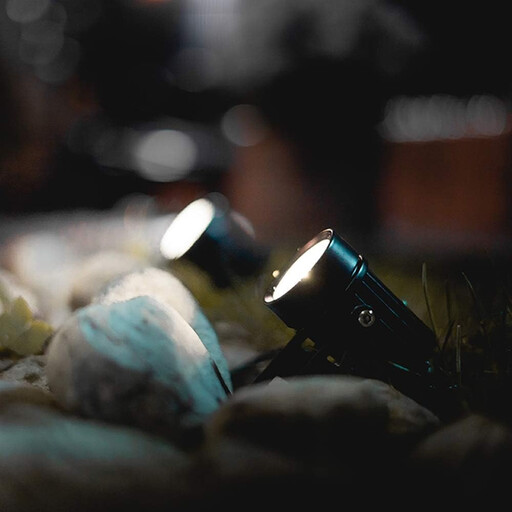
Why we chose it: The versatile solution for highlighting multiple garden features (trees, flowerbeds, facades) with a single system. This kit of solar garden spotlights offers great creative freedom.
The single, high-performance solar panel powers multiple spots, optimising the charge. Each spot can be aimed independently for precise lighting without wasting energy.
Maximum flexibility: a single well-placed panel is enough to power several lights, even if the lights themselves are in shadier areas.
We have selected a full range of products for you that meet these quality criteria and current safety standards.
Yes, but with understandably reduced performance. Modern solar panels can charge even in overcast weather, but the battery life will be shorter than after a full day of sun. In winter, shorter days and weaker sunlight also limit the illumination time. Models with a large solar panel and a high-capacity battery will always perform better in these conditions.
It all depends on the quality of the components. LEDs have a very long lifespan (often over 20,000 hours). The weakest link is usually the rechargeable battery, which typically needs to be replaced every 2 to 4 years. The quality of the housing and its waterproof rating (IP rating) are just as crucial for the product's longevity.
To get the most out of your light, a few simple steps are all it takes: