
Livraison le jour même ou le lendemain

Qualité garantie

Débloquez vos offres de bienvenue: Livraison GRATUITE | Jusqu'à -80 % | 30 jours d'essai gratuits à JoyPlus
Téléchargez l'application
Pickleball is gaining ground, and for good reason: it's an accessible, social, and excellent sport for staying in shape. But whether you're a beginner or a club manager, choosing the right equipment—especially the balls—can quickly become a headache. The wrong ball can not only ruin the quality of play but also wear out prematurely. In short, it's a poor investment.
As the Head of Product Recommendations at Joybuy, my role is to help you see things more clearly. Let's skip the marketing jargon and get straight to the point. Here are the pitfalls to avoid and the essential criteria for choosing outdoor pickleball balls that will truly get the job done.
Before diving into the technical details, you need to know the most common mistakes made when buying pickleball balls.
To make an informed choice, focus on these three objective parameters. They are the true measure of a ball's performance and longevity for outdoor play.
This is not a minor detail. 40-hole pickleball balls are the standard for outdoor play. These holes, which are more numerous and smaller than on indoor models (which typically have 26), allow the ball to cut through the air with greater stability.
The ball's composition determines its resistance to impacts and weather conditions.
For a fair and consistent playing experience, especially if you play in a club or in competitions, verify that the balls meet official specifications:
These specifications ensure the ball will perform as expected, regardless of your skill level.
Instead of an endless list, here are targeted options for specific user profiles. Each one meets the quality criteria we've just discussed.
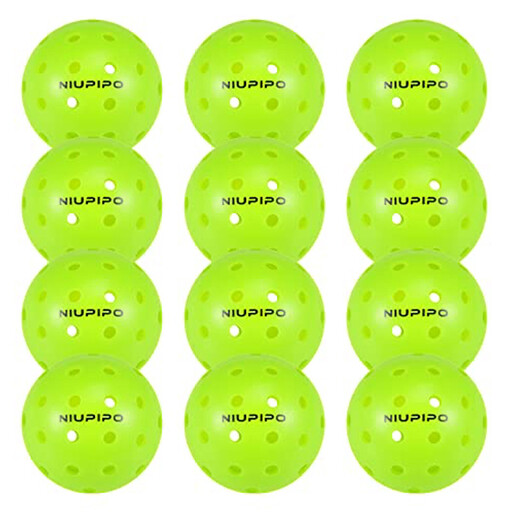
Why we chose it: This 12-pack of pickleball balls is perfect for frequent practice and tournaments. It provides a comfortable supply of reliable, regulation-compliant balls, offering excellent value for heavy use.
Its one-piece PE construction and 40-hole design make it a ball built for the outdoors, helping you avoid the trap of unsuitable or non-durable models.
Its resistance to extreme temperatures (from -30 °C to 40 °C) ensures consistent performance all year round. The seamless design minimises the risk of cracking.
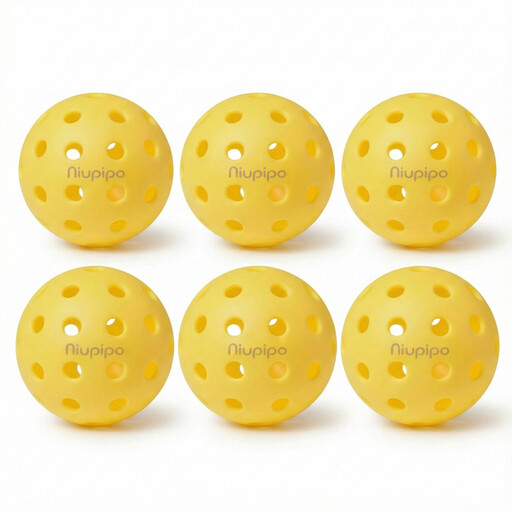
Why we chose it: A 6-pack of balls is perfect for those new to the sport or who play occasionally. It allows you to get equipped with quality gear without investing in too large a stock.
This set offers high-quality TPE balls designed for outdoor use. You won't fall into the trap of mistakenly buying indoor balls, ensuring a great playing experience from the start.
The precisely drilled holes ensure a stable flight path and good spin potential, which is ideal for mastering the fundamentals of the game under the right conditions.
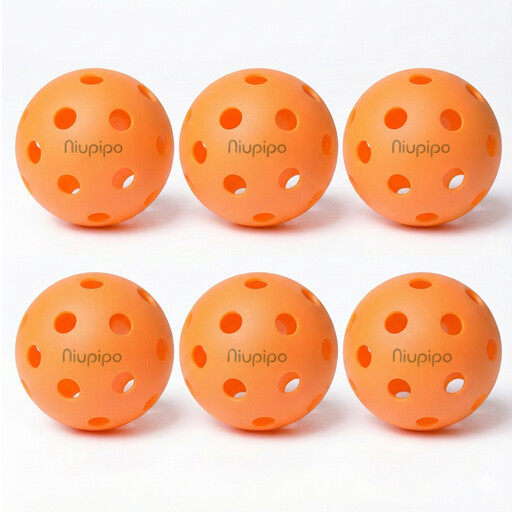
Why we chose it: For those who play exclusively in a gym, this model is perfectly suited. Its 26 larger holes provide a slower, more controllable bounce on the smooth surfaces typical of sports halls.
By choosing a dedicated indoor ball, you avoid using an outdoor ball that would bounce too fast and be harder to control on a gym floor.
The TPE material and design are optimised for a reliable bounce and enhanced durability on wooden floors, offering a much better indoor playing experience.
We have compiled a complete, up-to-date list of products that meet our strict selection criteria and official standards.
A ball's lifespan depends on the frequency of use, the playing surface (concrete is more abrasive than asphalt), and the weather. On average, a high-quality PE ball can last for 5 to 10 intense games before showing signs of wear. It's time to replace it when it develops cracks or is no longer perfectly round, as this affects its bounce.
It's technically possible, but strongly discouraged. Being harder and heavier, outdoor balls will have a lower, faster bounce on a gym floor, making the game less enjoyable and harder to control. They are also typically louder. For the best indoor experience, it's better to opt for balls designed for indoor play.
This colour is no accident. Bright yellow and orange are the most visible hues to the human eye in most lighting conditions and against various backgrounds (blue sky, trees, court colour). This high visibility helps players track the ball's trajectory more easily, from the serve to the fastest volleys.