
Livraison le jour même ou le lendemain

Qualité garantie

Débloquez vos offres de bienvenue: Livraison GRATUITE | Jusqu'à -80 % | 30 jours d'essai gratuits à JoyPlus
Téléchargez l'application
The pickleball phenomenon is taking the world by storm, and with it comes an ever-expanding range of equipment. While choosing a paddle often takes centre stage, selecting the right pickleball balls is just as crucial, though frequently overlooked. The wrong ball can not only ruin your games but also make you throw money down the drain. How many models crack after just a few hours or prove completely unsuitable for the court?
As product experts at Joybuy, our mission is to help you navigate this landscape. Let's break down the common pitfalls to avoid and the criteria that truly matter to find the perfect set of pickleball balls for your game.
The market is full of marketing promises that fall flat on the court. Here are the two most common mistakes that can spoil your games.
To avoid these pitfalls, you just need to understand a few technical specifications. These objective parameters are a ball's true identity, far more reliable than any marketing claim.
A ball's durability primarily depends on its material. Durable pickleball balls are made from two main types of plastic:
Also, look for terms like "single-piece construction" or "seamless." This manufacturing process eliminates seams—the weakest point of low-end balls—and drastically reduces the risk of cracking.
The most obvious difference between balls is the number and size of their holes. Far from being an aesthetic detail, this is a key factor that dictates their flight behaviour.
For an authentic playing experience, whether for recreation or competition, choose balls that meet official standards. The specifications to check are simple: a diameter of about 74?mm and a weight between 23 and 26.5 grams. Playing with regulation balls ensures you get the same feel in a match as you do in practice.
To help you make the right choice, here is our selection of models that tick all the boxes, tailored to specific player profiles.
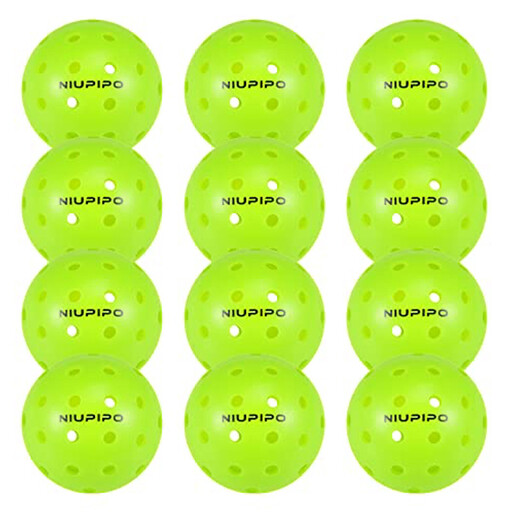
Why we chose it: Ideal for those who play very regularly outdoors, whether in a park or on a dedicated court. The 12-pack offers excellent value for money, allowing you to practice without holding back and always have a fresh ball on hand.
Its PE material and single-piece construction ensure excellent resistance to repeated impacts on hard surfaces and to temperature changes. A direct answer to the problem of balls that crack too quickly.
40-hole design for a stable flight path even in windy conditions. Complies with official size and weight standards (74 mm, 26.5 g).
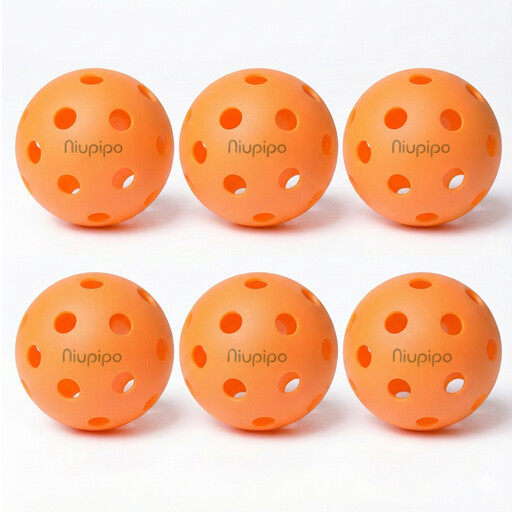
Why we chose it: Designed for gym and sports hall regulars. Its TPE material provides a highly predictable bounce and a softer feel, perfect for wood or PVC floors.
As a dedicated indoor pickleball ball, it puts an end to the lack of control and erratic bounce of an outdoor ball used indoors. Its design is optimised for a wind-free environment.
TPE material for a consistent bounce and a muffled impact sound. Its larger holes ensure a stable and predictable trajectory indoors.
We have selected a full range of products that meet all our quality criteria and safety standards.
A ball's lifespan depends on many factors: frequency of play, surface type (concrete causes more wear than a gym floor), temperature, and even the power of your shots. A good quality outdoor ball can last between 3 and 10 games. We recommend replacing a ball as soon as it shows a crack or is no longer perfectly round to maintain the quality of your game.
Technically, yes, but it's a very bad idea. Being lighter and having larger holes, indoor balls are extremely sensitive to wind, making their trajectory erratic and unpredictable. Their softer material will also wear out very quickly on rough outdoor surfaces.
Inspect your balls before each game. The tell-tale signs of wear are: