Fans of toast with jam and simple recipes
You already add jam and are looking for an organic base with no added sugar, salt or oil, provided the jar’s ingredient list confirms this.


If you’re having it with jam, choose an organic recipe made only with peanuts if you want to avoid added sugar or salt in your peanut butter. If you’d prefer a sweetened spread or a crunchy texture, compare the ingredients in each jar: the organic label alone doesn’t tell you what the recipe or texture is like.
You already add jam and are looking for an organic base with no added sugar, salt or oil, provided the jar’s ingredient list confirms this.
You’re happy with a recipe that contains sugar or salt and would also like to eat it without jam. Check the ingredients before pairing it with a sweet topping.
You want pieces of peanut in your spread. The word ‘crunchy’ can help you identify this texture, but it’s no substitute for checking the ingredients and allergen information.
For toast with jam, start with the ingredient list, then choose the texture you prefer. Check whether it’s organic and compare the nutritional information separately: none of these details tells you everything about the others.
| Criteria | What to check | Who this matters to |
|---|---|---|
| Ingredients | Compare a list containing only peanuts with recipes that add sugar, salt or other ingredients. | I already add jam and prefer my spread not to contain added sugar or salt; around 38% of consumers would prioritise this ingredient list. |
| Texture | Look for a smooth texture or the word ‘crunchy’, then check the recipe of the jar you choose. | I mainly want either a smooth spread or pieces of peanut on my toast; texture would be the top criterion for around 23% of consumers. |
| Organic certification | Look for the EU organic logo on the jar, the code of the control body and the indication of origin shown alongside the logo. | I want to be able to identify the product’s organic certification before choosing its recipe; around 23% of consumers would make this their priority. |
| Size and nutritional information | Compare the net weight and nutritional information per 100 g, particularly sugars and salt. | When comparing jars of different sizes, I need to compare quantities and nutritional values on the same basis; this would be the main consideration for around 16% of consumers. |
An organic recipe can also contain cane sugar and salt. Carrefour product listings for an Éthiquable product and a Jardin Bio Étic spread, for example, show different ingredient lists.
Check the ingredients if you’re looking for a spread with no added ingredients to pair with jam.
The Jardin Bio Étic recipe, which contains 94.6% peanuts, also includes cane sugar and salt. It therefore has a different composition from a peanut spread with no added ingredients when served on toast with jam.
If you want the jam to provide the sweetness, compare recipes made only with peanuts first.
Peanuts are the main ingredient in these products; other allergens may be mentioned as possible traces on individual products.
Read the label on the jar you choose, including any highlighted allergenic ingredients and possible trace warnings. Don’t assume the labelling for one recipe applies to an entire brand.
A score doesn’t show the ingredient list or the amounts of sugar and salt that matter when choosing a spread for toast.
Check the ingredients and compare the nutritional information per 100 g. The DGCCRF explains that using this common basis makes it easier to compare pre-packed foods.
For toast with jam, compare the specific recipes rather than assuming what they contain based on the brand name.
The Carrefour listing for a 350 g organic jar states ‘100% PEANUTS’, from organic farming and fair trade.
Carrefour listings include an organic recipe whose ingredient list features peanuts, an organic crunchy version, and a spread containing 94.6% peanuts, cane sugar and salt.
For a 300 g organic toasted peanut spread, the Carrefour listing states ‘100% toasted peanuts (PEANUTS)‘.
The Carrefour listing for a 340 g organic jar states that it contains 99% roasted peanuts and sea salt.
A 350 g organic product is labelled ‘no added sugars or salt’ in its Carrefour listing.
This PCD jar is worth considering for toast with jam. If organic certification is important to you, check the relevant details on the label before choosing it.
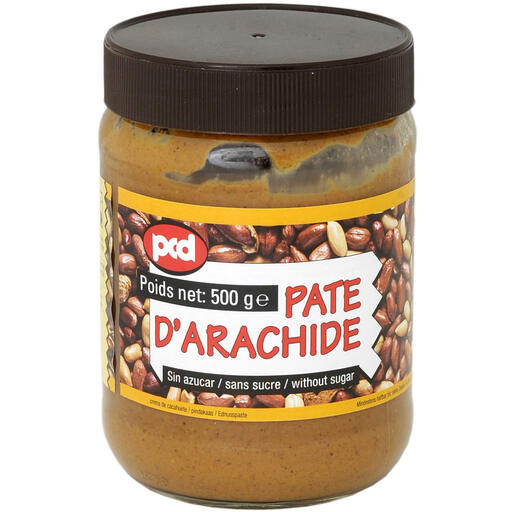 Image unavailable
For toast with jam, take a look at the ingredients in this 500 g jar. Check the label for organic certification, texture and allergen information before deciding whether it meets your requirements.
For a pre-packed product sold as organic in the European Union, look for the EU organic logo and the details shown alongside it, including the control body’s code and the origin of the agricultural raw materials. The European Commission explains that the logo is reserved for certified products. For processed products, at least 95% of the agricultural ingredients must be organic, subject to conditions for the remainder.
No: check the recipe on each jar. The Carrefour listing for an Éthiquable product states that it contains 100% peanuts, while the listing for a Jardin Bio Étic spread also mentions cane sugar and salt.
Check the jar you choose for highlighted allergenic ingredients and any warnings about possible traces. The DGCCRF says allergenic ingredients must be highlighted; a Jardin Bio Étic listing warns that one particular recipe may contain traces of tree nuts, sesame and milk.
Compare the values per 100 g, then check how much each jar contains. The DGCCRF says that presenting nutritional information per 100 g or 100 ml makes it easier to compare pre-packed foods.
Follow the storage instructions on the jar you receive and check its best-before date. Also look for any specific instructions on how to store it after opening.