
Livraison le jour même ou le lendemain

Qualité garantie

Débloquez vos offres de bienvenue: Livraison GRATUITE | Jusqu'à -80 % | 30 jours d'essai gratuits à JoyPlus
Téléchargez l'application
Hanging a picture frame, mirror or plant without getting the drill out is especially appealing for tenants, students and anyone who likes to update their décor regularly. But a no-drill wall fixing isn't automatically suitable for every surface or every object.
A poor choice can result in peeling, chipped paint or a fitting that can't support the weight. Here are the criteria to consider before buying adhesive fixing strips, adhesive wall hooks or a system specifically designed for plasterboard.
Removable adhesive strips can be taken off cleanly when used on a compatible surface and according to the instructions. In contrast, a claw hook for plasterboard sinks into the material to hold it in place. It avoids the need for wall plugs and screws, but it doesn't guarantee a completely invisible fixing.
Before you choose, ask yourself what matters most:
The capacity shown on the packaging applies to specific conditions. In practice, the weight it can support also depends on how flat the wall is, the temperature, humidity, dust and how the weight is distributed.
For a picture frame fixing, the weight of the frame alone isn't always enough: you also need to factor in the glass, the backing and anything attached to it. With a mirror or a whiteboard, the contact surface area and the number of strips used also play a role.
Adhesive wall hooks are generally intended for smooth, clean, dry surfaces. A rough wall, wallpaper, a freshly painted surface or a damp area can significantly reduce adhesion.
Fresh paint needs time to cure properly. On a delicate surface, test the solution in an inconspicuous spot first and check the restrictions stated by the manufacturer.
A suction cup, like the one used on some suction hooks, should only be used on perfectly smooth, non-porous surfaces. It is not suitable for a standard painted wall.
Look at the maximum weight per hook or per pair of strips, not just the figure stated for the whole pack. For comparison, the products shown below have different capacities:
These values don't automatically add up. Always check the instructions, the balance of the object and the actual surface area available.
With a removable strip, you generally need to pull the tab slowly downwards, parallel to the wall, not towards you. A sudden movement can pull off the paint or break the tab.
Clean the surface, press firmly for the recommended time and respect the waiting period before hanging the object. These steps are just as important as choosing the product.
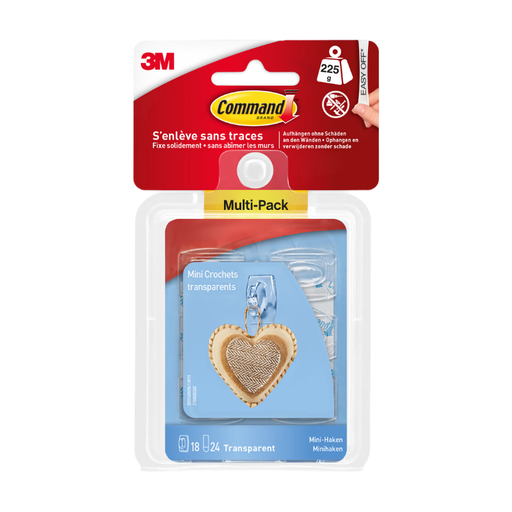
Why this choice suits this profile: This pack is ideal for small decorations, fairy lights, keys and lightweight accessories. It's easy to fit on a smooth indoor surface.
With a stated capacity of 225 g per hook, it reduces the risk of accidentally using it for a frame or object that's too heavy.
A pack of 18 transparent hooks with 24 adhesive tabs, designed for smooth indoor surfaces.
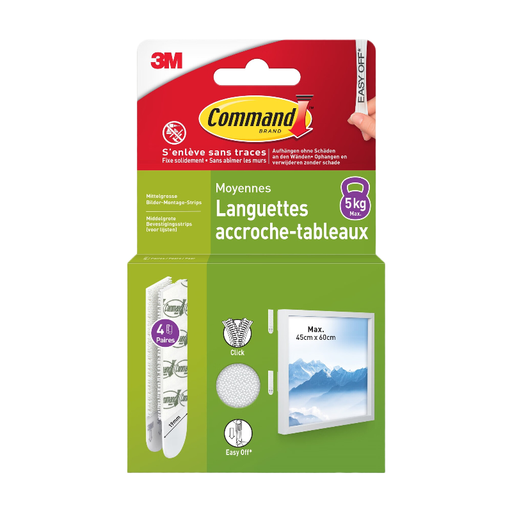
Why this choice suits this profile: These strips are suitable for frames and decorations of moderate weight, in a home or office where you like to rearrange things regularly.
The maximum weight is clearly stated at 5.4 kg. However, the restrictions regarding wallpaper and rough surfaces still apply.
White strips that hide behind the frame, residue-free removal and the ability to reposition the whole setup depending on your chosen layout.
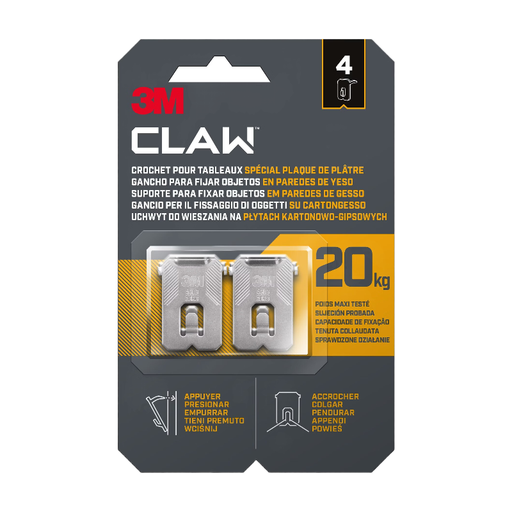
Why this choice suits this profile: This pack is designed for those who need to hang heavy frames, mirrors or decorations on plasterboard.
The stated weight capacity reaches 20 kg, but the system uses metal claws. You therefore need to use it on compatible plasterboard and accept small marks during installation.
A pack of four hooks, installation with a simple thumb press and hardened steel claws designed to hold the object in plasterboard.
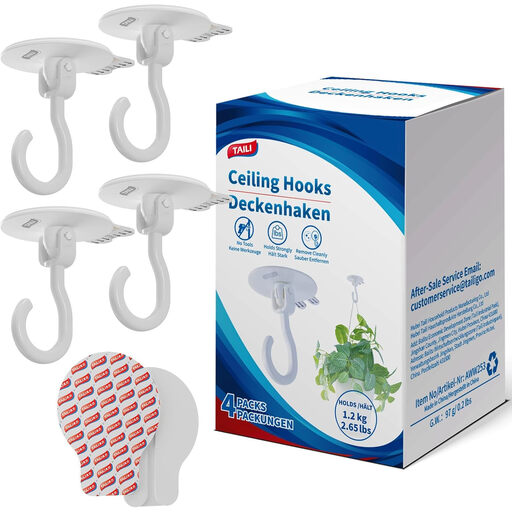
Why this choice suits this profile: Their design allows installation on a wall or ceiling for lightweight plants, fairy lights and decorations, particularly in a rental property or kitchen.
The stated weight capacity is 1.18 kg per hook (2.6 lb). This limit is a reminder to factor in the weight of the plant, pot and damp soil.
Swivel hooks, the strips supplied and stated compatibility with glass, metal, tiles and certain smooth painted surfaces.
In a public building or an office, also allow a safety margin. Avoid hanging a heavy or fragile object above a walkway.
For a lightweight or medium-weight frame, adhesive fixing strips suitable for the load are a practical solution on a smooth wall. Check the stated capacity, the dimensions of the frame and compatibility with the paint. For a heavy frame installed on plasterboard, a claw hook may work, but it won't necessarily keep the surface completely intact.
It all depends on the surface, humidity, temperature, the weight supported and whether the fitting instructions were followed. There is no universal duration that applies to all products. Regular checks are recommended, especially for a plant, mirror or object installed in a warm area.
The references shown indicate restrictions regarding wallpaper, rough surfaces and certain fresh paints. Always check the instructions for the model you choose. If the surface isn't smooth, clean and sufficiently stable, another fixing method will probably be more suitable.