
Livraison le jour même ou le lendemain

Qualité garantie

Débloquez vos offres de bienvenue: Livraison GRATUITE | Jusqu'à -80 % | 30 jours d'essai gratuits à JoyPlus
Téléchargez l'application
Multifunctional kitchen scissors can replace several utensils, provided you choose a pair that is genuinely suited to your cooking tasks. Cutting poultry, separating chicken bones, opening shellfish or snipping herbs each demand a different design.
The trap when buying is to rely solely on the word "multifunctional". A pair that is too thin may bend on bones, while a very robust model can lack precision for herbs or delicate foods. Here are the criteria to examine before placing your order.
Scissors that can cut packaging, herbs and poultry are not necessarily designed to handle thick bones or shells. For these tasks, look for a lever mechanism, reinforced blades or an assisted spring.
Poultry shears and chicken bone scissors should be used on a stable surface, keeping your fingers away from the cutting area. Similarly, a model intended for seafood is not meant for cutting cardboard or branches.
The term "stainless steel" indicates good corrosion resistance, but it alone does not tell you about the rigidity, sharpness or lifespan of the scissors. Check whether the product page specifies the steel grade, blade treatment or care recommendations.
Food-grade stainless steel scissors must be cleaned after contact with meat juices or seafood. Hand washing and careful drying help limit oxidation marks, even on stainless steel.
A very sharp blade without a lock can quickly become awkward, even dangerous, in a drawer. For robust kitchen scissors, look for a safety lock, a non-slip handle and an opening wide enough to make cleaning easy.
The dishwasher is not always a good idea. Some models can handle it, but others require hand washing to preserve the sharpness and mechanism.
For everyday preparations, a stainless steel blade is generally fine for herbs, packaging, thin poultry and common foods. For more demanding cutting, consider the following points:
Crab and lobster scissors often have a tip or gripping area designed for working on claws. However, they are not a substitute for standard scissors when cutting a pizza, a tart or herbs.
A secateur-style mechanism increases leverage. It can prove useful for chicken thighs, small ribs or thick pastry. An assisted spring makes it easier to reopen the blades, but also adds a part to clean and maintain.
The handle must remain stable with damp or slightly greasy hands. Also check whether it suits both right-handed and left-handed users, as well as the size of your hand. A grip that is too narrow reduces control, even with a perfectly sharpened blade.
It is best not to mix tools. Scissors intended for seafood, poultry or barbecuing should be kept for food only. Gardening shears, bonsai secateurs and precision plant scissors are designed for stems, flowers and branches.
In the garden, the stated cutting capacity should guide your choice. A tool designed for stems a few millimetres thick is not suitable for a 25 mm branch. Exceeding this limit can damage the blade and lead to a loss of control.
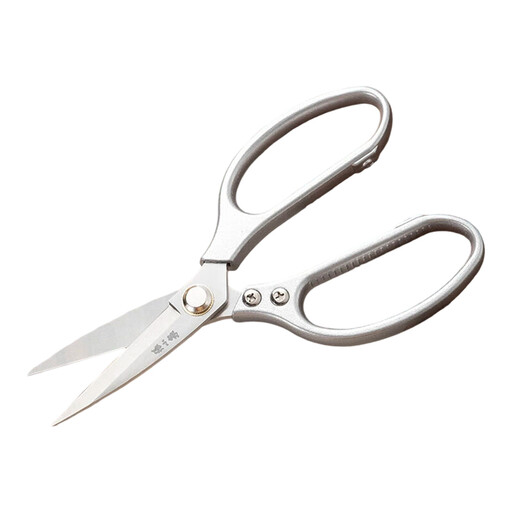
Why this choice suits this profile: this all-steel pair is aimed at everyday kitchen tasks: cutting herbs, opening packaging and carrying out simple preparations.
Its all-steel construction avoids relying on a decorative coating for everyday use. However, check the washing instructions on the product page before using it.
An all-steel construction and a versatile format for everyday cooking.
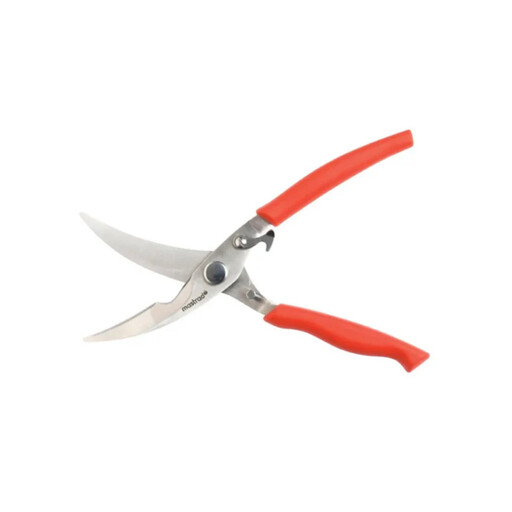
Why this choice suits this profile: its long, curved, reinforced blades and lever mechanism are ideal for those who switch between poultry, pizza, tarts and thick desserts.
The product page details the mechanism, blade shape and locking system, rather than relying solely on the multifunctional label.
Curved, reinforced stainless steel blades, a safety lock and hand washing recommended.
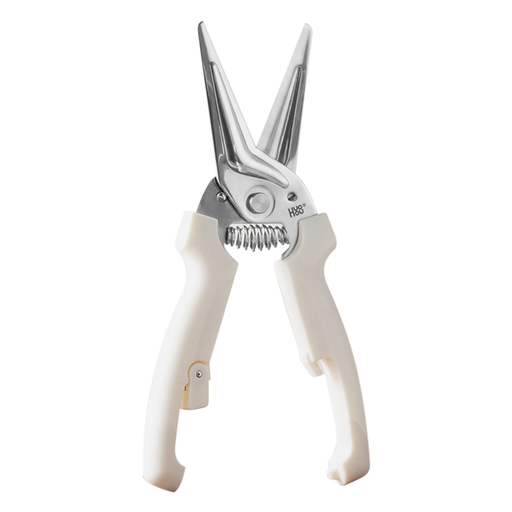
Why this choice suits this profile: this model is aimed at barbecue, roast and seafood lovers who want a pair with a spring and a non-slip handle.
The assisted spring and lock are clearly stated on the product page. This allows you to assess ease of use and storage before buying.
3Cr13 stainless steel blades, a spring, a non-slip handle and a safety lock.
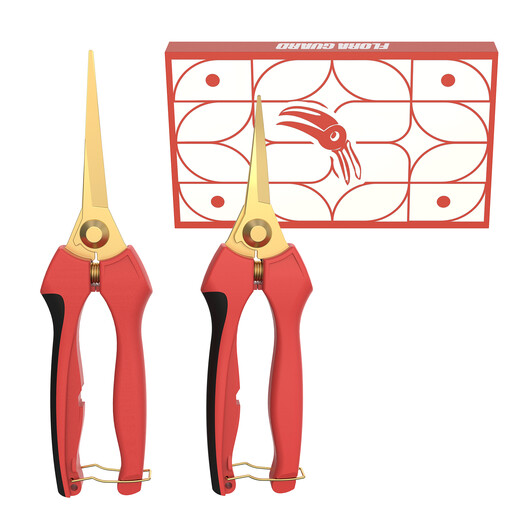
Why this choice suits this profile: this set is ideal for bonsai enthusiasts, flower arrangers and precision pruning fans who want two different blade shapes.
The two scissors are clearly differentiated: a 5 cm curved blade for delicate work and a 7 cm straight blade for stems up to 1.25 cm.
Coated stainless steel, non-slip handles and two cutting profiles for bonsai and flowers.
For prawns, crabs and lobsters, the Mastrad shellfish scissors have a tip designed to access shells, as well as a gripping area that helps open legs and claws. Keep them for seafood only, in line with safety instructions.
For thicker branches, a branch secateur with an SK5 blade and a cutting capacity of up to 25 mm will be far more suitable than kitchen scissors. Conversely, the FLORA GUARD Micro-Tip model, stated for stems up to 6 mm, is intended for precision cuts on flowers and small plants.
Barbecue enthusiasts can also look at a set of barbecue scissors with tongs and an oil brush, handy for bringing several accessories together around the grill.
We have compiled a complete, real-time updated list of products that fully meet these demanding selection criteria and European safety regulations.
This is not recommended unless the manufacturer explicitly states this use. For bones and joints, choose poultry shears with reinforced blades and a lever mechanism. Work on a stable surface and keep your fingers away from the blades.
It all depends on how often you use them, what you cut, how you clean them and how you store them. Hand washing, immediate drying and a light lubrication of the pivot, when the instructions allow it, can help maintain a consistent cut. Avoid materials the tool is not designed for.
Yes. Gardening tools can come into contact with soil, sap or plant residues that have no place in food preparation. Keep kitchen scissors for food use and reserve bonsai secateurs or precision plant scissors for your gardening tasks.