
Livraison le jour même ou le lendemain

Qualité garantie

Débloquez vos offres de bienvenue: Livraison GRATUITE | Jusqu'à -80 % | 30 jours d'essai gratuits à JoyPlus
Téléchargez l'application
A multifunction electric hot pot lets you prepare soup, noodles, fondue, stew or a slow-cooked dish without tying up your hob. But behind appliances that look similar, the uses, capacity and maintenance requirements can vary enormously. To avoid unpleasant surprises, it's worth examining a few concrete features rather than relying solely on promises like "fast", "family-sized" or "multifunction".
High wattage generally speeds up heating, but it doesn't guarantee gentle, even cooking. A 1,500 or 1,600 W appliance will be handy for bringing stock to the boil quickly, whereas a setting that's too limited can make simmering, sauces and slow cooking more difficult.
For a variety of recipes, go for progressive power selection or several clearly marked levels. A simple low/high switch may be enough for noodles or soup, but it leaves far less room for delicate preparations.
A 5 to 7 litre electric hot pot works well for meals for several people, but the actual usable volume is less than the nominal capacity. You need to leave a margin to avoid splashing and overflow, especially when stock is boiling vigorously.
On the other hand, a mini electric hot pot of 1 to 2 litres is better suited to a single person, a couple or a small kitchen. It takes up little space, but won't comfortably prepare a Chinese fondue for several guests.
A non-stick coating makes cleaning easier, provided you use utensils that won't scratch it. A removable pot, detachable cord and easy-to-remove lid also make maintenance and storage simpler.
Also check whether the manufacturer mentions overheat protection or dry-boil protection. This safety feature doesn't mean you can leave the appliance unattended – you still need to respect the fill level and place it on a stable, heat-resistant surface.
Compare the appliance's dimensions with your worktop, cupboards and storage space. A large electric pot can be very practical in use, but far less so if you have to move it every time.
A progressive control, for example over a range of 0 to 210 °C, offers more flexibility for searing food, simmering a dish or keeping it warm. Two-level models are still fine for basic needs: low power for gentle cooking, high power for rapid heating.
Claims like "4-in-1" or "multifunction" should be checked against the actual uses detailed: hot pot, electric slow cooker, braising, light frying or noodle cooking. The number of functions printed on the box is no substitute for a clear specification sheet.
A non-stick hot pot is generally cleaned with a soft sponge. Avoid metal forks, knives and abrasive products, which can scratch the surface. A transparent glass lid lets you keep an eye on cooking without lifting it.
The heating element and electric base must never be submerged. Unplug the appliance before cleaning and wait until it has completely cooled down. If the manufacturer says it's dishwasher-safe, check which parts are included: the pot and lid may be, but not necessarily the base.
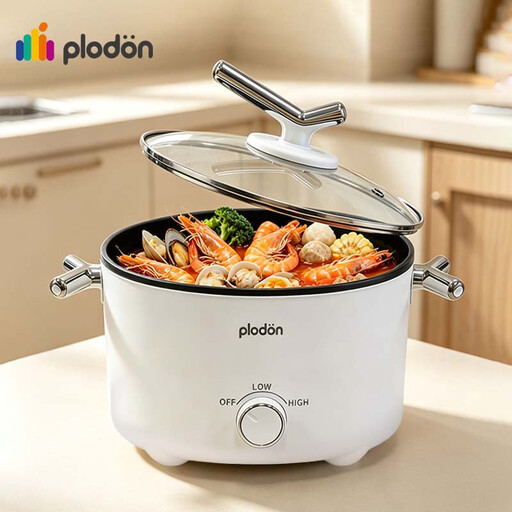
Why this suits this profile: Its 2-litre size is ideal for solo or two-person meals in a studio, student accommodation or small kitchen. The two heat levels let you switch from gentle cooking to boiling noodles.
The capacity is clearly stated and the product page mentions overheat protection. However, the recommended fill level should not exceed two-thirds.
Non-stick pot, glass lid, detachable cord and portable 2-litre format.
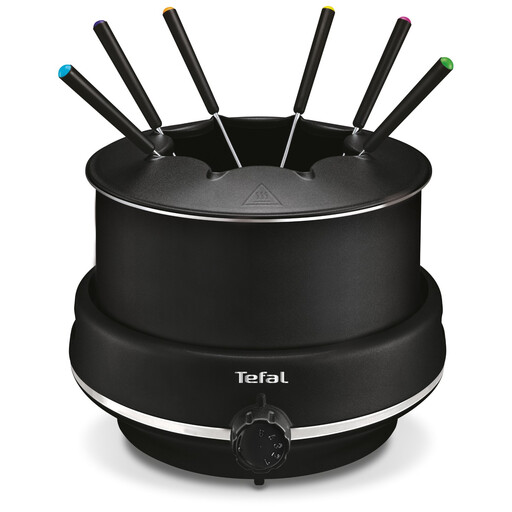
Why this suits this profile: This appliance is designed for sociable meals for up to six people, with an adjustable thermostat and colour-coded forks that are easy to tell apart. It works for oil, cheese, chocolate or broth fondue.
It doesn't rely solely on high power: the adjustable thermostat lets you tailor the heat to each recipe. The pot and lid are stated as dishwasher-safe.
Capacity for six guests, adjustable thermostat, removable non-stick pot and 800 W power.
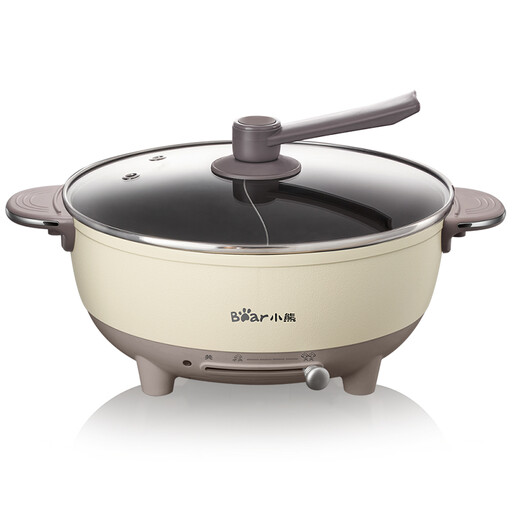
Why this suits this profile: Its 6-litre pot is ideal for family meals and varied cooking. The central divider lets you prepare two broths or two flavours at the same time, which is particularly well suited to Chinese fondue.
Its stated adjustment range, from 0 to 210 °C, offers far more precise control than a simple two-position switch. Dry-boil protection is also mentioned.
6 litres, 1,500 W, dual compartment, non-stick pot and detachable power cord.
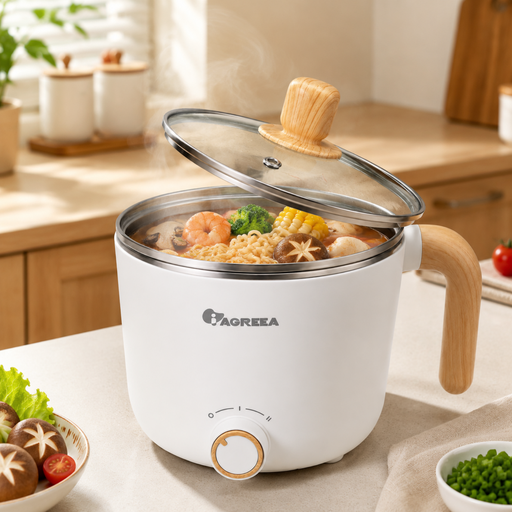
Why this suits this profile: This small 1-litre multifunction electric cooker is designed for one to two people. It stores away easily and can find a home in the office, a student room or a kitchen with limited equipment.
Its small size means you're not paying for or storing a family-sized appliance that would be oversized for daily use. The two power levels, 300 or 600 W, are fine for simple preparations.
Stainless steel inner pot, glass lid and two power levels.
We've put together a comprehensive, real-time updated list of products that meet these demanding selection criteria and European safety standards.
It depends on its wattage and how long you use it. A 1,500 W appliance used for 20 minutes theoretically consumes around 0.5 kWh. In practice, the heating element doesn't necessarily run at full power continuously. To keep consumption down, use maximum power only for heating or bringing the contents to the boil, then reduce it to continue cooking.
It's best to stay nearby, especially during oil cooking, when using an electric hot pot or preparing a dish that produces a lot of steam. Respect the fill line, keep the appliance away from the edge of the worktop and unplug it after use. Overheat protection provides an extra safety net, but doesn't replace supervision.
Let the pot cool down before cleaning it, use a soft sponge and avoid metal utensils on non-stick coatings. Never submerge the electric base in water and store the cord without bending it excessively. These few precautions help limit wear on the coating and reduce moisture-related risks.