
Livraison le jour même ou le lendemain

Qualité garantie

Débloquez vos offres de bienvenue: Livraison GRATUITE | Jusqu'à -80 % | 30 jours d'essai gratuits à JoyPlus
Téléchargez l'application
The promise of an electric pot is certainly appealing: a single appliance to simmer, boil, sear, and even steam. It's the ideal solution for students in dorms, young professionals in studios, or anyone looking to simplify their kitchen routine. The problem? The market is flooded with options, and spec sheets are often misleading. To avoid buyer's remorse, it's best to understand the marketing traps and invest in an appliance that will truly deliver on its promises.
As a product expert at Joybuy, I'm here to help you navigate the choices. Let's review the key points to watch out for and the criteria that really matter in finding the perfect electric pot for your needs.
The excitement of a new kitchen appliance can quickly turn to disappointment if it doesn't live up to its claims. Here are three common pitfalls that can turn a promising purchase into a regret.
To avoid these pitfalls, focus on a few objective technical criteria. These are the true indicators of the performance and durability of your future multifunction electric pot.
Capacity, measured in litres (L), is the first criterion to consider.
Power, measured in watts (W), determines the heating speed and the appliance's ability to maintain a high temperature.
Also consider the controls: a simple low/high switch is fine for basic needs, but a continuously adjustable thermostat offers the precision required for more technical recipes.
The quality of the non-stick coating is a key factor in longevity. High-quality coatings (often described as multi-layered or reinforced) are more resistant to scratches and high temperatures. Check that it is PFOA-free.
For cleaning, prioritise models with a detachable power cord. This makes handling the pot much more convenient and eliminates any risk of contact between the electrical components and water.
To help you choose, here are three models that stand out for specific uses, all meeting the criteria we've just discussed.
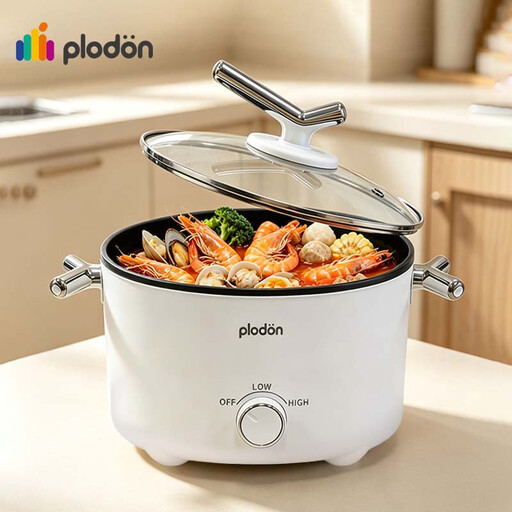
Why it stands out: With its 2.0 L capacity and compact design, it's made for students or people living alone. Perfect for quickly preparing noodles, soup, or a one-pot meal without cluttering a small kitchen.
It sidesteps the issue of insufficient power. Its 1000 W and two modes (low/high) are well-calibrated for its small size, ensuring a rapid boil for its intended uses.
Its portable design and detachable power cord radically simplify cleaning and storage. A real bonus in a limited living space.
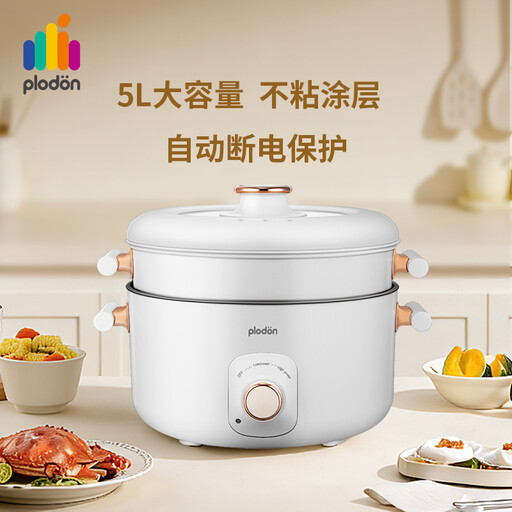
Why it stands out: Its 5 L capacity is perfect for couples or families of up to 4-5 people. The addition of a removable steamer insert makes it a true multi-cooker, capable of handling a complete meal all at once.
It doesn't fall into the trap of false versatility. The steamer is a well-designed, fully-fledged accessory, and the 1200 W of power is sufficient for two-level cooking or more demanding recipes.
The combination of a large 5 L pot and a well-designed steamer accessory offers true everyday flexibility, from steamed vegetables to slow-cooked stews.
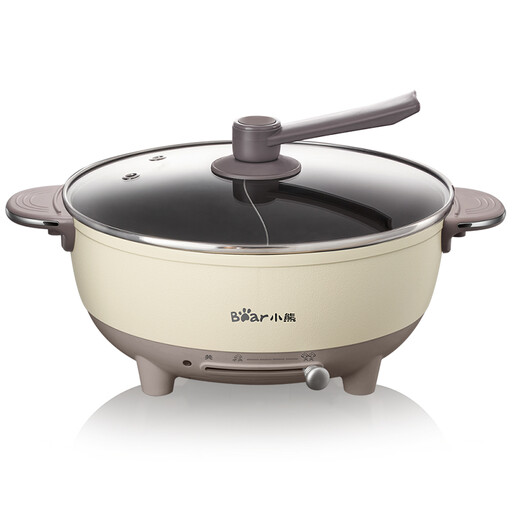
Why it stands out: Specifically designed for large gatherings and hot pot enthusiasts. Its large 6 L capacity and internal divider allow you to serve two different broths at the same time—a highly sought-after feature for this type of meal.
With 1500 W and a continuously adjustable thermostat (0-210°C), it guarantees powerful and precise heating, which is essential for keeping a broth boiling even when adding cold ingredients.
The dual-compartment design is its killer feature. It provides an authentic and social hot pot experience by letting you cater to everyone's tastes (for example, a spicy broth on one side and a mild one on the other).
We have curated a full range of products that meet our quality criteria and European safety standards.
1. What wattage should I choose for an electric pot? The ideal wattage depends on the capacity and your intended use. For basic tasks (simmering, reheating) and a small capacity (under 3 L), 600 to 1000 W is sufficient. For versatile use that includes searing, or for capacities of 4 L and up, aim for at least 1200 to 1500 W for efficient heating.
2. How do I clean an electric pot with a non-stick coating to preserve it? After use, let the appliance cool down completely. Unplug the power cord. Clean the interior with a soft sponge, warm water, and washing-up liquid. Never use abrasive sponges, metal scouring pads, or sharp utensils that could scratch the coating. Most importantly, never submerge the entire appliance in water.
3. Does an electric pot use a lot of electricity? Consumption depends on the power and duration of use. However, an electric pot is often more energy-efficient than a traditional hob (electric or ceramic) for similar tasks like boiling water or simmering a dish, because the heat is generated directly in contact with the pot, which minimises heat loss.