
Livraison le jour même ou le lendemain

Qualité garantie

Débloquez vos offres de bienvenue: Livraison GRATUITE | Jusqu'à -80 % | 30 jours d'essai gratuits à JoyPlus
Téléchargez l'application
The pile of dishes growing in the sink? A familiar nightmare for anyone living in a studio, small flat, or furnished rental. Lack of space makes installing a standard model impossible, yet the desire for comfort and hygiene is real. The mini dishwasher, designed to sit directly on the countertop, emerges as the ideal solution. But be warned: the market is flooded with models whose tempting promises sometimes hide deal-breaking flaws in practice. To avoid disappointment, it's crucial to know how to sidestep the most common pitfalls.
An alluring design or a rock-bottom price can quickly lead to disappointment. Here are the key points to scrutinise to ensure you don't regret your purchase.
To ensure your mini dishwasher becomes a true ally and not a source of frustration, focus on these three indispensable technical criteria.
The difference between dishes ready to be put away and a drying chore comes down to the drying technology. Forget simple condensation drying and opt for a model equipped with hot air drying. This system uses a fan to circulate hot air at the end of the cycle, ensuring complete moisture evaporation on all materials, including plastic. This is the non-negotiable feature for maximum user comfort.
A dishwasher must, above all, guarantee impeccable cleanliness. For parents of young children, the standard is even higher. A dishwasher for baby bottles must offer high-temperature cycles (above 70°C) to effectively eliminate bacteria. Some models go even further by integrating UV sterilisation technology. This function, activated at the end of the cycle, uses ultraviolet light to neutralise residual microorganisms, offering additional health safety for everything baby-related.
Two types of installation exist for a small dishwasher:
Finally, check for a built-in water softener. This compartment, where you add regenerating salt, protects the appliance from limescale, ensures a streak-free wash, and extends your machine's lifespan.
Rather than an endless list, we've selected one model that checks all the boxes for performance and hygiene, ideal for the most demanding users.
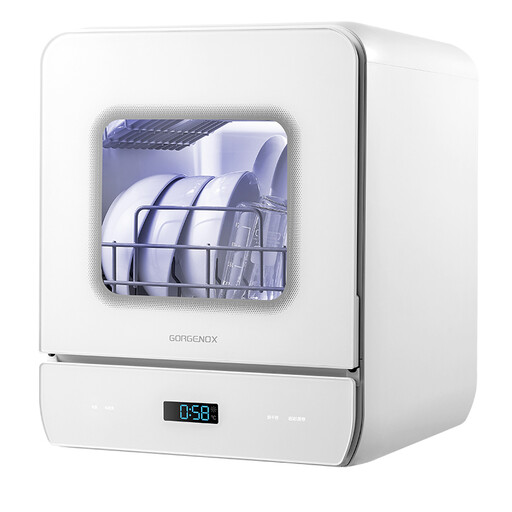
Why it stands out: Ideal for new parents thanks to its UV sterilisation function, which ensures impeccable hygiene for baby bottles and dishes. Its hot air drying system and built-in water softener meet the expectations of users who refuse to compromise on performance and convenience.
Unlike entry-level models, its hot air drying ensures perfectly dry, ready-to-store dishes. Its interior layout, though designed for 3 sets, is flexible enough to accommodate baby bottles, sidestepping the false capacity trap.
4-in-1 function (wash, disinfect, dry, store); UV sterilisation and a built-in water softener for minimal maintenance and lasting efficiency.
For students or those on tighter budgets, simpler models can certainly do the job. The key is to remain vigilant about drying efficiency and to keep an eye on water and energy consumption.
Discover our complete and up-to-date selection of mini dishwashers that meet our selection criteria and European safety standards.
Most countertop models are very water-efficient. They typically consume between 5 and 8 litres per cycle, which is far less than washing by hand, which can easily use over 15 litres.
Absolutely. Many models are equipped with a built-in water tank, making them self-contained. You just need to fill it before each wash. It's the ideal solution for a rental, a student dorm, or any kitchen not pre-equipped for a dishwasher. The drain hose can simply be placed in the sink.
It all depends on whether it has a built-in water softener. If you live in a region with hard water (high in limescale), choosing a model with this feature isn't an option—it's a necessity. By regularly adding regenerating salt, you'll ensure spotless washes and extend the life of your appliance.