
Livraison le jour même ou le lendemain

Qualité garantie

Débloquez vos offres de bienvenue: Livraison GRATUITE | Jusqu'à -80 % | 30 jours d'essai gratuits à JoyPlus
Téléchargez l'application
Metal cutting dies for scrapbooking help you create clean, consistent shapes for cards, photo albums and paper decorations. But not all dies are created equal, and not every one will suit your needs. A very intricate design can be difficult to release, a die that is too large may not fit your machine, and a set of shapes can end up languishing in a drawer if its theme doesn't match your projects.
Before you order, it's worth sorting the genuinely useful features from the purely marketing claims.
Some products are presented as models that can both cut and emboss. In practice, the result depends on the machine you use, the support plates and the pressure setting. A die may cut paper, impress a raised pattern, or do both, but you must check its compatibility with your device.
Flower and leaf dies, openwork borders and decorative motifs often feature many narrow cut-outs. If the paper is too thick or the pressure is too low, some parts will remain attached. Conversely, excessive pressure can mark the plates or distort the paper.
A set may include several shapes, but their size might not be suitable for your cards or album pages. For a standard card, measure the available space before ordering. In a photo album, also check that the design won't obscure the photo or the areas reserved for writing.
Metal cutting dies are generally designed to withstand repeated passes through a compatible manual machine. The term carbon steel appears on some models. However, this alone does not guarantee a perfect cut: the precision of the outline, the fineness of the details and the suitability for your machine remain decisive.
To preserve your dies:
Before buying, check the type of machine accepted: manual press, electronic cutting machine with an adaptor, or another system. Also check the width of the plates and the total thickness of the stack. A die sold on its own does not necessarily include the plates, mats or accessories needed for cutting.
For creative paper cutting, a lightweight cardstock generally works well for cards and embellishments. Thinner papers are handy for layering, while photo paper, vellum or thick card may require a specific setting.
Decorative dies are particularly useful for:
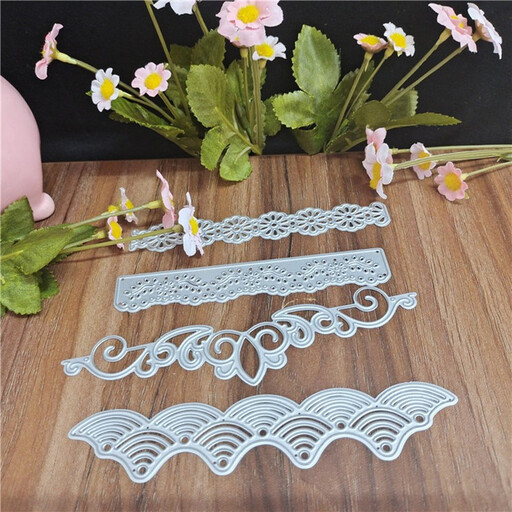
Why this choice suits this profile: With four different shapes, this set lets you get started without buying multiple items. It works well for cards, decorative paper and your first embossing attempts.
The material is stated as carbon steel and the number of pieces is clearly indicated. You will still need to check the dimensions and compatibility with your machine.
Set of four dies; designed for both cutting and embossing paper.
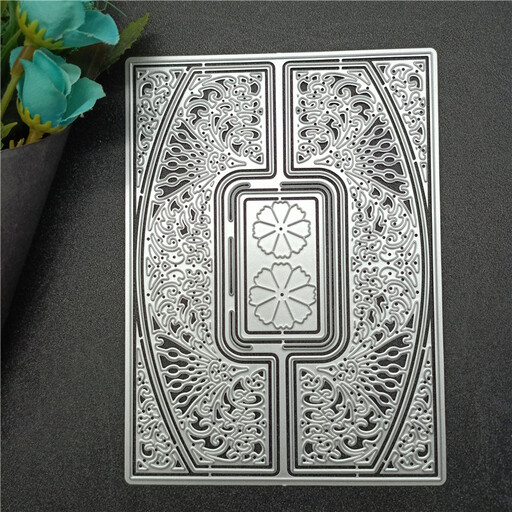
Why this choice suits this profile: This model is aimed at crafters looking for a floral frame to structure a card, an album page or a multi-layered composition.
The frame shape is identifiable before purchase. This reduces the risk of receiving a design that won't fit into your compositions.
Floral frame design; intended for both cutting and embossing.
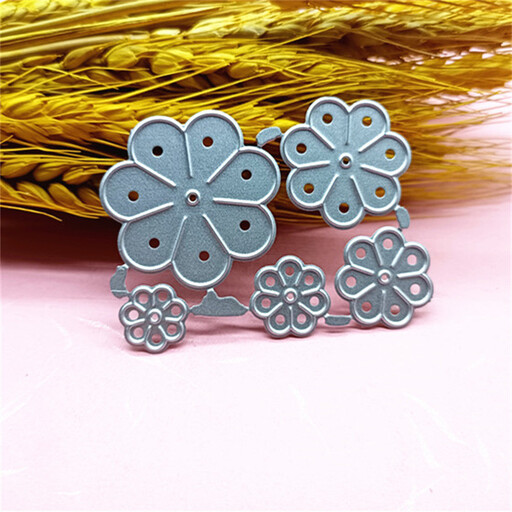
Why this choice suits this profile: Fans of botanical compositions can combine petals and leaves to create card or album decorations by playing with layers.
The theme is clearly focused on petals and leaves. You choose the set based on your projects, rather than ending up with a too-general assortment.
Petal and leaf motifs; suitable for layered creations and floral embellishments.
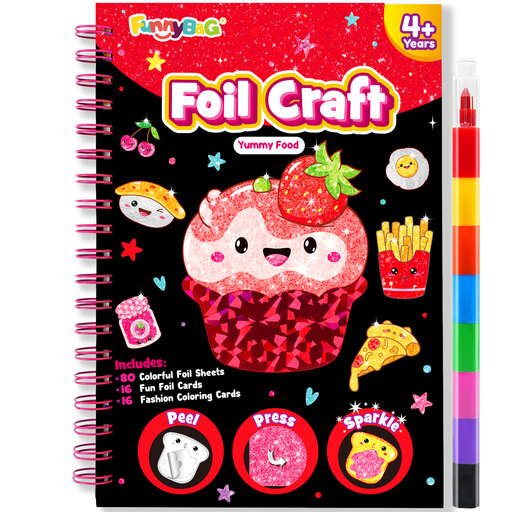
Why this choice suits this profile: According to the product description, this foil art kit is suitable for children aged 4 to 10. It offers an activity with no glue or scissors, ideal for journeys or rainy afternoons at home.
The activity requires neither a machine nor a metal die. This avoids compatibility issues and limits handling that might not be suitable for young children. Adult supervision is still recommended.
112 pieces stated; three-step method: peel, press, then reveal; format described as suitable for travel.
We have put together a comprehensive, real-time updated selection of products that meet these exacting criteria as well as European safety standards.
After each session, remove any paper fibres caught in the details. A small soft brush or a tool designed for scrapbooking will make this easier. Avoid bending your dies and store them in a rigid pouch.
For complex projects, start by testing on a scrap piece of paper. This way you can check the pressure, the direction of feeding and how easily the pieces release before working on your final card.
You need a manual cutting machine or a device compatible with metal dies. The dimensions of the plates, the thickness of the stack and the number of allowed layers vary from model to model. Always consult your machine's instructions before you start.
It depends on the weight accepted by your machine and the intricacy of the design. Cardstock can work, but very detailed models often require precise adjustment. Test on a scrap piece before cutting your decorative paper.
Its lifespan depends on how often you use it, the materials you work with and the pressure applied. Storing it in a dry place, using appropriate pressure and avoiding forcing it will help preserve the cutting edges. Replace the die if it becomes deformed or if its details no longer release properly.