
Same-day & Next-day Delivery

Quality Guaranteed

Unlock Your Welcome Offers: FREE Delivery | Up to 80% OFF | Free 30-day JoyPlus trial
Download the APP
Cutting dies, also known as scrapbooking dies, are essential tools for personalising cards, albums, and other crafting projects. They allow you to create clean, perfectly identical cuts that will give a professional touch to all your creations. But faced with an overwhelming selection, it's easy to be tempted by disappointing products that end up at the bottom of a drawer. This guide gives you all the keys to making the right choice and avoiding buyer's remorse.
Before you start, it's best to know the most common disappointments. A poorly chosen purchase can quickly turn a card-making session into a real headache.
The main pitfall? A die that refuses to cut properly. Frayed edges, torn paper, uncut areas... These are all signs of a low-end cutting stencil. The cause: poor quality steel or blades that are sorely lacking in sharpness. The result: wasted time and paper.
No, not all dies are universal and compatible with all cutting machines (Sizzix, Big Shot, Cuttlebug, etc.). A die that is too wide for your machine is simply unusable. The thickness of the die is another crucial factor: a very thin die (like a "thinlits" die) is not used with the same "sandwich" of plates as a thick die. Buying without checking these details is an almost guaranteed disappointment.
Some designs, especially very thin frames or delicate scripts, look superb in photos but can turn into a nightmare to use. "Releasing" (removing the paper from the die) becomes a test of patience if the design is too intricate. Small pieces of paper get stuck, risking damage to your precious cut-out as you try to extract them.
A few technical points are all you need to avoid these traps. They will help you judge a product beyond its appearance.
The vast majority of cutting dies are made of carbon steel. This material offers the best compromise between durability and fineness, which is essential for precise cutting blades. A good die should be rigid enough not to warp after a few passes through the machine. Beware of low-end alloys that bend at the slightest effort.
Examine the cutting edge of the die: it must be perfectly sharp around the entire contour of the design. It is this edge that guarantees a clean cut. For complex designs, like a highly detailed flower cutting die, the presence of small ejection holes on the body of the die is a real plus. They allow you to extract the cut-out with a pointed tool without damaging it.
Before every purchase, a double-check is essential:
To make things clearer, let's get practical with a few typical profiles and the products that suit them.
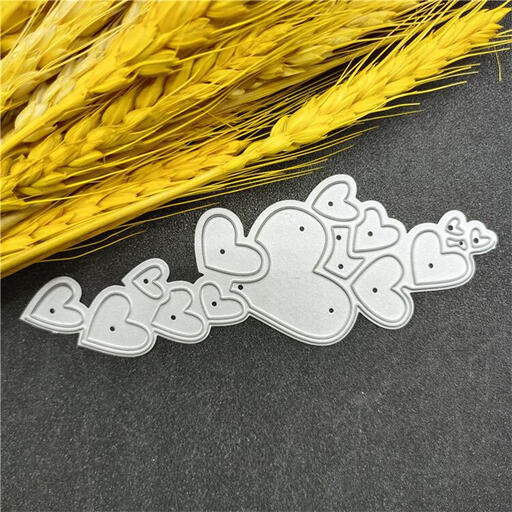
Why it's a great choice: To start, it's best to opt for simple and versatile shapes. This set of hearts allows you to get the hang of various themes (love, friendship, Mother's Day) without the frustration of overly complex cuts.
Its simple design with solid shapes minimises the risk of tearing and makes releasing the paper a breeze. Its standard size is designed to be compatible with the majority of consumer machines.
A universal and timeless motif, perfect for numerous occasions throughout the year.
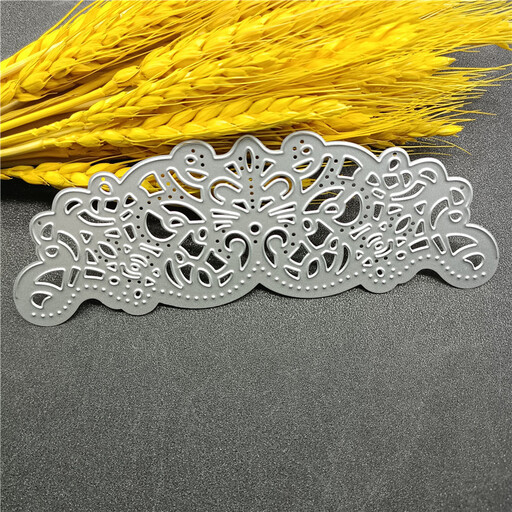
Why it's a great choice: Card-making experts often look for details that make a difference. A border die creates elegant finishes and allows you to play with layers for a superb depth effect.
Even though the pattern is detailed, its border design makes alignment on the card much easier. The steel structure is optimised so that the fine details of the lace cut cleanly, without snagging.
Ideal for adding a professional and delicate finish to wedding cards, greeting cards, or invitations.
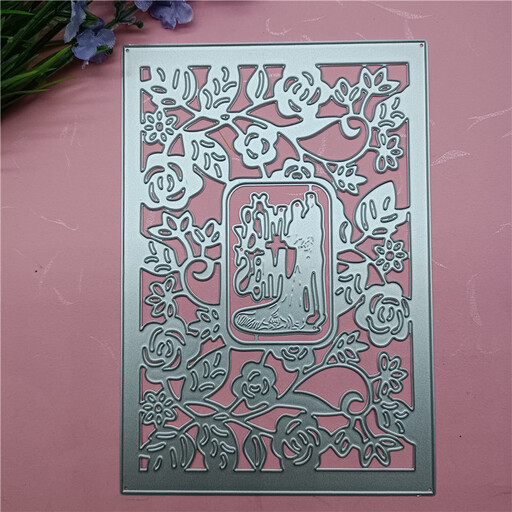
Why it's a great choice: In scrapbooking, coordination is king. A set that combines stamps and matching dies is a huge time-saver and guarantees perfect visual consistency. You stamp the design, then cut it out with precision using the corresponding **die cut**.
This type of set saves you the headache of finding a die that matches a stamp. The two are designed to work in tandem, which eliminates guesswork and misaligned cuts.
An all-in-one solution for creating perfectly coordinated raised embellishments, from **paper embossing** to the final cut.
Discover our full selection of cutting dies, all chosen to meet our quality standards.
To extend their lifespan, clean them after each use with a small brush to remove paper residue. For very fine designs, an occasional pass with a sheet of wax paper helps to "lubricate" the die and facilitates subsequent cuts. Always store them flat to prevent them from warping.
No, not always. Always check the width of the die against that of your machine. The thickness also varies: thin dies (like Thinlits, Framelits) require a different "sandwich" of plates than thicker dies (like Bigz). Refer to your machine's manual for the recommended plate combinations.
Most thin dies are designed for paper, cardstock (up to about 250 gsm), vellum, and thin foam. Some thicker, more robust dies can tackle felt, thin fabric, cork, or even thin sheets of metal. Always remember to check the manufacturer's specifications to avoid damaging the die or your machine.