
Livraison le jour même ou le lendemain

Qualité garantie

Débloquez vos offres de bienvenue: Livraison GRATUITE | Jusqu'à -80 % | 30 jours d'essai gratuits à JoyPlus
Téléchargez l'application
Whether you’re hiking, trekking, running or commuting every day, a men’s long-sleeved, quick-drying technical T-shirt should do more than simply cover your arms. It should minimise clamminess, remain comfortable under a jacket and withstand repeated washing. However, with so many marketing promises and genuinely useful features to consider, it isn’t always easy to know what to look for.
Here are the main pitfalls to avoid before buying a men’s hiking T-shirt or a breathable men’s sports top.
A thin garment isn’t necessarily breathable. The material, yarn construction and textile’s ability to spread perspiration often play a more important role than its thickness. A T-shirt may feel comfortable when you try it on, then remain damp across the back or under the arms during exercise.
An odour-resistant men’s garment can slow the appearance of unpleasant smells, but it doesn’t replace good ventilation or regular washing. Its effectiveness depends on factors such as the intensity of the activity, how long it is worn and whether the care instructions are followed. For treatments such as Polygiene, take the claim for what it is: a feature stated by the brand, not a guarantee that applies in every situation or a medical endorsement.
A men’s trekking top that fits too closely can restrict movement and prevent air from circulating properly. Conversely, a fit that is too loose may create uncomfortable folds under backpack straps. As sizing can vary from one brand to another, compare chest measurements and sleeve length, taking the intended use into account before placing your order.
For a men’s running T-shirt or men’s camping T-shirt, look for specific information about moisture management. The terms “quick-drying” and “sweat-wicking” are more meaningful when accompanied by details about the textile’s construction.
The PELLIOT models’ product information refers to Toray STORMDRY technology, based on a spiral yarn structure. It states a water-spreading time of less than 1 second, an absorption rate of 243% and a drying speed of 0.38 g/h. These figures come from data supplied by the manufacturer and should be treated as technical indications linked to its production process.
For extended wear, it’s best to choose a material that is soft, lightweight and sufficiently breathable. A lightweight men’s thermal T-shirt should be comfortable worn on its own when temperatures are mild, or under a fleece when the temperature starts to drop.
The PELLIOT models featured here use a Toray technical fabric described as soft and lightweight. Their long-sleeved design can be suitable for outdoor trips, indoor training and getting around town, provided you choose the right size.
According to the product information, the PELLIOT models feature a Polygiene antibacterial treatment. Based on information provided by the brand, it is designed to limit the bacteria responsible for odours. This is a useful benefit when travelling, on a multi-day hike or when training sessions take place one after another, but the treatment obviously doesn’t mean you can skip washing the garment.
The product information recommends machine washing in cold water, without bleach or tumble-drying. Ironing at a low temperature is possible if necessary. To protect the fibres, avoid high temperatures and allow the T-shirt to air-dry instead. These precautions are particularly important for a crease-resistant travel T-shirt that you regularly fold into a bag.
For the PELLIOT products, the size chart includes the following measurements:
If you plan to wear a mid-layer, make sure there is enough room across the chest and shoulders. For a close-fitting sportswear option, start by comparing the chest measurement, then check the sleeve length.
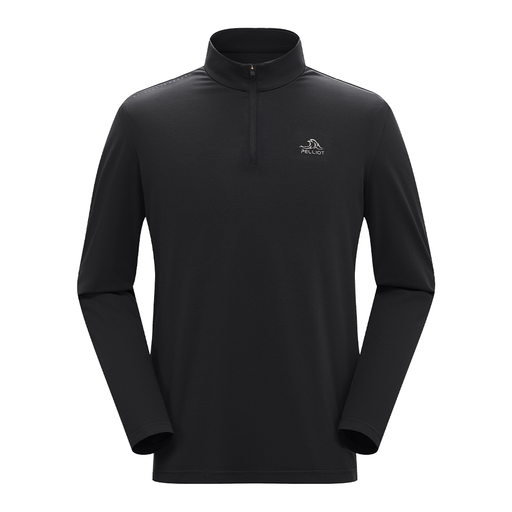
Why this choice suits this profile : This black size L version is a versatile base layer for walking, camping, indoor workouts or everyday journeys around town.
The detailed measurement chart and product information specify the material, treatment and washing instructions, rather than relying on a vague promise.
Advertised Toray STORMDRY technology, long sleeves, Polygiene treatment and a fabric described as lightweight.
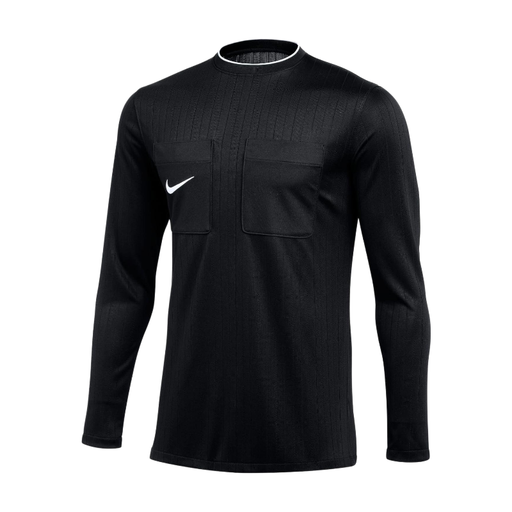
Why this choice suits this profile : This black long-sleeved jersey is aimed at those looking for a recognised sports brand and a particularly wide range of sizes.
The product information distinguishes between chest, waist and user height measurements, helping you avoid an ill-fitting cut.
Advertised Dri-FIT technology to draw sweat away from the skin, 100% polyester, sizes up to 4XL and “Tall” versions.
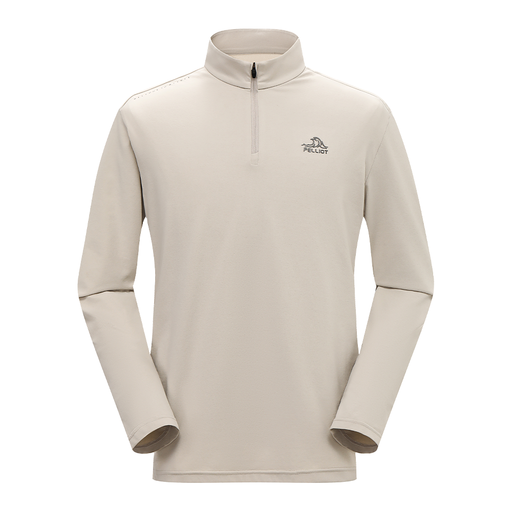
Why this choice suits this profile : The XXL size offers extra room for those who need it, particularly on long hikes or when worn under a jacket.
The product information provides the garment’s exact measurements and reminds you to account for the layers you’ll be wearing, reducing the risk of a fit that is too tight.
STORMDRY technology, advertised Polygiene treatment, highlighted crease resistance and intended use for trekking, sport and travel.
We’ve brought together a complete, regularly updated selection of products that meet these exacting criteria, while also taking European safety regulations into account.
Yes. It can be worn as a base layer on trips through forests, in the mountains or along the coast. Choose a material that wicks moisture away and adapt your outer layers to the weather conditions. When temperatures drop, a technical T-shirt is no substitute for a fleece or an insulated jacket.
Start by following the instructions on the care label. For the PELLIOT models featured here, the product information recommends washing in cold water, without bleach or tumble-drying. Air-drying helps preserve the fibres and textile treatment. Also avoid fabric softener when the brand advises against it, as it can reduce the absorbency of some technical fabrics.
For a trip lasting several days, two or three T-shirts allow you to alternate between them and wash them as needed. A quick-drying model can be washed in the evening and hung up somewhere well ventilated. Bear in mind, however, that drying time depends on the ambient humidity, particularly in Brittany, the Alps or when camping overnight in a tent.