
Livraison le jour même ou le lendemain

Qualité garantie

Débloquez vos offres de bienvenue: Livraison GRATUITE | Jusqu'à -80 % | 30 jours d'essai gratuits à JoyPlus
Téléchargez l'application
The konjac snack is taking the world by storm, and for good reason. This ultra-low-calorie snack, available in fun varieties like vegan tripe or noodles, promises guilt-free indulgence. But be warned: in a crowded market, the best products are often sold right alongside the worst.
As a section editor at Joybuy, I'm here to separate fact from fiction. This guide will reveal the common pitfalls and highlight the criteria that truly matter, helping you see past the marketing slogans to make the perfect choice.
Don't be fooled by appealing packaging. Behind the promise of a healthy snack, you can sometimes find real disappointment. Here are the three most common traps.
To avoid falling into these traps, here are the technical details to inspect before you buy.
The texture of a konjac snack is directly linked to its composition. The key criterion to watch for is the percentage of konjac powder. As a general rule, a higher content (often between 6% and 8%) guarantees a firmer texture and a better chew. This is what separates a quality product from a soft, disappointing imitation. If this information is listed, it's an excellent hallmark of quality, whether for a snack, konjac noodles, or shirataki.
Konjac is a blank canvas: the seasoning is everything. Don't just settle for the word "spicy" on the package—dive into the ingredients list.
A good spicy konjac owes its taste to real spices, not a long list of artificial flavourings.
Don't just rely on the calorie count displayed prominently on the package. Take a minute to read the nutritional label (per 100g). Two lines are crucial to examine:
To guide you, here are a few options that cater to different user profiles, selected based on the criteria mentioned above.
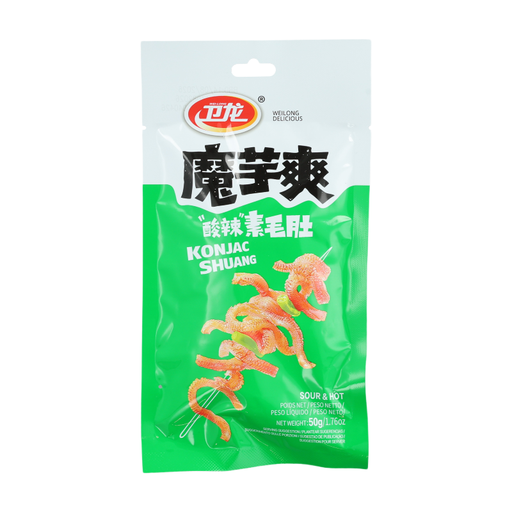
The ideal choice for: lovers of intense flavours. The hot and sour seasoning is prominent, and the tripe-like texture offers an interesting chew that perfectly captures the sauce.
This snack avoids the blandness trap with a complex seasoning (chilli, vinegar, spices) that leaves a bold, lingering flavour on the palate.
Unique texture in thin strips. The bulk pack format is perfect for sharing.
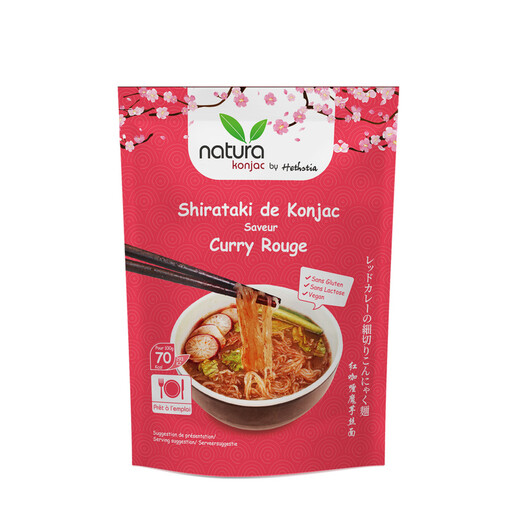
The ideal choice for: a quick office lunch or a light dinner at home. This **konjac soup** serves as a complete meal, ready in minutes in the microwave.
It avoids the "diet-friendly imposter" trap by being transparent: only 70 kcal per 100g and a controlled sugar content. A genuinely smart meal option.
A complete and balanced meal. Thai-inspired red curry flavour. Certified gluten-free.
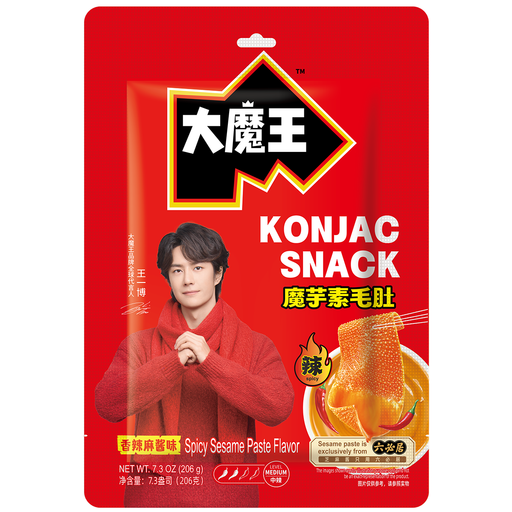
The ideal choice for: portion control, a grab-and-go snack, or sharing as an appetiser. The rich and original spicy sesame flavour is incredibly delicious.
Its texture perfectly mimics that of tripe, with a firm and pleasant chew. It's a world away from the "rubbery" effect often criticised in low-quality konjac snacks.
Packaged in individual portions. Complex flavour that combines sesame, spice, and umami notes.
Discover our complete selection of konjac snacks, all tested and approved by our editors according to these demanding criteria.
1. What is the ideal texture for a konjac snack?
A good texture should be firm yet supple, with a pleasant springiness when you bite into it (known as "QQ" texture in Asia). It should never be mushy, gelatinous, or, conversely, hard like plastic. The shape of the snack (strips, cubes, noodles) also plays a significant role in the mouthfeel.
2. Are konjac snacks really a good choice for a diet?
Yes, but only if you choose them carefully. Konjac itself is a fantastic weight-loss ally: it's packed with fibre (glucomannan) and contains almost no calories. The trap is the sauce! For a diet, aim for products low in sugar and fat, and keep an eye on the salt content, which is often high.
3. How should I store a pack of konjac snacks once it's opened?
Most are sold in individual portions, which solves the problem. If you open a larger pack, it's best to transfer the leftovers to an airtight container, place it in the refrigerator, and consume it all within 24 to 48 hours. In any case, always refer to the instructions on the packaging.