
Livraison le jour même ou le lendemain

Qualité garantie

Débloquez vos offres de bienvenue: Livraison GRATUITE | Jusqu'à -80 % | 30 jours d'essai gratuits à JoyPlus
Téléchargez l'application
The spicy konjac snack is popular for its springy texture, seasonings inspired by Chinese cuisine and ready-to-eat format. It slips easily into a bag for a break at work, a journey or drinks with friends. But when comparing products, it is best not to judge them by their packaging alone.
Two products sold as “vegetarian tripe” can have very different compositions: the proportion of konjac, salt content, presence of peanuts or gluten, individual format and chilli intensity. Here are the criteria to consider before adding them to your basket.
The term vegetarian tripe generally refers to a shape or chew inspired by offal. However, this is still a product made from konjac, starch and seasonings, with no animal-derived ingredients.
Depending on the recipe, konjac may contribute to the fibre content, but nutritional values vary considerably from one product to another. Some bites contain fewer than 120 kcal per 100 g, while versions with sesame, oil or peanuts are higher in calories. So check the nutrition table rather than relying solely on the phrase “low-calorie snack”.
Recipes such as Sichuan snack, spicy hot pot or mala often combine chilli, Sichuan pepper, soy sauce and flavour enhancers. Their bold flavour may delight fans of spicy Asian snacks, but makes them less suitable for frequent consumption.
As a guide, the product details consulted indicate between 3.2 and 8.2 g of salt per 100 g, depending on the product. An individual sachet limits the amount eaten at one time, but you should still check the label.
A sesame konjac snack may also contain soya, peanuts or wheat. These allergens often come from the sauces and seasoning blends. In France, check the information on the packaging rather than relying solely on the product name.
The statements “contains soya”, “sesame”, “peanuts” or “cereals containing gluten” are particularly important for people with allergies or following a gluten-free diet.
Konjac flour or paste is generally listed among the main ingredients, but its proportion varies depending on the recipe. Some product details mention 6 to 7% konjac flour, while others specify a preparation in which konjac plays a more prominent role.
For a firm, pleasantly springy texture, look carefully at the ingredients and choose a shape suited to how you plan to enjoy it: wavy strips for a chew similar to vegetarian tripe, compact bites for a quick snack or small sachets to share.
At a minimum, compare:
The products reviewed contain approximately 68 to 196 kcal per 100 g. This wide variation is explained by the quantity of oil, starch, sesame paste or peanuts. Also consider the actual weight of the sachet: an 18 g portion obviously does not have the same impact as a 120 g pack.
For work, travel or individual consumption, 18 to 20 g sachets make portion control easier. A box of 20 sachets is more suitable for sharing or storing at home.
These snacks are generally ready to eat: simply open the sachet and enjoy the product. Once opened, reseal it or eat the contents promptly, in line with the manufacturer’s instructions. Store unopened sachets in a cool, dry place away from light. Always check the best-before date printed on the packaging.
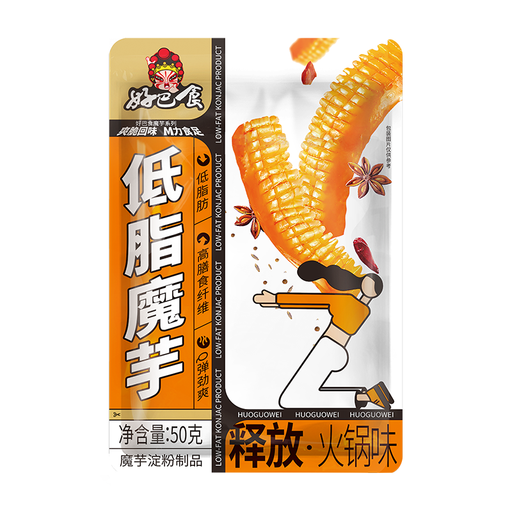
Why this product suits this profile : Its small format lets you try a spicy konjac snack without committing to a large box straight away. The sachet is ready to eat and slips easily into a bag.
The stated value is 71 kcal per 100 g, making it easy to compare with conventional crisps. The portion is limited to 50 g.
Spicy hot pot flavour, soft and springy texture, individual packaging and no-cook preparation. Contains soya.
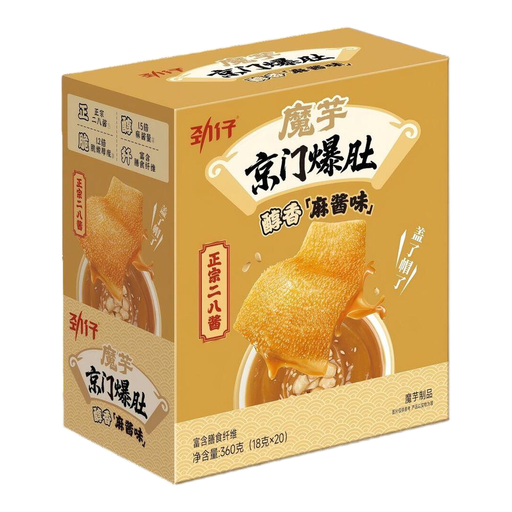
Why this product suits this profile : The recipe focuses on sesame and peanut butter notes. The box of 20 sachets lets you vary your breaks or share them easily.
Portion-sized packaging means you do not have to leave a large sachet open. The allergens — sesame, soya and peanuts — are clearly listed in the product details.
20 sachets of 18 g, a sesame-led flavour profile and the characteristic texture of konjac. The product details state 196 kcal and 2.5 g of salt per 100 g.
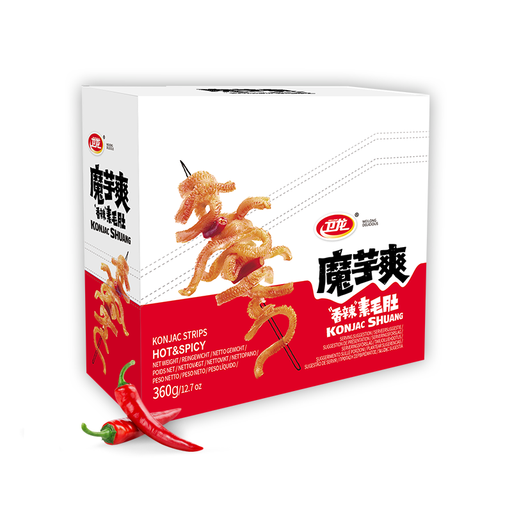
Why this product suits this profile : The box of 20 sachets of 18 g is ideal for fans of spicy Chinese snacks who want to keep several portions on hand or prepare nibbles for drinks.
The weight of each sachet is clearly stated and the ingredients list includes 6% konjac flour. This makes it easier to distinguish the advertised texture from more general claims.
Sichuan-inspired spicy flavour, crisp and springy texture, and practical packaging. The product details state 114 kcal and 3.2 g of salt per 100 g.
We have brought together a complete, real-time updated selection of products meeting these selection criteria and European safety requirements.
The products featured are made with konjac, starch and plant-based seasonings. However, always check the ingredients list and any allergen statements. “Vegetarian” does not automatically mean “gluten-free”, “soya-free” or “peanut-free”.
Unopened individual sachets should be stored according to the instructions on the packaging, generally in a cool, dry place. Once opened, eat the product promptly. For larger formats, keep any remaining sachets tightly sealed in their original packaging.
Sesame flavour is generally rounder and more aromatic, with notes of sesame paste or oil. Sichuan recipes place greater emphasis on chilli and Sichuan pepper, sometimes accompanied by a slight numbing sensation. Spicy hot pot flavour is more reminiscent of a richly spiced, chilli-infused broth. The intensity varies with each recipe: check the ingredients list and start with an individual portion.